As a bonus book from the shelves of Coventry University’s library I found this little gem – Tom Wood – ‘All Zones off Peak’. Well worth a look over the summer break, and much more to look at if you like this one!
“All Zones Off Peak is an extraordinary book. Wood has spent over fifteen years and shot over 3,000 rolls of film photographing Liverpool and its people from a bus. Visually stunning and dramatically revealing it is a body of work of immense power.”
“As good a set of photographs as one sees every five or ten years – if you’re lucky”
– Lee Friedlander
Term is coming to a close at Coventry University but the #fromthelibrary sessions run by the Photo Book Club have been a success with the first year students. We have discussed a whole host of books and many that I had never encountered before were brought along from the library shelves, which was great to see.
I am looking forward to runnig more of these session in conjunction with the Photo Book Club, if anyone is interested – send me an email matt@photobookclub.org
Thanks to all who have contributed to the discussion on Eugen Richards’ ‘Cocaine True, Cocaine Blue’. We have compiled an archive of the posts below for future reference and will also be listed under the reading list page.
We are coming to then end of May and ‘Cocaine True, Cocaine Blue’ by Eugene Richards, i know many have been in touch for recommendations of other books by Richards to check out. So here is a comprehensive list for you to enjoy.
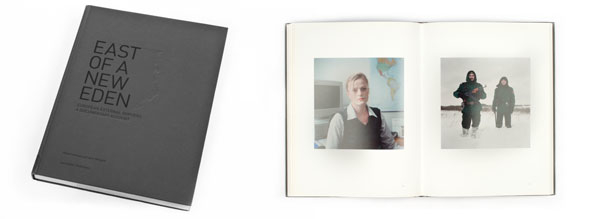
This week we will be discussing Kakulya and Mingard – ‘East of a New Eden’ documenting New Europe’s external borders. If you have would like to comment on the book, get involved in the comment section here, or by using the hashtag #fromthelibrary on twitter.
In last week’s session students brought all brought books from the library as well as looking closely at the ‘Border Film Project’
East of a New Eden
Alban Kakulya and Yann Mingard
Lars Muller Publishers 2010 Amazon UK Link
East of a New Eden, Image - Pete Lord
Dipping in and out of this book will be rewarding for those looking for a beautifully presented selection of euro-style images. But the real reward of this books requires investment in it’s documentation and factual pages that accompany the photographers images – Matt
“Europe’s new eastern borders stretch from the Baltic Sea to the Black Sea: 1,600 heavily guarded kilometres between former ‘fraternal countries’. The photographers Yann Mingard and Alban Kakulya spent a long time on the road; one of them travelled down from the North and the other up from the South in an effort to document the places and landscapes that mark the end of the Western world. On their journey they photographed the landscape as well as the border posts with their soldiers and their refugees seized at the frontier, and documented a reality defined in faraway Strasbourg, Brussels, and elsewhere. Explanatory maps and satellite images are juxtaposed in this book with the striking photographs. Articles by political scientists, security experts, sociologists, human rights specialists, and philosophers, as well as literary texts round out this photographic survey of the EU’s Eastern European external borders.”
Throughout June, the Photo Book Club will be looking at Larry Sultan’s ‘The Valley’, a body of work exploring the porn sets in Los Angeles’s San Fernando Valley–the Silicon(e) Valley of the porn industry.
Everyone remembers their first love; their first kiss, first rock song that sounded like its lyrics were written just for them. My first love of a photo book happened by chance (or as I have always assumed, fate) in my college library on a late weekend night. It was my second year and I was trying to get through a paper I had no interest in. Avoiding my noisy neighbors I walked around the library floor and found a corner desk with a lone book with a navy protective cover and no title. I brushed the book aside and focused on my blank screen. While inspiration refused to strike, I picked up the sticky book and opened it, thinking nothing of it. I couldn’t believe what I saw. It hit me within seconds – I was looking at something incredible. I couldn’t stop looking, carrying it around in my bag for weeks, pausing randomly throughout the day to focus on one intense page. To this day, as I sit here looking at the images that haunted me for years, I still wonder why it was this book that found me.
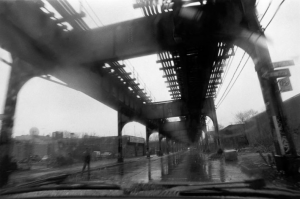
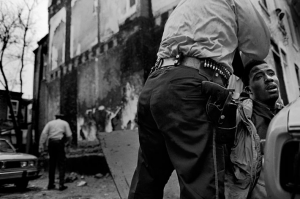
Something about Cocaine True, Cocaine Blue fired me up like nothing else. This man, Eugene Richards, had gone into one of the worst neighborhoods in New York at that time, alone, and documented a world that I had never been able to see. Growing up as a middle-class white girl in Manhattan, I knew there were parts of my city I would never know. This took me somewhere I never wanted to go to, but couldn’t stop looking at. Every shot was so rough, gritty, intense. At the time I thought to be a photojournalist, one needed to travel to a far off country to document war and suffering, I had no idea it could be a subway ride away. It’s cliche to say, but those pictures are burnt in my mind. If you asked me to name the situation in each frame today, I could do it.
To say a plastic coated book in a 70’s style library changed my life sounds silly, but it did. The following summer I interned at Magnum, just to be a few steps closer to the eyes that saw these things. On my first day I mentioned to my boss that Eugene Richards was my favorite photographer, and never to let me see him in person because I might literally have a heart-attack. He handed me a yellow envelope and told me I needed to bring this to Gene Richard, with an address, HIS address in my sweaty hand. To say my encounter was awkward is a generous understatement. While Mr. Richards wife told me to wait a few minutes so that I could meet her husband, I immediately told her that I needed to pee and she offered her bathroom. My response was that I couldn’t handle peeing in Eugene Richards bathroom. This might be the first time his wife was ever scared of an intern. Anyway, I met him and it was fine and I managed to not pee on myself, I met him again a few months later and was less awkward – thank you, red wine.
I still get that feeling when I see someones work that is great, that weight in my heart, unconscious smile – though nothing will ever feel like it did in that library, but that’s okay, that’s what first loves for.
The following is a nice little video from Paul Lowe who asked Eugene Richards about intimacy with his subjects, something that is particularly relevant when looking at ‘Cocaine True, Cocaine Blue’
Note: You may need to turn your volume up a little
It is fair to say that upon it’s release, Eugene Richards’ ‘Cocaine True, Cocaine Blue’ had a mixed reception from both the public and critics. Richards’ depiction of a predominantly black, poor, deprived community was seen by some to ignore the bigger issue of drug use in 90’s America, which was not exclusive to any class, or race.
Those who argued that Richards’ portrayal was biased, and that he was using sensationalism to sell photojournalism cited Richards’ use of cocaine as well as the fact that he had reportedly provided one subject with clean syringes as reason to doubt the validity of the images.
The arguments of bias, drug use and sensationalism in ‘Cocaine True, Cocaine Blue’ are best represented in two NY Times articles, along with both a letter from Richards to the article author, and one in reply to Richards.
Links to these articles and letters can be seen below, along with select quotes from each piece of text
‘Like most of his kind, Mr. Richards is a voyeur, obsessed with the grisly. He is a master of the brutal image, though his is a cold, distant brutality that whispers instead of shouting.’
‘Take note of the needle; it could well be one of those that Mr. Richards says he bought Mariella because the ones she owned were too dull for proper use. Note also that Mr. Richards smoked his share of crack to get a feel for the subject.’
‘Reading and looking, I couldn’t help wonder: why are nearly all of the people in these photographs black? The vast majority of drug addicts in America are white. This could be said of any phenomenon in the United States, of course, but why is the white aspect of drug addiction so consistently invisible?’
‘when I had completed my photographs, I delivered disposable syringes from a diabetic friend to Mariella. I did so after witnessing her jamming a bent needle first into her arm, then her neck. I knew that this woman I cared for would soon be using the syringes of others in that AIDS-plagued neighborhood.’
‘I did indeed reveal to Richard B. Woodward, the author of that article, that I had tried crack back in 1986, long before working on “Cocaine True Cocaine Blue,” but never again.’
‘Look, “Cocaine True Cocaine Blue” is quite obviously not a treatise on all drugs and drug users in America. It is not about a monthly snort of coke or casual marijuana use. From cover picture and title to the final paragraph, it is concerned with family- and neighborhood-destroying, racism-engendering, hard-core cocaine addiction.’
Staples to Richards
At the end of Eugene Richards letter to Staples, you can find Staples’ response
‘I share Mr. Richards’ horror at the drug-related carnage in our streets. But he misstates the case when he says I accused him of “bias.” My review contained no such accusation; I worked especially hard to avoid that.’
‘I regret causing Eugene Richards the anguish and ill feeling represented in his letter. I respect his photographic eye and his considerable skills as a journalist. As my review said: “His works cannot be called picture books. He arranges his images to make what amount to visual novels, which he augments with pungent stretches of reflection, dialogue or description.”’
‘Mr. Richards presents his powerful study with the impassioned anger of a biblical prophet. Many of his pictures seem intended to shock his audience out of any complacency it may feel about the scope or severity of the drug plague.’
‘But the real problem with Mr. Richards’s project is not the story it tells, but the ones it doesn’t tell. The pictures fit within the traditional functions of photojournalism, in which photographers, as surrogates for a middle-class audience, look at the problems of the poor.’
‘That may be too much to ask from any group of photographs. And despite the project’s limited scope, Mr. Richards’s pictures throw a harsh light on a world that is usually hidden from public view and give voices and faces to some people trapped there.’
The arguments raised by these articles is just as prevalent with the role photojournalism plays in today’s fast paced, seen-it-all-before media audience. If you have anything to add to this discussion of Richards work, or the modern equivalents, drop us an email or leave a comment below.
Writing in the afterword to ʻCocaine True, Cocaine Blue,ʼ Dr. Stephen W. Nicholas writes,
ʻThe United States accounts for five percent of the worldʼs population and consumes 50
percent of the worldʼs cocaine,ʼ with approximately one million American teenagers and
young adults using cocaine for the first time each year, and the rate of cocaine-associated
physical, sociological, or family-related problems doubling nationwide since 1985.
In this powerful and raw book, Eugene Richards takes an in-depth and very intimate look
at the inhabitants of three troubled communities: East New York; North Philadelphia; and
the Red Hook Housing Project in Brooklyn, New York.
Alongside the bold and often graphic black-and-white images, are Richardsʼ own personal
observations and interviews, with additional comment by journalist Edward Barnes. These
interviews, with gang members, addicts, dealers, parents, children, the elderly, sex
workers, police, and the clergy. In one such observation Richards writes, ʻThere were 107
murders, 145 rapes, 3,285 robberies, and 547 felonious assaults in East New York in one
year, in a population of 160,000… This is how we first learn about Americaʼs troubled inner-
city neighborhoods, reading the most elemental and squalid statistics, the lists of atrocities
and casualties, the body counts that are no different from those posted during war.ʼ
In ʻCocaine True, Cocaine Blueʼ Richardsʼ offers a powerful insight, and alerts us to how
drugs can affect the very fabric of our society.