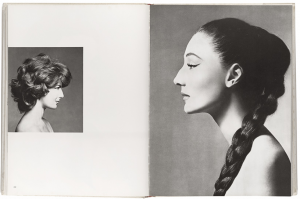
When we started looking at Avedon’s ‘Observations’ we mentioned that we would produce a video for those who could not get hold of a copy themselves. A video to show Avedon’s images, their layout, sequencing and so on. You can see the video embedded below, and as always we look forward to hearing your thoughts and suggestions.
Note: Due to a family emergency our video producer has been unable to create this video, and so for now a rather dogeared copy that is my own (including absence of p84-5) has been photographed this morning. Our apologies. Matt
This month’s book ‘Observations’ is not easily accessible in your local library, nor is it affordable to most. But we consider it to be more than worthy of a Photo Book Club discussion, and so next week we will post a video looking through the book, making sure this incredible book is available to view by as many fans as possible!
Title Observations
Author Richard Avedon, with comments by Truman Capote
Like Robert Frank’s ‘The Americans,’ which we discussed last month in the Photo Book Club, American photographer Richard Avedon’s first book, ‘Observations,’ was published in 1959. And, like ‘The Americans’ it was included in Andrew Roth’s ‘The Book of 101 Books: Seminal Photographic Books of the 20th Century (PPP Editions, 2001), now itself a seminal work on the history of the photographic book.
Having begun to take photographs during the Second World War, where he served in the Merchant Marine, Avedon became chief photographer of ‘Harper’s Bazaar’ in the late 1940s, where he helped redefine and elevate fashion photography to an art form, frequently taking his models out of the studio.
But Avedon’s first book did not focus on his fashion work, but on his iconic and penetrating portraits. In the 150 pages that form ‘Observations,’ with comments by the great American writer Truman Capote, we encounter the likes of Charlie Chaplin, John Huston, Alfred Hitchcock, The Duke and Duchess of Windsor, Arthur Miller, Pablo Picasso, Marilyn Monroe, Mae West, Judy Garland, Igor Stravinsky, Katherine Hepburn, Brigitte Bardot, Louis Armstrong, Humphrey Bogart, Buster Keaton, and many others.
Reflecting upon Avedon’s oeuvre, Maria Morris Hambourg recently wrote ‘By dint of progressive challenges to himself, Richard Avedon has not only distilled photographic portraiture to its irreducible core, but has also produced an extended meditation on life, death, art, and identity. Laureate of the invisible reflected in physiognomy, Avedon has become our poet of portraiture.’
Wayne Ford
Get involved
Let us know your thoughts by using the hashtag #photobc in Twitter or share links and blog posts in to comment section below.
Coming next…
Next week we will post a video, showing the book in all it’s glory to those who do not own, or have access to a copy (which is most of us!)
A huge thank you to all who have dropped by and especially those who have contributed in the first month of the Photo Book Club, looking at Robert Frank’s ‘The Americans’. We have compiled an archive of the posts below for future reference and will also be listed under the reading list page.
Please continue to share any links and further chatter around Frank’s masterpiece as we will keep updating the blog to provide an even better archive of information for future reference.
More to follow soon… but if you do or don’t know the book, let us know your thoughts by using the hashtag #photobc in Twitter or share links and blog posts in the comment section below.
This post, looking at ‘The Americans in Context’ has been written by John Edwin Mason is a writer and photographer who teaches African history and the history of photography at the University of Virginia. You can read his fantastic blog here and follow John on twitter here. A big thank you to John for this contribution, if anyone else would like to write on the Photo Book Club, pop us an email.
Robert Frank’s The Americans: Some Notes on Context
John Edwin Mason
Wayne Ford’s perceptive comments about the ways in which The Americans was received, when it appeared in the United States, have got me thinking about the historical context within which Frank made and published his photographs. That context — riddled as it is with complexities and contradictions — can itself suggest a series of commentaries about both the photographs and the ways in which people responded to them.
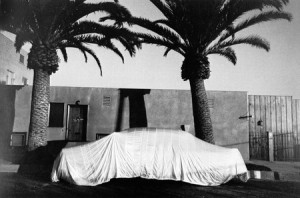
Wayne is quite right when he says that, on the whole, that American reactions to the book were initially hostile. While the New York Times was ambivalent (conceding that Frank had talent), most reviews were unambiguously negative. J. Hoberman has summed it up nicely: “…[most] Americans took The Americans personally. The book was characterized as ‘sick,’ ‘warped,’ ‘joyless,’ ‘dishonest,’ ‘sad,’ ‘neurotic,’ ‘marred by spite, bitterness, and narrow prejudice.’ Coming from a foreigner, the title was an insult. Why not ‘Some Americans?’”
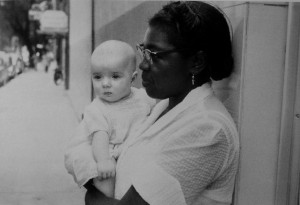
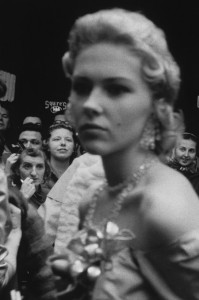
It’s not hard to understand where this hostility was coming from. The nation that confronted people, when they opened the pages of The Americans, was anything but the “Shining City on the Hill” that so many have so often imagined it to be. Instead, the country was a dystopia, its citizens alternately menacing, menaced, or estranged. The photos often reveal racial hierarchies and class stratification. In many of them, fear, anger, and suppressed rage — sometimes masked by a boisterous bravado — seem to linger just below the surface. Frank wasn’t making any of this up, and people knew it. They hated him for showing it to them.
If Frank’s Americans seemed to be beset with both tangible and existential anxieties, we can understand why. Early victories in the African-American civil rights movement destabilized the old certainties of white supremacy. Suburbanization disrupted established communities and broke families apart. Cars choked the highways. Post-war prosperity failed to eliminate poverty. Always present, but largely unseen were the Cold War and its threat of nuclear annihilation.
No one who had read The Americans would have been surprised by what was to come a few short years later — the assassinations (the Kennedys, Martin Luther King, Malcolm X), the urban rebellions of African-American youth, and the disastrous escalation of the Vietnam War.
Then as now, however, there were many Americas and many sorts of Americans. Frank didn’t capture them all and couldn’t have, even if he had tried. As a result, people had a point when they said that the book was actually about “some Americans.”
Frank saw the darkness in the American soul, but he rarely captured the light. The years during which he shot, edited, and published The Americans — 1955 to 1959 — belonged as much to Elvis Presley and Chuck Berry as to anyone else. They were the commercial avatars of a cultural revolution that was leaving few aspects of American life untouched. This was the decade of rock ‘n’ roll, civil rights, abstract expressionism, and the Beats. Rosa Parks and Martin Luther King, Allen Ginsberg and James Baldwin, Jackson Pollack and Jasper Johns, James Dean and Marilyn Monroe could all lay a claim to it. Coincidentally, if not ironically, Disneyland opened in a Los Angeles suburb just a few months before Frank passed through town.
The ’50s were as exuberant as they were bleak, but we rarely see this in Frank’s photos. (Interestingly, Jack Kerouac, who wrote an introduction for the US edition of The Americans, managed to capture some of both qualities in his early novels.) Nobody relying on The Americans for their knowledge of the US would have anticipated much of what was to come next — the successes of the civil rights and anti-Vietnam War movements, the emergence of women’s and environmental (Green) movements, not to mention hippies, Woodstock, and bell bottom jeans. Frank’s America hadn’t disappeared, as Richard Nixon’s victory in the 1972 presidential election made perfectly clear. It was, however, one America among many.
It does nothing to diminish Frank’s achievement to say that the truths he captured in The Americans are partial and contingent, rather than comprehensive and absolute. The insights are powerful, the photographs are beautiful, and we cannot plausibly ask for anything more. The book remains essential reading and viewing for anyone who wants to understand the history of photography or the nature of American society in the 1950s.
Thanks to ‘Here on the Web‘ for sharing the link to Andreas Schmidt’s book ‘The Americans’ in which Schmidt has sourced 83 images from Google to create a current version of Frank’s work. You can see a full preview of the book as well as purchase it, from blurb here.
Andreas Schmidt - The Americans
We would love to hear from anyone who has the book themselves – pop us an email mail@photobookclub.org
Schmidt’s Synopsis:
“Few books in the history of photography have had as powerful an impact as The Americans”, said The New York Times about Robert Frank’s photobook first published in 1958. More than 50 years later and made entirely without the help of a Guggenheim fellowship comes Andreas Schmidt’s take on a portrait of America. Selected from over 20 million photographs found on Google images, 83 photographs tell a story of contemporary America – pictures of normal people, everyday scenes, lunch counters, bus depots and cars, and the strangely familiar faces of people we don’t quite know but have seen somewhere. They are pictures showing the “American way of life” as we haven’t yet quite been able to see it ourselves, photographs that condense the entire life of a nation in classic images that speak to us today, and in another 50 years to come.
We thought it would be useful to have a place where all the great suggestions, comments and links can be seen easily. Below are the thoughts shared so far about Robert Frank’s ‘The Americans’. Keep them coming through thehashtag #photobc in Twitter or share links and blog posts in to comment section below.
Comments
Steve Goldenberg
There was a show of all 83 images at the Corcoran Gallery of art in DC a year or so ago. Just amazing.#photobc
Thing that sticks with me most about The Americans is contrast b/w how familiar the imagery looks but how foreign the images feel #photobc
Rich Beaubien
I grew up in the US during the 1950’s and came of age during the tumultuous 60’s. Frank’s book documents the middle of the 1950’s and was released just prior to the explosive 1960’s decade. I found my first copy of The Americans in a second-hand bookstore sometime in the early 1970. It was Kerouac’s name on the cover that first enticed me (I was born and raised in Kerouac’s home town), in the end it was the photographs that captured me. I wasn’t sure what I had, but the evocative images struck me from the beginning. The careful sequencing (where I learned how story telling takes shape) and the format, with the blank facing pages, lends itself well to close inspection of each photo. There has always been, at least for me, both a subtleness and strong articulation in the images. Plus they all have some sort of interesting angle and often carry some humor. When looking at these images I often get transported as an observer back in time to the moment, becoming part of what is happening. These photographs captured the breadth this country as it entered a pivotal decade of the 20th century – the hope, difficulties, feelings, tension, and insecurities.
I guess this became more of a rambling personal reminiscence, than a review. Still, it was inspirational in my own development in that I realized for the first time of the possibilities capturing someone in public. I never saw a photograph the same way again.
John Edwin Mason
There’s a lot of good audio on the website of the National Gallery of Art, in Washington, DC, which mounted a major exhibition on The Americans (and including Frank’s entire career) in 2009.
You’ll find an hour-long conversation between Frank (in very good humor) and Sarah Greenough, plus other talks by Greenough, Stephen Brooke, Martin Gasser, Olivier Lugon, and Alan Trachtenberg, among others. Here’s the link:
http://www.nga.gov/exhibitions/frankinfo.shtm
My favorite edition of The Americans might be Looking In: Robert Frank’s The Americans, which was the catalog for the National Gallery exhibition. It contains, besides the usual scholarly essays, reproductions of the contact sheets on which each of the photos in the book appears. And there are few things in the world more fascinating that a great photographer’s contact sheets.
Looking In also contains some of the photos that didn’t make it into the book. It’s wonderful to see what made the cut and what didn’t.
Thanks for putting this together, gents. Should be fun.
John Edwin Mason
You’ll find an hour-long conversation between Frank (in very good humor) and Sarah Greenough, plus other talks by Greenough, Stephen Brooke, Martin Gasser, Olivier Lugon, and Alan Trachtenberg, among others. Here’s the link:
http://www.nga.gov/exhibitions/frankinfo.shtm
Larissa Leclair
I would be interested to hear a discussion about the initial criticism for the book when it was published in the US and a discussion on how the sentiment changed to be lauded as such an influential book.
In Reply – Pete Brook I think Larissa’s wish to read criticism upon the release of ‘The Americans’ is tantalising. I’d like to see those reviews too.
Iain Sarjeant Congrats on the launch of @photobookclub – would love to see Keld Helmer-Petersen discussed in the future #photobc
Brian David Stevens Maybe a future discussion on what great photobooks are out of print and why that is….?
Henry Iddon
Its not photography but Colour by Derek Jarman is a brilliant book that should be read by anyone in visual arts.
The idea for the Photo Book Club which will launch on 28 February 2011, grew out of conversations between designer Wayne Ford and photographer Matt Johnston, with the encouragement of photographer and educator Jonathan Worth.
The premise for the Photo Book Club is a simple one, each month we will discuss one book that we consider to have made a significant contribution to the world of photography, this may be a well known volume, such as Robert Frank’s Les Américains/The Americans, (1958/1959), which will signal the launch of the Photo Book Club, or a lesser known, but no less important work.
At the beginning of each month we will post a brief introduction of our chosen book on the Photo Book Club website, followed by a more in-depth comment on the work, and through the comment section of the website we aim to create a platform through which we can discuss the impact of each body of work through, over the coming weeks.
Whilst Wayne and Matt, both have ideas for the books that we would like to feature, we want the Photo Book Club to be an open platform, for a community to evolve, so we actively encourage suggestions for books, and in other ways in which we can develop the conversation, we want to create a community where the photobook in its widest context can be discussed and appreciated.
Whilst we are initially launching the Photo Book Club as a blog, and as a Twitter feed, we are hoping that in the near future we can arrange the occasional physical meeting, and even some print content too.