Term is coming to a close at Coventry University but the #fromthelibrary sessions run by the Photo Book Club have been a success with the first year students. We have discussed a whole host of books and many that I had never encountered before were brought along from the library shelves, which was great to see.
I am looking forward to runnig more of these session in conjunction with the Photo Book Club, if anyone is interested – send me an email matt@photobookclub.org
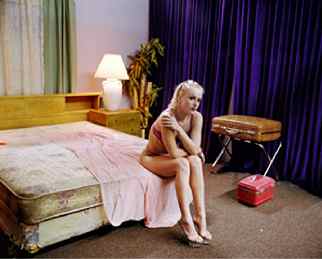
Since 1988, Larry Sultan has returned time and again to photograph on porn sets in Los Angeles’s San Fernando Valley–the Silicon(e) Valley of the porn industry. But The Valley is by no means a documentary on porn filmmaking. Rather, it is a dense series of pictures of middle-class homes invaded by the porn industry. Sultan’s lens focuses on pedestrian details–a piece of half-eaten pie, dirty linens in a heap, “actors” taking a break–that offer clues to a bizarre other-world. The lush and intricate images adroitly play with artifice and reality, adding up to rich, elliptical narratives that circle around the concepts of “home” and “desire.”
These images of homes and gardens, porn actors and film crews, studio and location shootings are an ambiguous meditation on suburbia and its trappings, family and transgression, loss and desire, the utopias and dystopias of middle-class lifestyle. The Valley and its many-layered photographs outline the complexity of domestic life at the beginning of the 21st century, opening up new perspectives for photography through its innovative combination of staged and documentary photographs. In 1998, an English magazine asked me to go on a porn set. After the first five minutes of the strangeness of it all, I started to look around, going to the bedrooms, wandering through the house. It felt like a permission to go into a house in L.A. and to imagine how someone would live their life in this house. I made the pictures for the magazine. I left and thought, “This is it, this is what I have to do.” –Larry Sultan
Resources:
Unfortunately it is not easy to find a collection of the images from ‘The Valley’ in one place. Quite a few however can be found at Sultan’s agent Bill Charles’ website HERE, HERE and HERE
The text by Sultan, from ‘The Valley’, along with some images from the series can be found on American Suburb X here.
Text, Artist statement and interview from the SFMoMA exhibition can be found here
In preparation for our look at Larry Sultan’s ‘The Valley’ in June, the following video obituary was produced by Daylight Magazine and gives a brief but concise insight into Sultan’s work for those who are unfamiliar with it.
Thanks to all who have contributed to the discussion on Eugen Richards’ ‘Cocaine True, Cocaine Blue’. We have compiled an archive of the posts below for future reference and will also be listed under the reading list page.
We are coming to then end of May and ‘Cocaine True, Cocaine Blue’ by Eugene Richards, i know many have been in touch for recommendations of other books by Richards to check out. So here is a comprehensive list for you to enjoy.
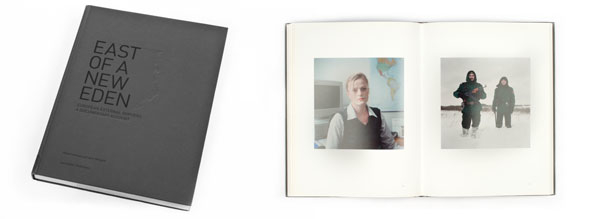
This week we will be discussing Kakulya and Mingard – ‘East of a New Eden’ documenting New Europe’s external borders. If you have would like to comment on the book, get involved in the comment section here, or by using the hashtag #fromthelibrary on twitter.
In last week’s session students brought all brought books from the library as well as looking closely at the ‘Border Film Project’
East of a New Eden
Alban Kakulya and Yann Mingard
Lars Muller Publishers 2010 Amazon UK Link
East of a New Eden, Image - Pete Lord
Dipping in and out of this book will be rewarding for those looking for a beautifully presented selection of euro-style images. But the real reward of this books requires investment in it’s documentation and factual pages that accompany the photographers images – Matt
“Europe’s new eastern borders stretch from the Baltic Sea to the Black Sea: 1,600 heavily guarded kilometres between former ‘fraternal countries’. The photographers Yann Mingard and Alban Kakulya spent a long time on the road; one of them travelled down from the North and the other up from the South in an effort to document the places and landscapes that mark the end of the Western world. On their journey they photographed the landscape as well as the border posts with their soldiers and their refugees seized at the frontier, and documented a reality defined in faraway Strasbourg, Brussels, and elsewhere. Explanatory maps and satellite images are juxtaposed in this book with the striking photographs. Articles by political scientists, security experts, sociologists, human rights specialists, and philosophers, as well as literary texts round out this photographic survey of the EU’s Eastern European external borders.”
Throughout June, the Photo Book Club will be looking at Larry Sultan’s ‘The Valley’, a body of work exploring the porn sets in Los Angeles’s San Fernando Valley–the Silicon(e) Valley of the porn industry.
Everyone remembers their first love; their first kiss, first rock song that sounded like its lyrics were written just for them. My first love of a photo book happened by chance (or as I have always assumed, fate) in my college library on a late weekend night. It was my second year and I was trying to get through a paper I had no interest in. Avoiding my noisy neighbors I walked around the library floor and found a corner desk with a lone book with a navy protective cover and no title. I brushed the book aside and focused on my blank screen. While inspiration refused to strike, I picked up the sticky book and opened it, thinking nothing of it. I couldn’t believe what I saw. It hit me within seconds – I was looking at something incredible. I couldn’t stop looking, carrying it around in my bag for weeks, pausing randomly throughout the day to focus on one intense page. To this day, as I sit here looking at the images that haunted me for years, I still wonder why it was this book that found me.
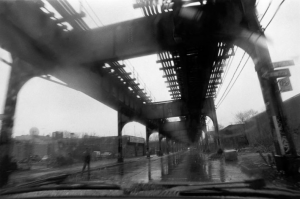
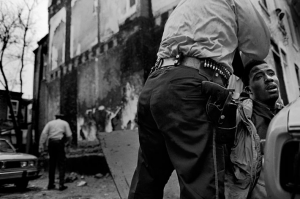
Something about Cocaine True, Cocaine Blue fired me up like nothing else. This man, Eugene Richards, had gone into one of the worst neighborhoods in New York at that time, alone, and documented a world that I had never been able to see. Growing up as a middle-class white girl in Manhattan, I knew there were parts of my city I would never know. This took me somewhere I never wanted to go to, but couldn’t stop looking at. Every shot was so rough, gritty, intense. At the time I thought to be a photojournalist, one needed to travel to a far off country to document war and suffering, I had no idea it could be a subway ride away. It’s cliche to say, but those pictures are burnt in my mind. If you asked me to name the situation in each frame today, I could do it.
To say a plastic coated book in a 70’s style library changed my life sounds silly, but it did. The following summer I interned at Magnum, just to be a few steps closer to the eyes that saw these things. On my first day I mentioned to my boss that Eugene Richards was my favorite photographer, and never to let me see him in person because I might literally have a heart-attack. He handed me a yellow envelope and told me I needed to bring this to Gene Richard, with an address, HIS address in my sweaty hand. To say my encounter was awkward is a generous understatement. While Mr. Richards wife told me to wait a few minutes so that I could meet her husband, I immediately told her that I needed to pee and she offered her bathroom. My response was that I couldn’t handle peeing in Eugene Richards bathroom. This might be the first time his wife was ever scared of an intern. Anyway, I met him and it was fine and I managed to not pee on myself, I met him again a few months later and was less awkward – thank you, red wine.
I still get that feeling when I see someones work that is great, that weight in my heart, unconscious smile – though nothing will ever feel like it did in that library, but that’s okay, that’s what first loves for.
When published in 1994, Cocaine True, Cocaine Blue was perhaps the last great photographic shock documentary, and brought with it considerable controversy for depicting a certain segment of society in such a negative, nihilistic manner. My younger self very much believed in the power of those raw, stark, in your face images- believed they were exactly what was needed to expose the crack and heroin scourge that was consuming inner cities across the country, and ultimately help reform a national drug policy long bereft of any possible rehabilitative or positive consequence.
In the interim, photojournalism has struggled to redefine and reestablish itself in a declining market, and reinvent itself in a new medium, via new technology. And yet the problem remains- critics clamoring for a new visual paradigm in photographic story telling, particularly, a new vision of depicting tragedy, hardship and conflict in a way that can command and engage our attention with those we may not encounter in our everyday lives. No short order in these austere and somber economic times when so many of us are simply striving to survive- or escape.
Eugene Richards never struck me as the kind of man, or photographer, who was strictly out to shock. The images in Cocaine True, Cocaine Blue have an almost apocalyptic sense of urgency in their madness and desperation, and as only a master photographer can envision and present, many of those same images are also maddeningly beautiful, not unlike the “darker” masterpieces of the Renaissance. His photographs seemed hell bent on rattling you to the very core, so that even if you turned away, they would still unnerve you, haunt you, have at you until you finally removed yourself from your comfort zone and entered their twisted netherworld of existence- the very madness addiction demands.
Obviously, I can’t speak for him, but I don’t think it would be the kind of book Mr. Richards would do today. If anything, his current work is more reflective, more contemplative. The Blue Room meticulously examines the domestic remains of those forced to abandon their points of origin, and his recent work with disabled vets, while containing many an unsettling and disturbing image, portrays subjects who could well be family members, neighbors, friends. We get to feel the main players out, get to know their stories, their lives- before, and after.
Although the characters get to speak out in Cocaine True, Cocaine Blue, their voices are lost within the insanity that overwhelms their lives and the numerous black and white enlargements that predominate the book itself. Powerful and significant as it was, perhaps that was the one key and vital ingredient that Cocaine True, Cocaine Blue so woefully lacked- we never connected with the individuals depicted, in fact, it was hard to even think of them as individuals! They were ghosts of former selves not even they would fully recognize, beings seemingly beyond redemption, beyond human connection, and well beyond our empathy…
I’m generally sympathetic to Brent Staple’s critique of “Cocaine True, Cocaine Blue” (now, as I was in 1994). He’s right to insist that the book can’t be properly evaluated without situating it within a society and culture that has been shaped, consciously and unconsciously, by racist ideologies and practices. It does seem to me, however, that the general thrust of his argument misses the most essential point.
Yes, it’s a problem that the faces in the book are overwhelmingly black and brown, although the cocaine problem — contra Richard’s self-defense — wasn’t confined to African-American and Latino communities. Drug use by whites may have been hidden — harder to see and to photograph because of the defenses that social class and racial privilege can erect — but it was a major element in the crisis of the mid-90s. Richards (and the writer Edward Barnes, with whom he worked) certainly should have foregrounded this fact. Not to do so was to reinforce ever-prevalent racist stereotypes about who uses illegal drugs and who doesn’t.
Staples alludes to, but does not develop, a much more important critique when he says that “Photographs can shock and dismay, but are useless to explain such complicated matters as economic decline [which underpinned the demand for drugs].” This is the heart of the matter.
Photographs, as every theorist and most photographers will tell you, are very good at showing us how things look, but very bad at explaining why they look that way. Documentary work, however, must be as much about the “why” as the “how.” Pretty pictures, scorching pictures, gut-wrenching pictures aren’t enough. Context and analysis are just as important. And this is where Richards fails utterly. Or, perhaps, “fails” is the wrong word. He doesn’t even try.
I’m tempted to say that it was rashly irresponsible for Richards to have published the book without attempting to explain the crisis he captured in his images. This was not, after all, an exercise in fine art photography. It’s documentary, and its purpose is to help us to understand the world in which we live.
Instead, I fear, many readers came (and come) away knowing less about the drug crisis, rather than more. In the absence of analysis and explanation from Richards, many people would have fallen back on ideas already circulating in the culture. A great many — not all — of those notions would have been deeply racist.
It’s not so much that Richards’ images are decontextualized, it’s that their context would too often have been America’s reflexively racist culture, rather than its history and political-economy. As a result, the photos reinforce, rather than undermine, stereotypes of black and Latino depravity and criminality.