The following is a nice little video from Paul Lowe who asked Eugene Richards about intimacy with his subjects, something that is particularly relevant when looking at ‘Cocaine True, Cocaine Blue’
Note: You may need to turn your volume up a little
It is fair to say that upon it’s release, Eugene Richards’ ‘Cocaine True, Cocaine Blue’ had a mixed reception from both the public and critics. Richards’ depiction of a predominantly black, poor, deprived community was seen by some to ignore the bigger issue of drug use in 90’s America, which was not exclusive to any class, or race.
Those who argued that Richards’ portrayal was biased, and that he was using sensationalism to sell photojournalism cited Richards’ use of cocaine as well as the fact that he had reportedly provided one subject with clean syringes as reason to doubt the validity of the images.
The arguments of bias, drug use and sensationalism in ‘Cocaine True, Cocaine Blue’ are best represented in two NY Times articles, along with both a letter from Richards to the article author, and one in reply to Richards.
Links to these articles and letters can be seen below, along with select quotes from each piece of text
‘Like most of his kind, Mr. Richards is a voyeur, obsessed with the grisly. He is a master of the brutal image, though his is a cold, distant brutality that whispers instead of shouting.’
‘Take note of the needle; it could well be one of those that Mr. Richards says he bought Mariella because the ones she owned were too dull for proper use. Note also that Mr. Richards smoked his share of crack to get a feel for the subject.’
‘Reading and looking, I couldn’t help wonder: why are nearly all of the people in these photographs black? The vast majority of drug addicts in America are white. This could be said of any phenomenon in the United States, of course, but why is the white aspect of drug addiction so consistently invisible?’
‘when I had completed my photographs, I delivered disposable syringes from a diabetic friend to Mariella. I did so after witnessing her jamming a bent needle first into her arm, then her neck. I knew that this woman I cared for would soon be using the syringes of others in that AIDS-plagued neighborhood.’
‘I did indeed reveal to Richard B. Woodward, the author of that article, that I had tried crack back in 1986, long before working on “Cocaine True Cocaine Blue,” but never again.’
‘Look, “Cocaine True Cocaine Blue” is quite obviously not a treatise on all drugs and drug users in America. It is not about a monthly snort of coke or casual marijuana use. From cover picture and title to the final paragraph, it is concerned with family- and neighborhood-destroying, racism-engendering, hard-core cocaine addiction.’
Staples to Richards
At the end of Eugene Richards letter to Staples, you can find Staples’ response
‘I share Mr. Richards’ horror at the drug-related carnage in our streets. But he misstates the case when he says I accused him of “bias.” My review contained no such accusation; I worked especially hard to avoid that.’
‘I regret causing Eugene Richards the anguish and ill feeling represented in his letter. I respect his photographic eye and his considerable skills as a journalist. As my review said: “His works cannot be called picture books. He arranges his images to make what amount to visual novels, which he augments with pungent stretches of reflection, dialogue or description.”’
‘Mr. Richards presents his powerful study with the impassioned anger of a biblical prophet. Many of his pictures seem intended to shock his audience out of any complacency it may feel about the scope or severity of the drug plague.’
‘But the real problem with Mr. Richards’s project is not the story it tells, but the ones it doesn’t tell. The pictures fit within the traditional functions of photojournalism, in which photographers, as surrogates for a middle-class audience, look at the problems of the poor.’
‘That may be too much to ask from any group of photographs. And despite the project’s limited scope, Mr. Richards’s pictures throw a harsh light on a world that is usually hidden from public view and give voices and faces to some people trapped there.’
The arguments raised by these articles is just as prevalent with the role photojournalism plays in today’s fast paced, seen-it-all-before media audience. If you have anything to add to this discussion of Richards work, or the modern equivalents, drop us an email or leave a comment below.
Writing in the afterword to ʻCocaine True, Cocaine Blue,ʼ Dr. Stephen W. Nicholas writes,
ʻThe United States accounts for five percent of the worldʼs population and consumes 50
percent of the worldʼs cocaine,ʼ with approximately one million American teenagers and
young adults using cocaine for the first time each year, and the rate of cocaine-associated
physical, sociological, or family-related problems doubling nationwide since 1985.
In this powerful and raw book, Eugene Richards takes an in-depth and very intimate look
at the inhabitants of three troubled communities: East New York; North Philadelphia; and
the Red Hook Housing Project in Brooklyn, New York.
Alongside the bold and often graphic black-and-white images, are Richardsʼ own personal
observations and interviews, with additional comment by journalist Edward Barnes. These
interviews, with gang members, addicts, dealers, parents, children, the elderly, sex
workers, police, and the clergy. In one such observation Richards writes, ʻThere were 107
murders, 145 rapes, 3,285 robberies, and 547 felonious assaults in East New York in one
year, in a population of 160,000… This is how we first learn about Americaʼs troubled inner-
city neighborhoods, reading the most elemental and squalid statistics, the lists of atrocities
and casualties, the body counts that are no different from those posted during war.ʼ
In ʻCocaine True, Cocaine Blueʼ Richardsʼ offers a powerful insight, and alerts us to how
drugs can affect the very fabric of our society.
It was great to find rare, original copies of Graham’s earlier books – ‘A1 The Great North Road’, ‘Beyond Caring’ and ‘Troubled Land’, along with ‘New Europe’, and the Phaidon ‘Contemporary Artists monograph’ offering a look at work between 1981 – 1996.
All books are now back on the library shelves for the students to discover before our visit.
Images Online:http://www.paulgrahamarchive.com/a1.html Here, in Graham’s first publication, he documents both the physical landscape and people that inhabit the roadside service stations, rest-stops and motels of the Great North Road in order to ‘weave a picture of England in the 1980’s’. Beyond Caring, 1986
Paul Graham
Images online: http://www.paulgrahamarchive.com/beyondcaring.html#a ‘Beyond Caring’ chronicles the state of employment in 80’s Britain through images made in the waiting rooms, corridors and cubicles of the department of social security and department of employment.
Images Online:http://www.paulgrahamarchive.com/troubledland.html Troubled Land was Graham’s last book produced in the 80’s and followed the style of the two previous publications via ‘Grey Editions’. This time examining the subtle relationship between the landscape of Northern Ireland and the ‘troubles of its society’.
Images Online:http://www.paulgrahamarchive.com/neweurope.html ‘New Europe seeks to dig beneath the utopian dream of a united continent arising to face the 21st century. Paul Graham’s photographs reflect on the inescapable shadow of history that falls over each nation’s conscience, from the dictatorships of Franco and Hitler, to the Holocaust and the Irish conflict.’ (From back cover of ‘New Europe’)
This book features a collection of Graham’s images, along with essays and an interview to provide a solid overview of his work up to 1996. The extensive interview with Gillian Wearing, is alone worth the read and to find a conversation with the great Lewis Baltz at the end of the book is a great treat.
The following was added by William Allen, highlighting the correspondence between Robert Frank and Hugh Edwards following ‘The Americans’ (Curator of Prints, Drawing, and Photographs at the Art Institute of Chicago)
Robert Frank:
“It seems I made these photographs. I’m happy that they mean so much to you.”
“N.Y.C. May 1969 For Hugh Edwards First with gratitude and respect to help + encourage when it mattered (1958) and now with regrets not to see in print your thoughts long before they became fashionable Your friend Robert.”
Frank had his first one-person show in a major venue at the Art Institute of Chicago in 1961. That was Robert Frank: Photographer and Hugh Edwards arranged the show. Here is the 1960 letter from Edwards inviting Frank to exhibit.
Hugh Edwards:
May 23, 1960
Mr. Robert Frank,
34 Third Avenue,
New York City, New York.
Dear Mr. Frank: It seems so long since I was in New York and talked with you on the telephone that I am afraid you have forgotten the conversations we had in regard to an exhibition. Since I came back to Chicago, I have been very busy and knew you had little time to be bothered with correspondence. However, I have not forgotten that you said you might be interested in a show and my experience with The Americans have been so many since my return that I am writing you at last, still with the hope that we may have an exhibition here.
In the last week I have completed an exhibition schedule so that I am able to give you, if you are still interested, some idea of when the show would take place. How would the period of April 28 through June 11 of next year suit you? I remember you said you would like to have some delay and although these dates-almost a year in the future-may seem distant, the time will pass much faster than we think.
I have had the museum store stock the American edition of your book. They have sold a number of copies and there is steady demand for it. We have both the French and American editions in the print room and they have been enthusiastically received by many young photographers who come here to look at the prints in our collection. This pleases me a great deal because no other book, except Walker Evans’ American Photographs, has given me so much stimulation and reassurance as to what I feel the camera was created for. I hope this does not have too pompous a sound for I feel your work is the most sincere and truthful attention paid to the American people for a long time. Although so different and not stemming from them, it may be kept in the company of Frank Norris, Sherwood Anderson, Hart Crane, Jon Dos Passos and Walker Evans and these are the best in American expression in the time I can remember. It is a real privilege to have known your pictures in their first freshness and newness. Someday they will spread to everyone and even the most sterile and analytical of intellectuals will except them at last.
I should greatly appreciate hearing from you as soon as possible in regard to what you think about the exhibition so that I may put it definitely in the schedule of exhibitions.
I hope to be in New York again, at least in the early fall, and talk with you again. As typewriters and telephones are instruments of inhibition for me, I regret I could not arrange a meeting during those days I was there this spring.
Yours sincerely,
Hugh Edwards, Curator of Photography.
I want to thank David Travis, retired Head and Curator of the Department
of Photography at The Art Institute of Chicago, for sharing with me his
first-hand knowledge of the inscriptions of Robert Frank to Hugh
Edwards.
– William Allen
Note: Jags, amongst others, have been suggesting books for us to look at. We aim to choose one at least every 3rd month. If you would like to suggest a book, please email mail@photobookclub.org
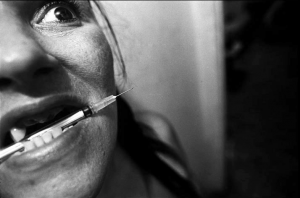
“I was introduced to Cocaine True, Cocaine Blue on my first photojournalism course. The cover captivated me – a woman staring into a distance with desperate eyes and a syringe held tightly between her teeth – as if it were the last moment of her life and the syringe was her only possession. I was disturbed and intrigued.
Cocaine True, Cocaine Blue documents inner city America during the 1980s, lives consumed by drugs, poverty and gangs, rather like the crime drama The Wire. I’ve always been drawn to work which explores the ‘other side’ of society, requiring the photographer to get under the skin of their subject yet remain impartial, something only possible with patience, respect, tenacity and courage. I was fascinated by how Eugene Richards, being a white man, had gained such trust and done exactly that, allowing him to take such close and personal shots.
Was he wearing an invisibility cloak? How did he do it? How did he develop the relationships? The book redefined the meaning of photojournalism to me – it raised the bar. The term is often overused and the story badly told, but not this time.
Picture after picture captivated me, telling me a story and leaving me haunted. I realised that a great photographer not only becomes invisible to their subject but presents their work with a respect and dignity.
If a great picture is a thousand words, this is a great novel.”
A huge thank you to all who have contributed to the discussion of Avedon’s ‘Observations’. We have compiled an archive of the posts below for future reference and will also be listed under the reading list page.
Please continue to share any links and further chatter around ‘Observations’ as we will keep updating the blog to provide an even better archive of information for future reference.
A book from the shelves of the Coventry University Photography library:
Matt Johnston will be discussing this book, among others, with students in a Photo Book Club meeting next week
Border Film Project, Photos by Migrants and Minutemen on the US – Mexico Border
Rudy Adler, Victoria Criado, Brett Huneycutt
Abrams 2007 Amazon UK Link
Border Film Project, Image - Pete Lord
Not only is this a great example of how a photography book can be powerful, emotive, challenging and important, but all without a trained photographers image present. Often we forget that many times, your subject is the best person to tell the story. – Matt
“We handed out six hundred disposable cameras to two groups on opposite sides of the U.S – Mexico border – undocumented migrants crossing the desert and American Minutemen volunteers trying to stop them” – Border Film Project
Shortly after our first post on Avedon’s ‘Observations’, Katja Anderson got in touch to offer her own contribution to this months book, and we are really pleased she did: below is Katja’s piece which offers background, comment, deconstruction and a few ‘behind the scenes’ facts, a great read. (Don’t have a copy of ‘Observations’? – Take a look at our video)
Katja Anderson – Richard Avedon’s ‘Observations’
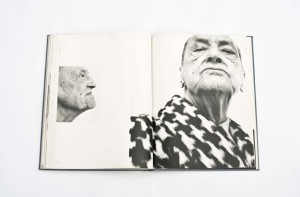
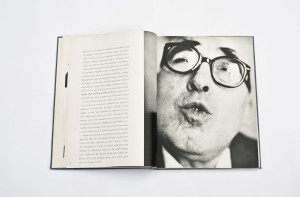
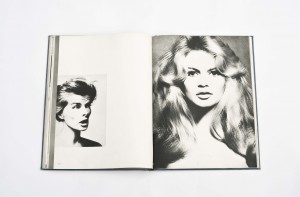
In 1959, lovers of photography and popular fiction alike were eagerly awaiting the publication of Observations, a collaborative effort between Richard Avedon and Truman Capote. Avedon had taken the photographs, all portraits, an interesting departure for a man known primarily as a fashion photographer. Capote, an old friend, was asked to write the text, while Alexey Brodovitch, then the former art director of Harper’s Bazaar and the man who had made certain Avedon would work for the publication, was responsible for the layout and cover art. It was an interesting time for anyone associated with Harper’s Bazaar, which included Capote. While never a staff writer, he had written an article when in his early twenties, a relatively obscure writer of short stories. The fiction editor had sent him to New Orleans, accompanied by Henri Cartier-Bresson. Capote commented: “I’ve never worked so hard and I never want to again.”
Harper’s Bazaar had some of the most talented people in the business on the masthead, ranging from Brokovitch to the brilliant editor-In chief Carmel Snow; Avedon later claimed that everything he knew he had learned from her. She hired him, Brodovitch having sung his praises. Avedon was twenty-two, a high school dropout who served his country during World War II by working as a photographer, using his Rolleiflex (a going away present from his father) to take one I. D. photograph after another for two years. After returning to New York, he enrolled at the New School, where he was taught by Brodovitch. Brodovitch, struck by similarities between Avedon’s work and that of Martin Munkasci, an eminent photographer on the Harper’s Bazaar payroll. It was the real reason Carmel Snow hired him. Both men depicted models smiling, laughing, exceptionally energetic, constantly in motion (as Avedon himself was).
Diana Vreeland was another brilliant member of staff, a fact that understandably evaded Avedon when they first laid eyes on one another. As he recalled many years later: “Vreeland returned to her desk, looked up at me for the first time and said, ‘Aberdeen, Aberdeen, doesn’t it make you want to cry?” He continued with: “Well, it did. I went back to Carmel Snow and said, ‘I can’t work with that woman. She calls me Aberdeen.’ And Carmel Snow said, ‘You’re going to work with her.’” It was the beginning of a forty-year professional relationship, as well as a close friendship. Avedon and Vreeland inspired the Audrey Hepburn film Funny Face, Dick Avedon hired as adviser, helping Fred Astaire portray his alter-ego Dick Avery.
That was in 1956; the film was released the following year. Avedon and Capote had been friends for years (“Dickiboo”). Near-exact contemporaries, both attained
fame early, Capote with his bestselling first novel, Avedon as a photographer, sufficiently well known for Life magazine to publish page after page of his portraits of Broadway stars, referring to him by surname. But the photographs were lacklustre. Good enough for a widely circulated magazine aimed at the average American, but not Avedon. By the early Fifties, his style had changed dramatically by eliminating every superfluous detail, as well as exploiting the Rolleiflex, capable of producing “a hallucinatory sharpness.”
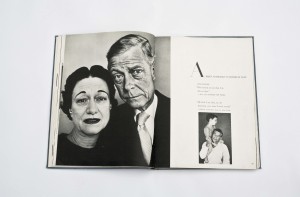
Avedon was as driven, as intense as Capote was relaxed. He continued to work on portraiture, placing subjects against a background of medium or lighter hue. By 1957, if not earlier, he had become skilled at saying exactly the right thing to elicit an emotional response. Everyone, particularly celebrities, wore masks in public and Avedon was determined that the masks would, if not fall off completely, at least slip. His portrait of Marilyn Monroe exposed a lost, vulnerable woman, oblivious to her blonde beauty and highly sexual presence. Perhaps the expression was fleeting, perhaps not, but the challenge for Avedon was to capture it on film as quickly as possible, not to mention eliciting it; while Avedon sought to have good relationships with his models, even taking the trouble to discover the food and music they liked, a celebrity sitter was a very different matter. Usually, there was no relationship between celebrity and photographer, and while Avedon which buttons to press as far as the models were concerned (he tended to use the same models over and over) there was no such luxury with a stranger, no matter how famous. Sessions were brief, about ten minutes long, so Avedon would ask a provocative question. Or make a statement certain to elicit an emotional response. While photographing the Duke and Duchess of Windsor, he casually mentioned a taxi driver hitting a dog earlier. The masks slipped, if only for a moment; Avedon clicked away on the Rolleiflex and revealed the Windsors as the sad, tired couple they had become.
Brigitte Bardot was another matter, merely looking at the viewer, too characteristically languid to be surprised. Marella Agnelli was positively tranquil, serenely gazing into the camera, the only sign of life in her limpid, faintly glowing eyes. Including her portrait in Observations was surprising, as was that of American social figure Barbara ‘Babe’ Paley. Both Marella and Babe were best known to those who read fashion magazines and gossip columns. And there was little room to spare in the book; images fought for space. By 1959, Avedon had such an impressive body of work (in terms of quality as well as quantity) that rejection was rather more common than inclusion. As Brodovitch was responsible for the layout, one suspects he advised his former protege. One suspects, too, that Capote pressed for the portraits of Marella and Babe (two of his closest friends) to be chosen. A travel diary kept by a seventeen-year-old Grand Tourist inspired his text, likening the women to swans. A lovely, exceptionally graceful image, but one reads on. Thanks to a wealthy man, “…a husband, a father”, these women created an illusion of beauty, the ‘swan illusion’, a substitute for the real thing, so powerful, so convincing that everyone who lays eyes on the swans is convinced as well. A backhanded compliment if there ever was one, but one with more than a grain of truth, as is the case with many observations.
The Photo Book Club’s Matt Johnston is currently residing in the Midlands, England, and so making use of the excellent photography section in the Coventry University library. Starting shortly, Matt will be posting some of the books found on the shelves of the library along with a brief synopsis under the headline and hashtag #fromthelibrary. As well as this online post, Matt will be meeting with students and holding informal discussions on these books, and the various books that students will bring to the sessions.
As with everything on the Photo Book Club we would love to get your thoughts and discussion on the books. You can use the hashtag #photobc on Twitter, or use the comments section below this post.
And if you want to see one of the #fromthelibrary books given a thorough look by the Photo Book Club and community, let us know!