Categories
CLOSER LOOK COMMENTS GUEST POST INVISIBLE CITY

Ken Schles On: How ‘Invisible City’ came to be

How did ‘invisible City’ come to be?

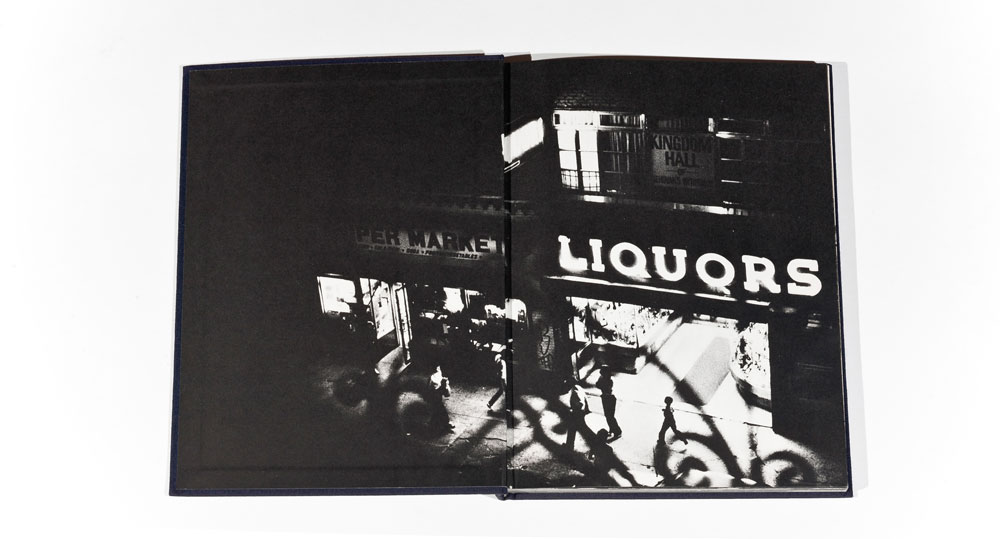
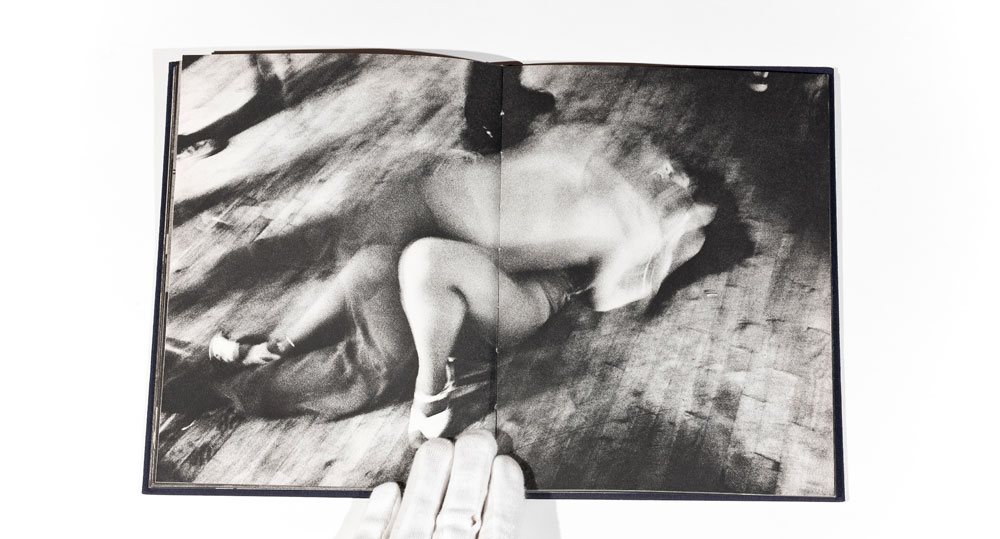
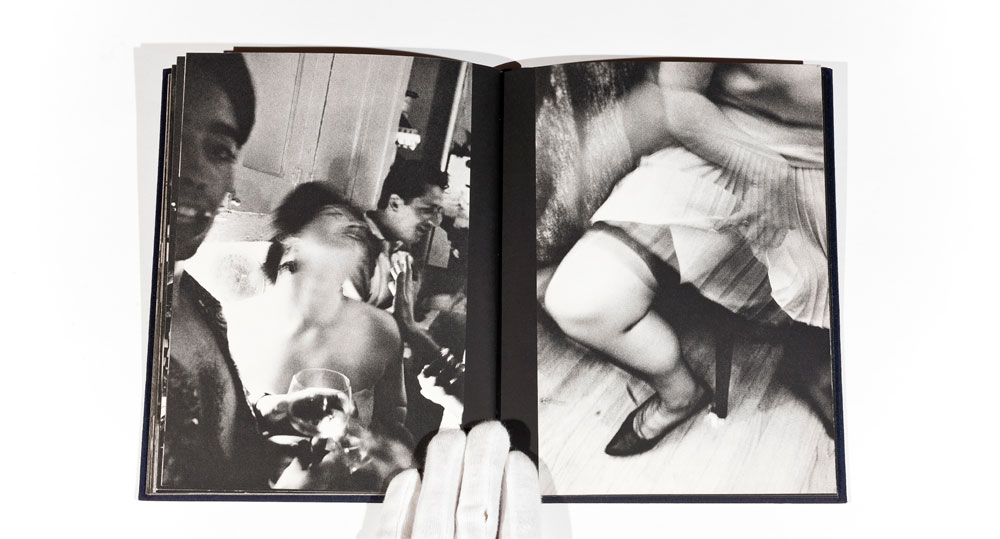
It was a force of will. I think books are like that. I made Invisible City because I had to. I saw myself in a particular place at a particular time that wasn’t being looked at, simply wasn’t a part of the consciousness of the world ‘out there’ at the time. It was an intense period and depicts my life in that unforgiving place: NYC’s East Village/Alphabet City in the mid-1980’s. It was a hotbed of sociological and cultural phenomena that eventually became significant to the larger world: the downtown art scene, performance art, punk rock, hip-hop, the no-wave movement, squats, gay-rights, AIDS. It was the last pre-internet underground cultural scene in the United States. And I was coming of age.
©KEN SCHLES

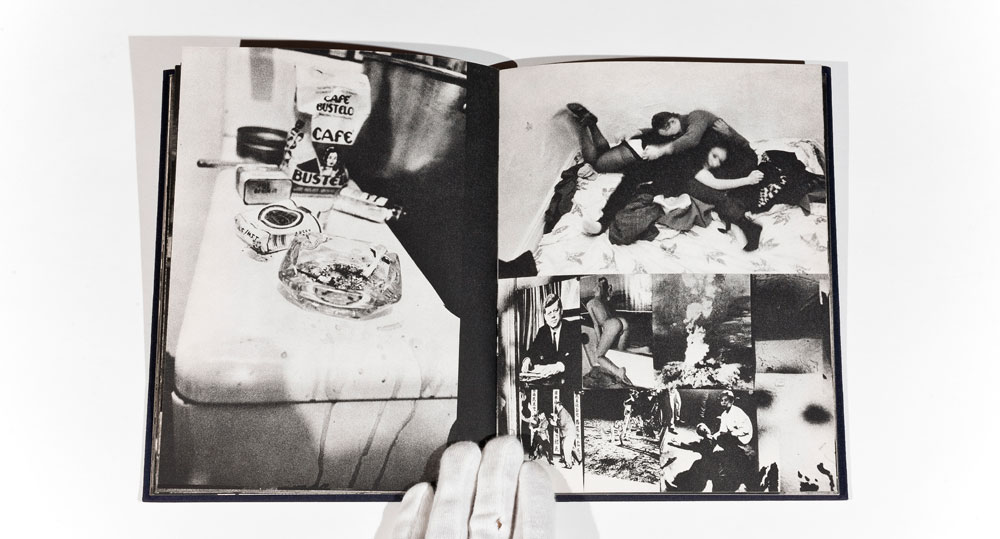
In 1982 I graduated from art school. I found myself destitute in the heroin trade center for the planet—but felt lucky enough to find an apartment in what a few years later became an abandoned building—only it wasn’t really abandoned. There were many people living there—whole families, artists, couples, all sorts of people. It was the landlord who walked out on us. I remember that cold winter I was sequencing the images for Invisible City: there was a fire that destroyed the electrical controls for the boiler and we were having a kind of war with junkies who were using an apartment in the building as a shooting gallery. But that was later on.

When I was shooting Invisible City I was keenly aware of the rich history of photography in New York City: Jacob Riis, Lewis Hine, Weegee, Bernice Abbott, Louis Fauer, Helen Levitt, Roy DeCarava, William Klein, Robert Frank, Diane Arbus, Garry Winogrand, Lee Friedlander, Joel Meyerowitz’s early street work. And I recognized that legacy all around me. I saw it in the buildings and the sidewalks. These were the same hallways, the same streets, same tenements, sometimes seemingly the same faces in the crowds, the same freaks in the park that I saw in those photographs, but my view of it all was very different. Physically there were incredible similarities, but the physical content had a different significance to me. Having grown up in New York and being the son of someone who grew up in New York, I realized just how different the mythos surrounding New York City played to people of different generations.
©KEN SCHLES

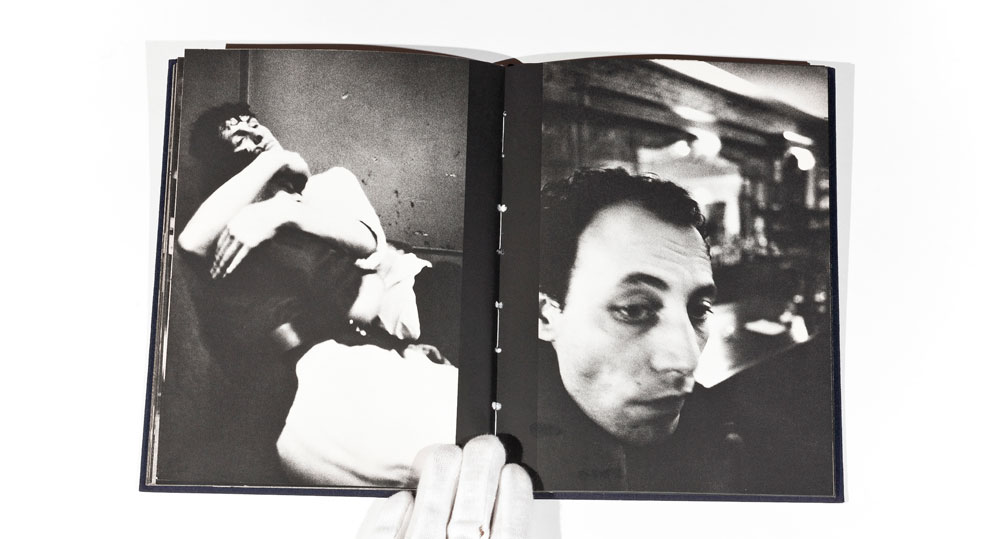
You can only begin to know a place at a particular time and from a particular perspective. And you are, for the most part, isolated in that place and locked into that specific time. I recognized my invisible city. I saw the truth in it. The book is a love story about the place I found myself in. And it features many pictures of the person who eventually became my wife, so there is a romance in there as well. But the world and the images are not simple or one-dimensional. The depiction is complex, perhaps a little obscure and frankly, somewhat dark. I moved with some friends from high school to the East Village in 1978, a year after the black out and the riots. I was 17 and starting on my own—I just got into Cooper Union, an art school down in the Village. Those were the ‘Taxi Driver’ days. People were dying on the streets, victims of self-abuse and addiction, victims of violence. And then in the early 80’s friends started getting sick and dying of aids. And then there was this craziness to the abandon we were feeling and trying to make sense of. We were children and we had reign of the decay of the city. It was a world my friends and I embraced as our own.
©KEN SCHLES

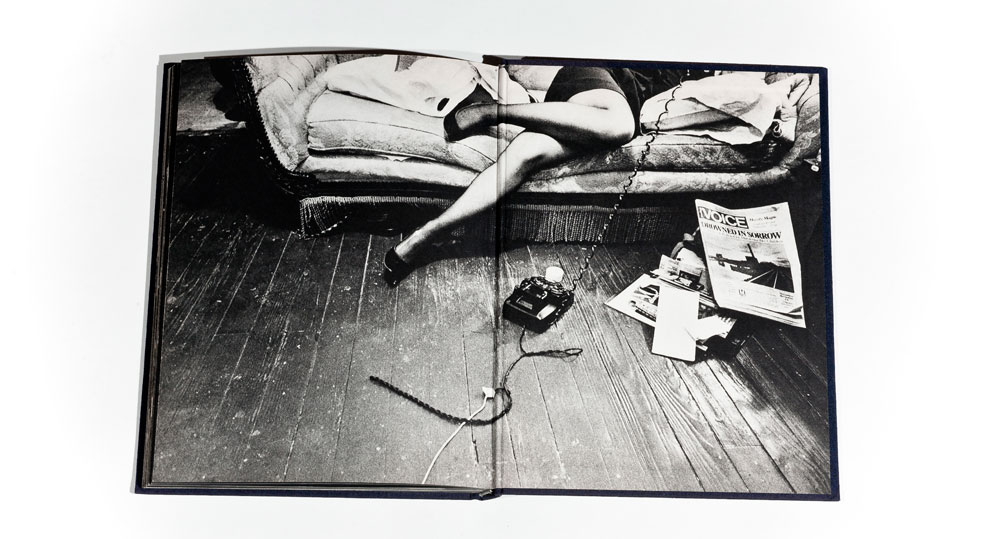
I titled my book Invisible City after Italo Calvino’s amazing book Invisible Cities. His book is a fictional encounter between Marco Polo and Kubla Khan. Polo tells the Khan of cities within his vast empire—an empire so large that the Khan knows nothing about its composition. The descriptions turn to allegory or fantastic creations of the imagination. The emperor knows nothing of the reality outside the impenetrable walls of his palace and knows not whether to believe Polo’s tales or not. I was Marco Polo to the impenetrable world’s Kubla Khan.
©KEN SCHLES

I tried every publisher I could think of to publish the book. But it didn’t fit the mold at the time: it wasn’t a monograph devoted to a specific dead photographer tastefully done with large white borders in a coffee table format. It was dark and small and full bleed. I had no gallery to back it, no museum show to sell it through. No book tour. I was in my 20’s. I didn’t have a history that could be banked on: no gallery outside of the East Village would take me; no publisher would publish me: “Who do you think you are that you want to publish a book?” “Who wants to look at that?” And then Jack Woody picked it up after my anonymous drop. Late one sweltering summer night he called and spoke to me in his slow, deep and commanding voice: “Is this Ken Schles? I’m Jack Woody. I want to publish your book. It’s so depressing.” By then he was my last best hope really. By the time he called, I had nearly given up. And so, Jack Woody (publisher of Twelvetrees Press and later Twin Palms) just put it out there. No promotion, really. I guess he didn’t care if it sold or didn’t, he just wanted to make it happen. Strange that. But then, in those days, two thousand copies wasn’t such a great risk.
– Ken Schles

Categories
COMMENTS GUEST POST INVISIBLE CITY REFLECTION

Jeff Brouws on ‘Invisible City’, a personal reflection

Our sincere thanks to Jeff Brouws, photographer and author of ‘Approaching Nowhere’ and ‘Twentysix Abandoned Gasoline Stations’ amongst others, for offering this personal reflection on Ken Schles’ ‘Invisible City’.

Ken Schles Invisible City was a lonely, cold toned poem to the urban night, capturing equally the alienation of those unsanctified city spaces while simultaneously calling forth the glee of anonymity and free flight found only on the street. The size of the book was perfect, the design perfect, and its printing perfect: matt, coal-black, sheet-fed gravure. Bleed upon bleed: images interrupting and overflowing onto, and into, one another.

©KEN SCHLES

This was a fragmented, elliptical narrative. With tenderness sprouting on one double spread, and bouts of cold-hard fucking amongst the decay on another. Blighted beauty. Naked nightscapes. Unkempt, dimly lit details of fast and forlorn self-pleasure make themselves known. Revelations pour down from our daily stage production, the audience a lone camera. Metonyms and metaphors for all that ail humanity.

This was a grainy, lens wide-open, manly photography: when a fellow had to know how to push film. Had to know the proper darkroom alchemy in which to conjure and coax delicate, thinly sliced images from cooked celluloid.

©KEN SCHLES

A bit of William Klein, Meatyard and Brassai. R. Frank roaming internal America instead of its hinterlands. A Tom Waits tune or Bukowskian turn-of-phrase made visual; the threat of the acrid, hot city beckoning, or blowing itself up, or perhaps imploding. Who knows in all that darkness?

Schles’ Invisible City photos hold all tension and dance with it. We catch our breath for the briefest of moments and then seek solace in movement again.


– Jeff Brouws


Categories
COMMENTS HISTORY INVISIBLE CITY

Ken Schles’ ‘Invisible City’ Lecture Notes from 1990

I received an email this morning from Ken with the following message regarding his lecture notes form 1990. The notes can be enlarged by clicking on the images. Thanks again to Ken for openly sharing this with the Photo Book Club.

Dear Matt,

Just wanted to send this. I found my original lecture notes for IC for a talk that I gave in April, 1990 at The International Center of Photography—over twenty years ago. I was 29 then. Now I am 51. Reading it, I feel it still rings true. I think other people might be curious to read and I am happy to share it.

Ken

Page 1

Page 2
Extract from 'Blood and guts in High School' ©KATHY ACKER


Categories
COMMENTS GUEST POST INVISIBLE CITY

Jn-Ulrick Desert on ‘Invisible City’, a personal reflection

The following is a personal reflection on this month’s book ‘Invisible City’ by Ken Schles. If you would like to add your own personal reflection from seeing the book for the first time. Email us mail@photobookclub.org

I have selfishly carried my copy of this wonderful book with me 3000 miles to my new home in Europe, since 10years now. I knew the work was beautiful then and i had no idea (youth) that that landscape (including the people) captured so artfully by Ken’s vision would morph or fade away- it now seems like a tsunami has hit what we all called home turf (east-village)- New York let alone the USA is indebted to Ken to have captured such a seminal period of American history so well (and i remind everyone that the book is a mere tip of the iceberg which he chose to reveal). I understand (and can see) that this book has influenced videos and films such as Pi (π) which is well worth seeing. Indeed I remember Newmath gallery and Mario and Craig Coleman and an atmosphere that I sometimes see only vaguely echoed here in Berlin (perhaps that is why i live here now- trying to re-enter Ken Schles’ Invisible City)

– Jn-Ulrick Desert

Categories
BOOKS COMMENTS INTERVIEW INVISIBLE CITY

Put your questions to Ken Schles on the Photo Book Club

Throughout September we will not only be looking at Invisible City, but we will be hearing from its author Ken Schles who will not only be giving us a unique insight on how the book came to be, but also answering questions from Photo Book Club readers on the book, his practice and anything else that you would love to ask one of the most important photographic minds working today.

[customcontact form=2]

Pop any questions to us via the comments section above, our Facebook page, using the #photobc hashtag on Twitter, or using the form below. We will collate questions and out them to Ken in September.

If you have not seen the book, it is online in it’s entirety right here

Categories
COMMENTS GUEST POST

Aya Takada on Cafe Lehmitz

Our thanks to Aya Takada fro producing this text on Anders Petersen’s Cafe Lehmitz which is featured here in both a Japanese and English translation. As well as checking out her website, you can follow Aya Takada on Twitter.

It is in the photo exhibition “Rat Hall Gallery” in Tokyo in 2007 that I first met Cafe Lehmitz. The first impression I saw reminded me of the book jacket from ‘Weegee’s people’, the production and typography were splendid. However it is the latest Cafe Lehmitz by Schirmer/Mosel that exists in my hands now.

If the book is opened, it is possible to put your own body to Cafe Lehmitz.

“It seems this is not work that a young person produced.”
There are times when you hear that kind of opinion, but on the other hand, it is through a young photographers eyes that this very pure and straight style could emerge. It seems like a conventional approach was chosen, simple and lacking in sensational images with a rustic feel.  The work is not dissimilar to that of Daido Moriyama in this respect.

©ANDERS PETERSEN

The characters are seen not as supportive as if the heart and mind, body and mutual support the body, sometimes they show a winsome look for the photographer, and
with each passing page, the subjects seems gradually to release themselves to Petersen. I feel a deep affection for the subject from the photographer.
I feel a line of vision near the sense that parents watch the child in a word to which family’s photo album is concluded. This will be able to be seen from the portrait of the photographer in the back book cover. The family is indispensable for Cafe Lehmitz.

©ANDERS PETERSEN

You might also understand the reason why this book keeps being resold as many as ten times, and being loved well.

Cafe Lehmitz is one book that a young photographer must see.

– Aya Takada


わたしが、Cafe Lehmitzに出会ったのは、

2007年東京のラットホールギャラリーで行われた写真展です。
ここから出版されたCafe Lehmitzの最初の印象はまさしく「日記帳」でした。
「Weegee’s People」のブックジャケットと似たタイポグラフィーを使った見事な演出。
しかし、現在、私の手の中にあるCafe Lehmitzは、「schimer/mosel」の最新版です。
中身を開けば、Cafe Lehmitzへ自分の身を置く事が可能です。

©ANDERS PETERSEN

「青年の撮影した写真ではないようだ。」
そのような意見を屢々聞くことがありますが、むしろ、まだ写真を始めて間もない若い写真家であるから完成できた作品群であると感じます。
とても純粋でありストレートな写真が多く見られます。
それは、写真の古典的なスタイルのようです。
センセーショナルな印象は少なく、とても素朴さを感じます。
森山大道に代表されるような(または筆者の後期の作品郡に近いような)、撮影時や暗室内での「マジック」をこの本で見ることはありません。

写っている人々は心と心を支え合うようかのように、肉体と肉体を支え合い、時折、写真家に対して愛嬌のある表情を見せることもあります。
ページを追うごとに、徐々に被写体は写真家に心を解放しているように見えます。
撮影者から被写体に対しての深い愛情を感じます.。
家族のフォトアルバムが完結されたような、つまり親が子を見守るような感覚というものに近い目線を感じます。
したがって、背表紙の著者のポートレートは、この本になくてはならない一枚であるように思えます。

©ANDERS PETERSEN

皆さんも、この本が10回も再販され、愛され続けている理由がよく分かるでしょう。
若い写真家にぜひ見て欲しい一冊です。

高田 彰

Categories
COMMENTS GUEST POST

Aggie Morganti on Cafe Lehmitz

Our thanks to Aggie Morganti for getting in touch to share a love of Anders Petersen’s ‘Cafe Lehmitz’.

If anyone wants to continue the conversation with Aggie, you can do so on Twitter, here.

I’ve often wondered what makes Cafe Lehmitz so special to me. It’s not only about its exquisite photography, its visual intensity, its emotive tension running through the edit. That special something is, somehow, a step backwards, hiding in the making itself rather than in the final object.

Anders Petersen - Cafe Lehmitz

I am amazed every time I flip through it by its unique way of being so rich and so poor at the same time. It is rich in all the above mentioned, and poor in pretentiousness. Straightforward, down to earth, honest-to-God report of what had to be reported – and nothing else. The book itself is stripped down to the bare essentials and it only makes me love the fancy title lettering even more, so much that I almost see it blinking on and off as a neon light from a bar would do in the dark of night.

©ANDERS PETERSEN

It’s so transparent you can see through it – or feel you’re there. And the reason why I love it so much is that I have a very personal photographic memory related to Cafe Lehmitz (I’ll be brief – promise).

So, I was around 20 and I had just started to discovery what you could do with documentary photography in terms of storytelling and powerful narratives. It was a gloomy afternoon in December, in Lucca, and I was attending photojournalist Massimo Mastrorillo’s workshop on such matters.

©ANDERS PETERSEN

To provide us with guidance and advice, he had brought some of his favourite photobooks with him (and many of them would also become a pick of my favourites later on, such as Billingham’s Ray’s a Laugh or Telex Iran by Gilles Peress). The table was literally flooded with wonderful things, and I remember this little, black and white white compact book striking me straight on. Cafe Lehmitz was special to him as well, for Massimo’s main advice to us was to follow what really means to us in our photography. To follow what literally grabs your heart and your stomach and does not let you go, to photograph what you love, in any possible way.

So, as I have tweeted before – this is what I’ve always found in Cafe Lehmitz from that moment on. Love, warmth of heart, being human, humble and true. That’s what I like about it and what I think of every time I start doing something photographic.

– Aggie Morganti

Categories
CLOSER LOOK COMMENTS INDEPTH

Cafe Lehmitz, InDepth by Wayne Ford

In 1968 Swedish photographer Anders Petersen walked into Café Lehmitz, a bar located on the Reeperbahn, the red light district of Hamburg. Sitting down at a table with a beer, the photographer was soon engaged in conversation with a young man, his camera sitting on the table top, when he got up fro the table to use the menʼs room, Petersen left his camera on the table, and when he returned from he found the barʼs clientele
photographing one another.

©ANDERS PETERSEN

Seizing the opportunity, Petersen asked if he too could photograph the bars clientele; a
mixture of sailors and dock workers, strippers, prostitutes and their pimps, along with poets and small time criminals; all of whom occupy the fringe of society, and signalling the beginning of a project that would occupy him on and off for the next two years.

©ANDERS PETERSEN

In the raw and gritty black-and-white images, that have now become a signature of
Petersenʼs oeuvre, we experience in Café Lehmitz, not a voyeuristic view of this
atmospheric, smoke filled world, but a collaborative visual dairy. Petersen has fully
integrated himself into the Café Lehmitz family, with it becoming a new home.

©ANDERS PETERSEN

Whilst this work is often graphic, even brutal at times, it is a very intimate and sensitive
work, with Kate Bush, curator of the Barbicanʼs ʻIn the Face of history: European
Photographers in the 20th Century,ʼ an exhibition which included the Petersenʼs series,
describing Café Lehmitz as a ʻZeigeist book,ʼ she continues, ‘It has a powerful identity and is totally of the moment. But Petersen is also important because he was very much a
participant in the social life he was documenting. His work has that integrity of engagement that great personal reportage requires.’

– Wayne Ford

Categories
COMMENTS REFLECTION

Cafe Lehmitz, a personal reflection by Matt Johnston

The following is a personal reflection from Matt Johnston on his first viewing of Cafe Lehmitz, if you have a reflection you would like to add, then do so in the comments below or email mail@photobookclub.org

I should have first seen Cafe Lehmitz back at university when my tutor suggest I see Petersen’s view of a single beer house in Hamburg for inspiration. I have to confess i didn’t see it then (sorry Jonathan!) as I was quickly distracted by the bright lights, ball parks and endless roads of American photography.

©ANDERS PETERSEN

And so my first viewing of ‘Lehmitz’ was only a month ago. The raw power of the striking, rich-black images grabbed me straight away, but it was the refreshingly honest and simple premise of the story that most appealed. I loved the idea I was seeing someone who first came as a visitor and soon became embraced by the seemingly dysfunctional family he depicted.

©ANDERS PETERSEN

I would never had made the images Petersen made here, and I don’t know many photographers who would have. The technical skill can be taught, but the way he went about gaining trust, meeting people and producing this ‘family album’ is something only Petersen knows.

– Matt Johnston


Categories
COMMENTS

Technical proficiency in Cafe Lehmitz – Stan Banos

Thanks to Stans Banos of ‘Reciprocity Failure‘ who commented this week on the technical proficiency Petersen demonstrates with the 35mm images in Cafe Lehmitz.

Banos pointed to several other artists who have captured moments under available light in a similar fashion, the comments, and a selection of images are shown below.

Stan Banos
Something that rarely, if ever, gets mentioned is that one of the reasons that Cafe Lehmitz remains so powerful and poignant to this very day is that the technical proficiency of the work alone is simply incredible. Early on, it really set the bar for what “availble light” work could aspire to be at its very pinnacle with a simple 35mm camera- and it was rarely duplicated in the years since…

Matt Johnston
Stan, you are absolutely right, the technical proficiency Petersen shows in Lehmitz is something i must say i overlooked on my first looks through the book. I would be keen to hear some of the projects you think have come close to the Lehmitz standard? I would suggest Invisible City by Ken Schles (which we look at in Sept) is another groundbreaking ‘available light’ piece of work.

Stan Banos
Good question. First off, it’s much easier to get top quality available light (ie- just enough existing light to record a worthwhile image) work today with full frame digital sensors. And although I can’t think of any (film) projects offhand of that particular (technical) quality that involve the sole use of available light photography, I’m sure they must exist. Admittedly, I’m not a great fan of available light work since 35mm by its very nature is pushing the limits of technical quality under the best of circumstances. That said, Henry Wessel’s 35mm prints (although not “available light”) are some of the most technically amazing and pristine wonders that can compete with any format for sheer technical (and aesthetic) beauty. And you need not go further than Cocaine True, Cocaine Blue to sample top notch work that features a considerable amount of available light work.

The work by Ken Schles has a different, more dreamy like aesthetic than Cafe Lehmitz that more closely resembles the work by another exemplary available light photographer, Michael Ackerman.


Anders Petersen

©ANDERS PETERSEN
©ANDERS PETERSEN
©ANDERS PETERSEN

Eugene Richards

©EUGENE RICHARDS
©EUGENE RICHARDS
©EUGENE RICHARDS

Michael Ackerman

©MICHAEL ACKERMAN
©MICHAEL ACKERMAN
©MICHAEL ACKERMAN

Ken Schles

©KEN SCHLES
©KEN SCHLES
©KEN SCHLES

We looked at Eugene Richards’ ‘Cocaine True, Cocaine Blue’ a couple of months back, the archive can be found here

And we will be looking at Ken Schles’s ‘Invisible City’ in September, so plenty of food for thought here!

– Matt Johnston