Categories
BOOKS COMMENTS INVISIBLE CITY REFLECTION

Matt Johnston on ‘Invisible City’, a personal reflection

The first thing I said upon seeing the ‘Invisible City’ in it’s entirety was simply, “wow”, unfortunately at the time I was across the table from Ken Schles himself who had kindly agreed to lend the Photo Book Club a copy. It was a ‘Frasier-like’ moment when I really wished I had something more intelligent to say.

I also wished that I had a memory of this time and place depicted in such dark tones within Ken’s images, I wanted to layer my own history onto Ken’s page and relive a particular time through different eyes. But I have no memory of Ken’s subject and so Invisible City was new for me, allowing me to search without reference and without the worry of reality or history. It was like reading a book as a kid, each character would come to life and create a movie in my mind. There are books in which the authorial presence is constant and reassuring, in Invisible City I felt I was left alone to wander and explore Alphabet city, a fascinating, daunting, exciting and entirely unfamiliar place to be.

To me, Invisible City is not just a poem to the night (As Jeff Brouws commented) but a poem to the book, a reminder of how powerful the book as a medium can be. Single images are erased from my mind as I follow the darkest black tones from page to page, much like a shadow stretching across the entire spread of images. A photobook is a selection of images, and a good photobook is a fantastically sequenced and edited selection of images. Invisible City is just one, single, poetic image.

– Matt Johnston

©KEN SCHLES


Categories
BOOKS INVISIBLE CITY REFLECTION SUMMARY VIDEO

Invisible City: Nightwalk, Fragments and Alternates

I want to thank Matt Johnston and Wayne Ford so very much, once again, for taking on Invisible City. I hope people not already familiar with IC found something here. For me, this month has been a great ride. The Photo Book Club re-connected me to that challenging time—not only to people I once knew but it also reaffirmed bonds with people I’ve known on through into our current challenging times. I want to personally thank those who wrote so eloquently about their memories and the significance Invisible City had for them: Some of you I’ve met in later years and some I still have yet to meet—and look forward to meeting.

I have to say it’s been extraordinarily good timing for me to revisit Invisible City. It gave me insight on current work, as well as old. Because of this Photo Book Club process, I dug out things I barely remembered I even had. It’s help me with talks I am about to give and it was helpful in organizing the Invisible City images to exhibit at the Bursa Photo Festival. And good timing as well as I consider a reprint in the book’s future.

Over the summer I was approached to produce a piece for Paris Photo by Harper’s Books that worked in relation to Invisible City. And because my mind thinks in ‘book’ form, I put together a maquette of images and text I had originally considered for inclusion in Invisible City but that didn’t make it into the original for reasons about tone and emphasis. To this day I still enjoy seeing and reading this other work: they still share essential poetic qualities that infuse the heart of Invisible City; they still speak about that time and my experience of it. And so I made a small companion to Invisible City—Invisible City: Nightwalk, Fragments and Alternates. Because this is a one of a kind, hand-made thing, I videotaped it before sending off to Harper. I am now happy to share this rarity here with the Photo Book Club members to close out the Photo Book Club/Invisible City experience:

Images in this dummy have not appeared previously anywhere (if memory serves me) with the following three exceptions: image on left at the 2:11 mark, image at right at the 4:00 mark and the back cover image all appear in my book, A New History of Photography: The World Outside and the Pictures In Our Heads (plates 61, 35 and 31 respectively). The back cover image is also in the collection of The Metropolitan Museum of Art in New York.

TEXT

This is a hand-made 64 page book prototype (including covers) composed of material I considered for use in the book Invisible City (Twelvetrees Press, 1988). None of these images appear in the final printed version of the book, however. The images here were scanned from original prints used in a book dummy that was a forerunner to Invisible City. The plates used to print Invisible City were also made from this set of original prints. 

The book dummy ends with my original notes for a talk I gave at the International Center of Photography in 1990. The full text, including the excerpt by Kathy Acker, from Blood And Guts In High School, can be seen here.

Other text in this prototype:

NIGHT WALK
Night draws from its body one hour after another. Each different, each solemn. Grapes, figs, sweet drops of quiet blackness. Fountains: bodies. Wind plays the piano among the stones of the ruined garden. The lighthouse stretches its neck, turns, goes out, cries out.
Crystals a thought dims, softness, invitations: night, immense and shining leaf plucked from the invisible tree that grows at the center of the world.

Around the comer, Apparitions: the girl who becomes a pile of withered leaves if you touch her; the stranger who pulls off his mask and remains faceless, fixedly staring at you; the ballerina who spins on the point of a scream; the who goes there?, the who are you?, the where am I?; the girl who moves like a murmur of birds; the great tower destroyed by inconclusive thought, open to ,the sky like a poem split in two … No, none of these is the one you wait for, the sleeper who waits for you in the folds of her dream.

Around the corner, Plants end and stones begin. There is nothing, nothing you can give the desert, not a drop of water, not a drop of blood. You move with bandaged eyes through corridors, plazas, alleys where three vile stars conspire. The river speaks softly. To your left, to your right, ahead, behind: whispers and cruel laughter. The monologue traps you at every step with its exclamations, its question marks, its noble sentiments, its dots over the i’s in’ the middle of a kiss, its mill of laments, its repertory of broken mirrors.
Go on: there’s ‘nothing you can say to yourself.
– Octavio Paz, from Eagle or Sun?

Remember when I insulted you? When I vomited all over you?
And when you had to see with these eyes that never close how I slept with that vile hag and talked of suicide? Show me your face,
Where are you? Actually, none of this matters to me. I’m tired, that’s all. I’m sleepy. Don’t these endless discussions tire you?
It’s as if we were a couple who, at five in the morning, with swollen eyes, continues on the rumpled sheets a quarrel started twenty years ago. Let’s go to sleep. Say good night. Show a little courtesy.
You are condemned to live with me and you ought to force yourself to make life more bearable. Don’t shrug your shoulders. Be quiet if you want, but don’t go away. I don’t want to be alone: the less I suffer, the more unhappy I am. Maybe happiness is like the foam of the painful tide of life that covers our souls with a red fullness. Now the tide recedes and nothing remains of that which made us suffer so. Nothing but you. We are alone, you are alone. Don’t look at me. Close your eyes so I can close mine. I can’t get used to your eyeless watching.
– Octavio Paz, from Eagle or Sun?

Memory is redundant: it repeats signs so that the city can begin to exist.
– Italo Calvino, from Invisible Cities

“The necessary condition for an image is sight,” Janouch told Kafka; and Kafka smiled and replied: “We photograph things in order to drive them from our minds. My stories are a way of shutting my eyes.”
– Roland Barthes, from Camera Lucida

At this point Kublai Khan interrupted him or imagined
interrupting him, or Marco Polo imagined himself
interrupted, with a question such as: “You advance
always with your head turned back?” or “Is what you see always behind you?” or rather, “Does your journey take place only in the past?”
– Italo Calvino, from Invisible Cities

Mind takes form in the city; and in turn, urban forms condition mind. For space, no less than time, is
artfully reorganized in cities: in boundary lines and
silhouettes, in the fixing of horizontal planes and
vertical peaks, in utilizing or denying the natural site, the city records the attitude of a culture and an epoch to the fundamental facts of its existence.
– Lewis Mumford, from The Culture Of Cities

Even when lovers twist their naked bodies, skin against skin, seeking that position that will give one the most pleasure in the other, even when murderers plunge the knife into the black veins of the neck and more clotted blood pours the more they press the blade that slips between the tendons, it is not so much their copulating or murdering that matters as the copulating or murdering of the images, limpid cold in the mirror.
– Italo Calvino, from Invisible Cities

I don’t believe people exist whose inner plight resembles mine; still, it is possible to imagine such people—but that the secret raven forever flaps about their heads as it does about mine, even to imagine that is impossible.
– Franz Kafka, from Diaries 1914-1923

Categories
COMMENTS GUEST POST INVISIBLE CITY

Steve Pyke on ‘Invisible City’, a personal reflection

Thanks to New York based photographer Steve Pyke for offering his personal reflection on Ken Schles’ ‘Invisible City’

I came across Invisible City in April 1990 in the MoMA bookshop. It made an immediate impression on me. I was enthralled, and bought three copies for friends.

These photographs were of New York City at a time that I knew it, or thought I did. Ken Schles photographed the people and the streets of his neighborhood with such a deep love that he created a poem to those times we knew….if I close my eyes now 25 years on and pull on the memories of those long dark warm nights in the East Side, the images that come to me are Ken Schles’, not my own. This is how powerful Invisible City still is to
me.

– Steve Pyke New York City 2011

Categories
BOOKS

10% Off select Aperture titles for Meet-up Members

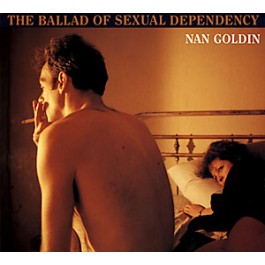
A huge thanks to the folks at Aperture publishing who have kindly offered the Photo Book Club community 10% off select titles, including Nan Goldin’s ‘Ballad of Sexual Dependency’ which we are looking at next month.

This special offer code will be sent to all members of our meet-up community at the beginning of next month. If you are not already part of this, you can add yourself below. And if you do not wish to be a meet-up member but would still like the code, please email Matt here.

[customcontact form=3]


So what books are available to get 10% off?

Nan Goldin, The Ballad of sexual dependency

John Gossage, The Pond

Robert Adams, Summer Nights, Walking

Sally Mann, Immediate Family

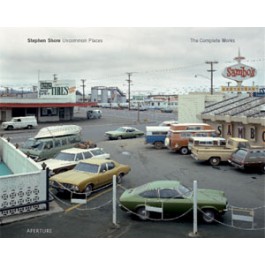
Stephen Shore, Uncommon Places

Japanese Photobooks of the 60’s and 70’s

Fred Ritchin – In our own image

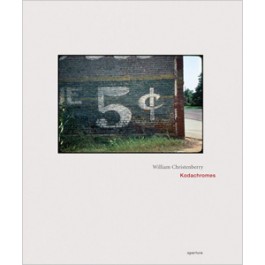
William Christenberry, Kodachromes

Rinko Kawauchi, Illuminance

Bruce Davidson, Subway


Categories
WELCOME

What’s happening on the Photo Book Club?

For those of you that may be just joining us, I thought it an idea to show you around so you can see what we have been up to lately.


This month, we are looking at Ken Schles’ ‘Invisible City’, with Ken himself contributing to the discussion, you can find all posts for Invisible City here. And you can see the other books on our past and future reading list here. If you don’t have a copy of the book, we have two videos, showing the book, and the images, embedded below.

We also had the first official ‘Meet-up’ this month, you can read about it here, and if you are interested in signing up to our meet-up map and notification system, click here. Or if you would like to know the best places to get your photobook-fix in the offline world, then visit our World Map.

If you have any comments, questions, or would like to use our website to share your thoughts on one of our books, leave a comment below, or email Matt Johnston here.


Categories
CLOSER LOOK COMMENTS INDEPTH

Cafe Lehmitz, InDepth by Wayne Ford

In 1968 Swedish photographer Anders Petersen walked into Café Lehmitz, a bar located on the Reeperbahn, the red light district of Hamburg. Sitting down at a table with a beer, the photographer was soon engaged in conversation with a young man, his camera sitting on the table top, when he got up fro the table to use the menʼs room, Petersen left his camera on the table, and when he returned from he found the barʼs clientele
photographing one another.

©ANDERS PETERSEN

Seizing the opportunity, Petersen asked if he too could photograph the bars clientele; a
mixture of sailors and dock workers, strippers, prostitutes and their pimps, along with poets and small time criminals; all of whom occupy the fringe of society, and signalling the beginning of a project that would occupy him on and off for the next two years.

©ANDERS PETERSEN

In the raw and gritty black-and-white images, that have now become a signature of
Petersenʼs oeuvre, we experience in Café Lehmitz, not a voyeuristic view of this
atmospheric, smoke filled world, but a collaborative visual dairy. Petersen has fully
integrated himself into the Café Lehmitz family, with it becoming a new home.

©ANDERS PETERSEN

Whilst this work is often graphic, even brutal at times, it is a very intimate and sensitive
work, with Kate Bush, curator of the Barbicanʼs ʻIn the Face of history: European
Photographers in the 20th Century,ʼ an exhibition which included the Petersenʼs series,
describing Café Lehmitz as a ʻZeigeist book,ʼ she continues, ‘It has a powerful identity and is totally of the moment. But Petersen is also important because he was very much a
participant in the social life he was documenting. His work has that integrity of engagement that great personal reportage requires.’

– Wayne Ford

Categories
BOOKS HISTORY

Cafe Lehmitz – Key Editions and other publications by Anders Petersen

As we have pointed out before, and 5b4 books has commented on, there have been a variety of different editions that form a history of ‘Cafe Lehmitz’ from initial publication in 1979, to it’s latest incarnation from Schirmer/Mosel in 2009. It’s 32 year history marked by a total of 10 editions all listed below.

Key editions of Cafe Lehmitz:

Café Lehmitz; Prestel, 2009
Café Lehmitz; Schirmer/Mosel, 2009
Café Lehmitz; Rat Hole, 2007
Café Lehmitz; Schirmer/Mosel, 2004
Café Lehmitz; Fischer, 2003
Café Lehmitz; Schirmer/Mosel, 1985
Café Lehmitz; Fischer Taschenbuch, 1985
Café Lehmitz; Schirmer/Mosel, 1985 (French edition)
Café Lehmitz; ETC Förlags AB, 1982
Le bistrot dʼHamburg; Contrejour, 1979

As well as Cafe Lehmitz, Petersen has published numerous other successful books, listed below with, wherever possible current links to Amazon or other sources of information have been provided

Gröna Lund; Aman Iman, 2009
Dear Diary; Gun Gallery, 2009
Sète #8; Images En Manoeuvres, 2008
French Kiss; Dewi Lewis, 2008
Roma: A Diary; Zone Attive Edizioni, 2005
Ich Dich Iieben, Du mich auch?; Fotomuseum Winterhur, 2003
Du mich auch; Journal, 2002
Nära avstå/Close Distance, Journal Fölag, 2002
Indicier; Journal Fölag, 1996
Fotografier/Photographs 1966-1996; Journal Fölag, 1997
Ingen har sett alit; Legus Fölag, 1995
Karnevalen i Venedig; ETC Fölag, 1991
Rågång till Kärleken; Norstedts Fölag, 1991
I Mörkrummet; Fyra Förläggare, 1984
Brottsoffer; Pockettidningen R, 1977
En Dag På Cirkus; Bo Cavefors Bokförlang, 1976

Gröna Lund; Fyra Förläggare, 1973

Categories
BOOKS COMMENTS HISTORY

5b4 looks at the editions of ‘Cafe Lehmitz’

Several years ago, Jeff Ladd wrote a fantastic post on the editions of ‘Cafe Lehmitz’ over on the similarly fantastic 5b4 blog. This post, and accompanying comments are of course still relevant now and offer a great insight into changes made between different editions of our book for July.

Click the images below to go straight to the blog post

©JEFF LADD


©JEFF LADD


©JEFF LADD


Categories
EXHIBITION TEXT

The Valley – Exhibition Catalogue

A great resource for those interested in the original words that accompanied ‘The Valley’ as it was first exhibited at the San Francisco Museum of Modern Art.

The interview with Terri Whitlock which was included in the catalogue will be posted separately.

Text owned by SFMoMA and Larry Sultan, found via The Traditional Fine Arts Association
Images added for illustration, ©LARRY SULTAN


The San Francisco Museum of Modern Art (SFMOMA) presents Larry Sultan: The Valley, an exhibition of photographs by Bay Area artist Larry Sultan that looks at the transformation of middle-class suburban homes into stage sets for adult films.
Organized by SFMOMA Senior Curator of Photography Sandra S. Phillips, the exhibition will be on view May 8 through August 1, 2004. A fully illustrated catalogue of the series The Valley will be produced by Scalo Press to coincide with the exhibition.

Featuring fifty-three large-scale, color photographs taken since 1999, The Valley engages many of the themes found in Sultan’s earlier project, Pictures from Home, which was, in part, a photographic investigation into the meaning of home and family. Along these lines, The Valley examines why the ideal of middle-class domesticity lends itself to a most curious form of appropriation-use as a setting for pornographic films. The project also questions the notion of photographic truth, a popular subject of inquiry for contemporary artists.

On recent excursions to the San Fernando Valley, Sultan noticed that ordinary houses in the vicinity were being rented for a few days at a time to be used as sets for adult films. Fascinated by this practice, Sultan undertook his current work not as a meditation on the morality or a sociology of pornography, but as an investigation into what home, work, domesticity, and suburbia mean when used as charged, symbolic backdrops for adult films. Sultan’s complex photographs negotiate the boundary between fiction and truth-they take advantage of the seductive cinematic lighting, yet they also divulge the frayed edges of the set and the boredom behind theatrical personas. In Suburban Street in Studio, a familiar looking street of suburban homes is revealed to be nothing more than a painted stage set. In West Valley #11, Sultan focuses on an exterior wall with a grid of small openings, one of which offers a revealing peek at a reclining woman within.

This ordinary scene, complete with the clutter of a roll of paper towels and a gallon jug of liquid, is dominated by a rich, golden light, adding an air of mystery to the photograph. In Sharon Wild, Sultan captures an actress in a moment of repose between takes. Sultan’s contemplative portraits reveal the working actors behind the film characters in honest off-screen moments of hunger, ennui or fatigue.

Phillips says, “Larry Sultan’s new work is visually stunning. Although nominally about the industry of adult sexual fantasy, the true subject of Sultan’s pictures is how photography is used in the construction of that fantasy-and how it can also function as a critical tool to dismantle those same illusions. Sultan is a leading figure in the Bay Area art community, both as an artist and as a teacher, and we are proud to present his thoughtful work at SFMOMA again.”

Raised in the San Fernando Valley, Larry Sultan studied at the San Francisco Art Institute, and though he has made Northern California his home, his work has consistently engaged the culture of Southern California. His first major work was a collaborative project with artist Mike Mandel, a book of appropriated photographs, Evidence, and a subsequent exhibition organized by SFMOMA in 1977. These pictures came from the files of government agencies, local corporations, and research institutions and, assembled in the narrative format of a book, produced a witty, provocative, and insightful look at contemporary American culture. In 1992 Sultan compiled the book and accompanying exhibition Pictures from Home, which approaches the meaning of family and home through the artist’s own photographs, extensive diaristic writing, family artifacts, and stills from his parents’ home movies. Like The Valley, the photos in Pictures from Home engage ideas of truth, fantasy, and artifice.

In conjunction with Larry Sultan: The Valley, SFMOMA’s Education Department will present Staging Domesticity: The Making of Fiction, on Friday, May 28, 2004 at noon in the Koret Visitor Education Center Lecture Room. In this slide presentation and gallery tour, Terri Whitlock, a curatorial associate in SFMOMA’s photography department, will discuss Sultan’s exploration of the artifice of photography and the construction of middle-class suburban identity.

In addition, an Artist’s Talk with Larry Sultan will be presented on Saturday, June 5, at 2 p.m. in the Wattis Theater, followed by a book signing in the MuseumStore at 3:30. Sultan will be signing copies of Larry Sultan: The Valley, available in hardcover.

Introductory text to the catalogue

Larry Sultan’s most recent body of photographs, The Valley, examines the adult film industry’s use of middle-class houses as stage sets. Sultan first gained access to these sets through an editorial assignment in 1999 and became intrigued by the idea of staging erotic fantasies in such banal circumstances. He does not focus on the sex acts themselves, but instead frames his photographs to include the surrounding architecture and the off-camera activities of the actors and crew.

Sultan lives and works in the Bay Area, but he was raised in the San Fernando Valley in a suburban tract home much like those pictured here. His last major project, Pictures from Home, took his own family as its subject and explored photography’s role in creating a familial mythology. In this new series, Sultan turns to broader questions of domesticity. Glamorous stage lighting cannot conceal the almost unbearable ordinariness of these homes, with their knick-knacks and big-screen TVs, fine-art prints and dining room sets. His pictures beg the question: What is it about these houses and their middle-class decor that makes them suitable settings for projected sexual fantasies?

Although they are nominally about adult films, Sultan’s pictures are also interrogations of the photographic medium itself. He shows how photography can create the illusion of fantasy, and then he uses his pictures to dismantle those same fictions. Lush backyards are exposed as mere painted backdrops; even the beautiful, sexually uninhibited porn stars seem less exotic and more familiar when seen between takes, waiting for makeup or instructions from the director-especially when Sultan catches the actors in moments of contemplation, boredom, and fatigue.

By showing us the places where illusion falls apart, Sultan also calls our attention to the act of looking. A reflection on a sliding glass door, a sofa standing between us and the actors, or a strategically placed vase are all reminders of our status as onlookers, or interlopers. In some cases these obstacles almost completely obscure the scene. Unlike pornography, which is designed to be immediate and uncomplicated, Sultan’s images are complex. Sometimes humorous, sometimes erotic, they reward close examination.
Corey Keller, Assistant Curator of Photography, SFMOMA

Artist Statement

The cast and crew have gathered in the front yard of a ranch-style house, a few blocks from where I went to high school in the San Fernando Valley. Women in six-inch heels sink into the lawn; men push around camera equipment, anxious about losing the light. They are preparing to film a scene in which four blond housewives in a convertible are pursued and overtaken by two men in an appliance-repair van. In the golden afternoon light the neighbors have come out to water their lawns and witness the scene.

It is common for adult-film companies to shoot in tract houses — the homes of dentists and attorneys and day traders whose family photographs can be seen in the background, and whose decorating tastes give the films their particular look. It’s as if one family went on vacation for a few days, leaving everything in the house intact, and another family, an odd assembly of unrelated adults, has temporarily taken up residence. While the film crew and talent are hard at work in the living room, I wander through the house peering into the lives of the people who live there. I feel like a forensic photographer searching out evidence.

In these films, lazy afternoons are interrupted not by noisy children but by the uncontrollable desires of delivery boys, baby sitters, coeds and cops. They crowd in the master bedrooms and spill out onto the patios and into the pools that look just like our neighbors’ pools, like our pool. And by photographing this I’m planted squarely in the terrain of my own ambivalence — that rich and fertile field that stretches out between fascination and repulsion, desire and loss. I’m home again.

Categories
Uncategorized

#fromthelibrary 4 Tom Wood – All Zones off Peak

As a bonus book from the shelves of Coventry University’s library I found this little gem – Tom Wood – ‘All Zones off Peak’. Well worth a look over the summer break, and much more to look at if you like this one!

“All Zones Off Peak is an extraordinary book. Wood has spent over fifteen years and shot over 3,000 rolls of film photographing Liverpool and its people from a bus. Visually stunning and dramatically revealing it is a body of work of immense power.”

“As good a set of photographs as one sees every five or ten years – if you’re lucky”
– Lee Friedlander