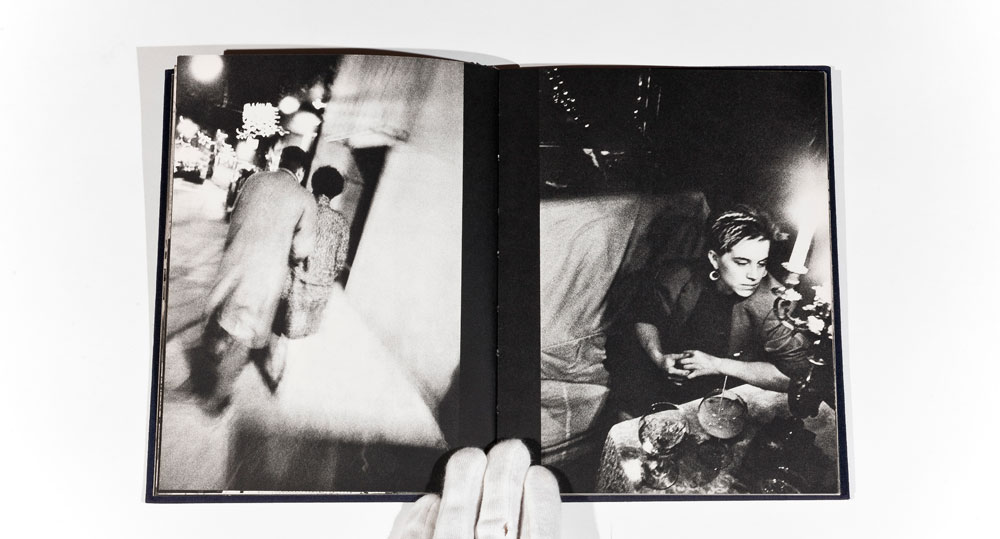
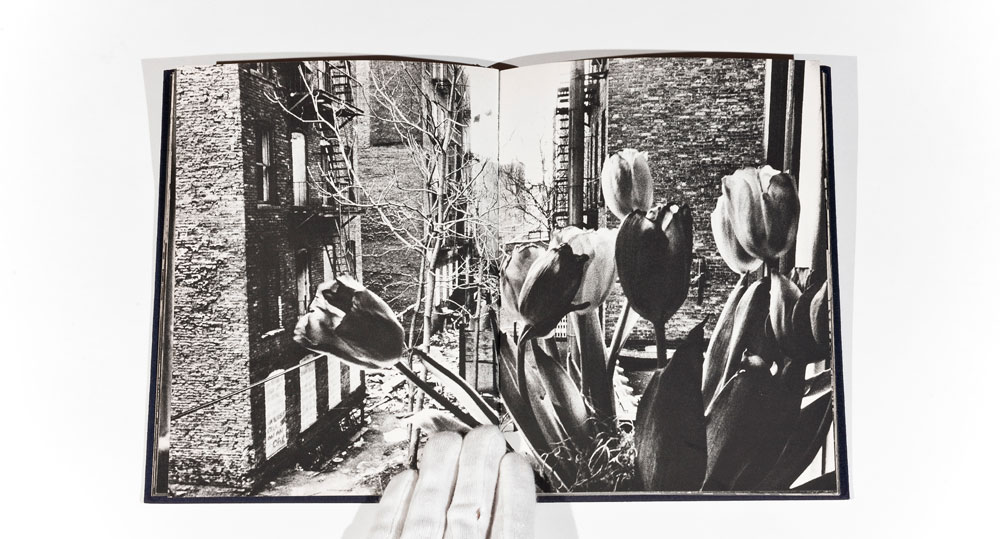
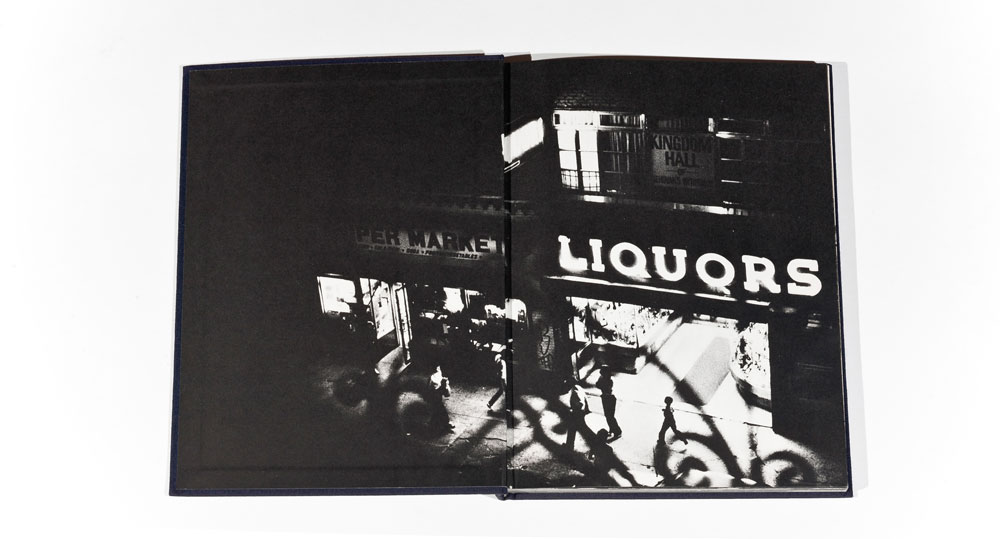
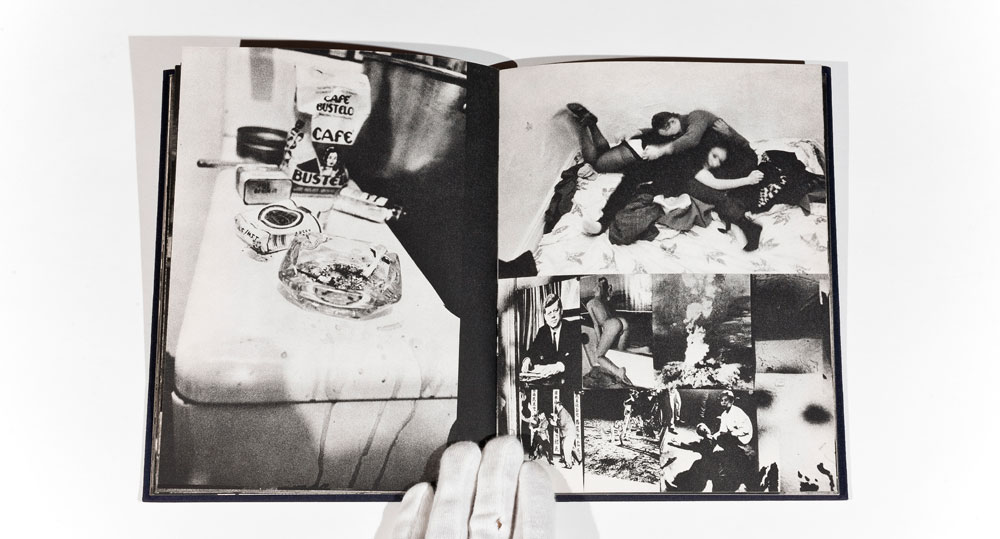
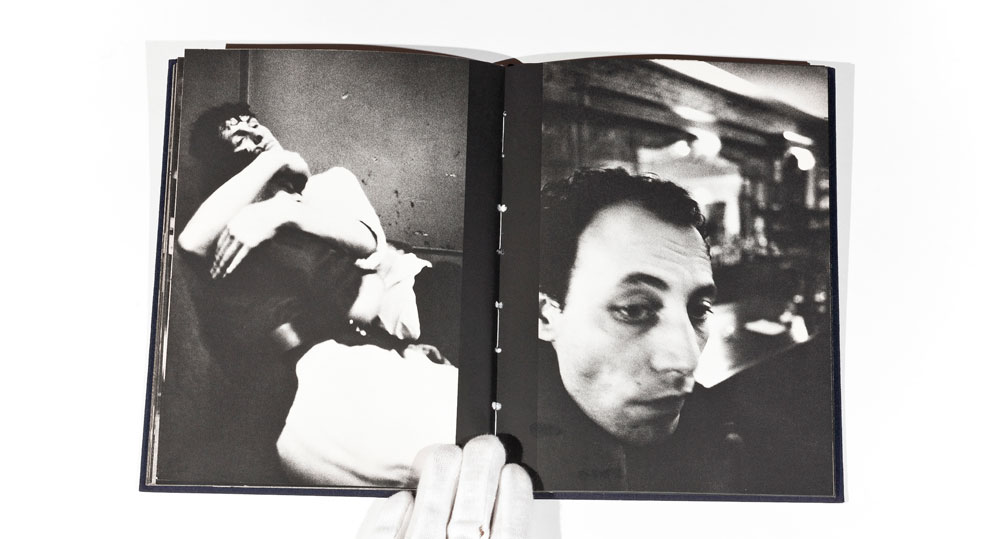
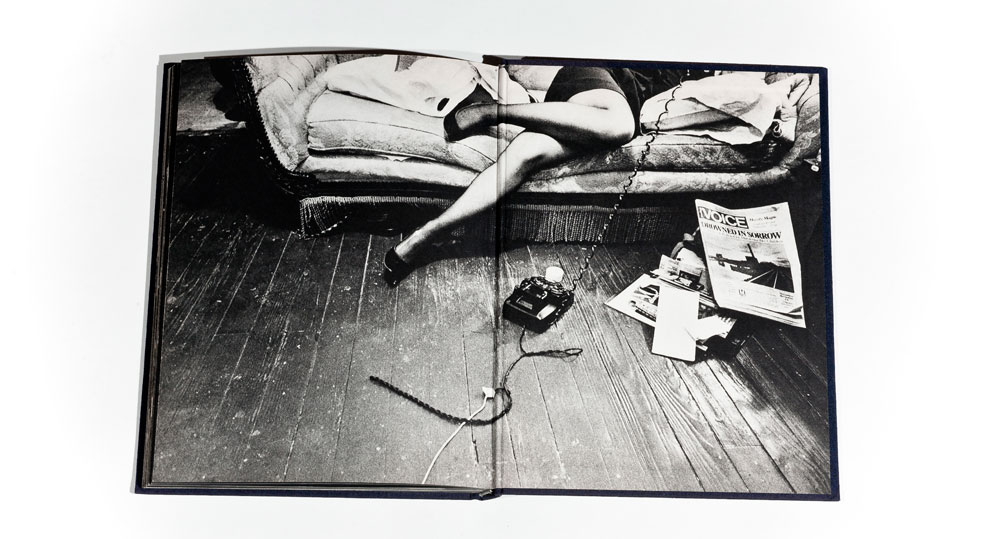
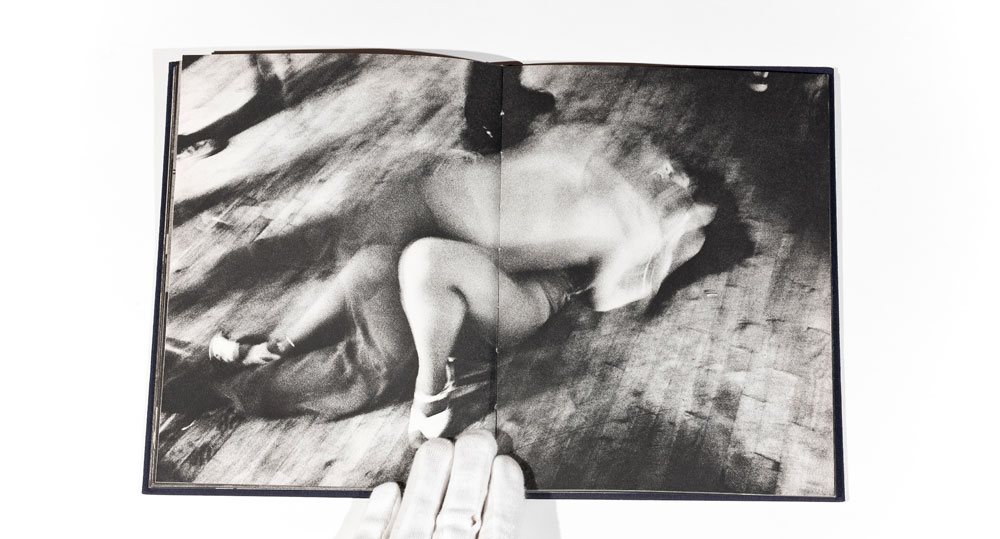
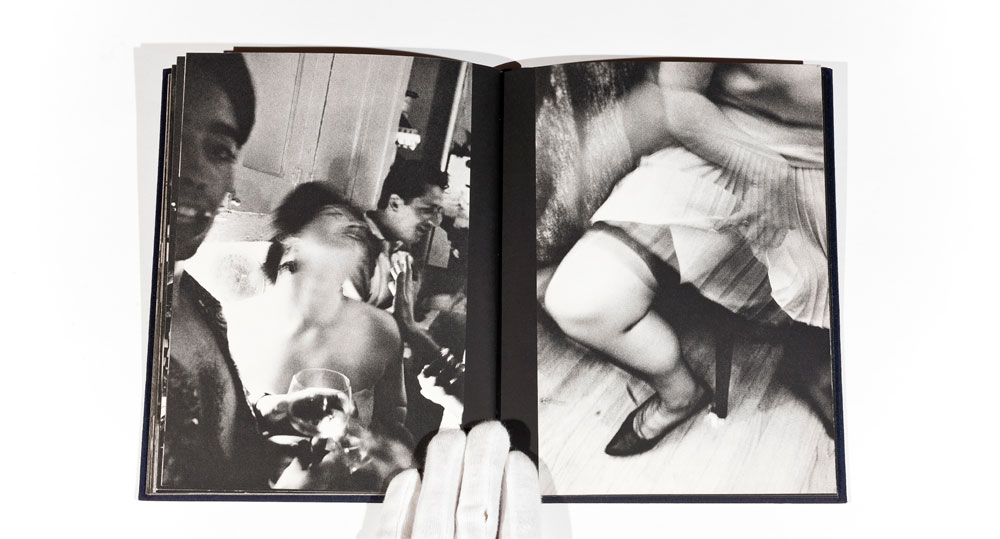
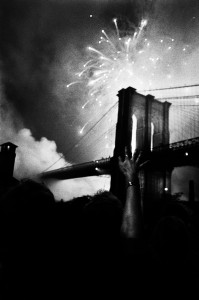
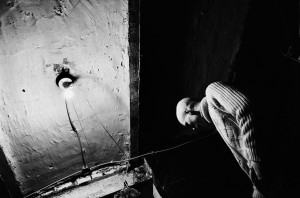
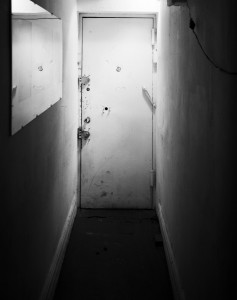
As I have mentioned often in this process we are truly thankful that Ken has taken the time to illuminate us through a book that the majority of readers had never seen in it’s entirety. And one that only gains from Ken’s insightful and open posts. I would like to think that this book has become more accessible in some form to its new audience, it absolutely deserves to be seen.
Below is a list of all posts and reflections that have been shared this past month, which forms the most comprehensive archive we have created yet.
I want to thank Matt Johnston and Wayne Ford so very much, once again, for taking on Invisible City. I hope people not already familiar with IC found something here. For me, this month has been a great ride. The Photo Book Club re-connected me to that challenging time—not only to people I once knew but it also reaffirmed bonds with people I’ve known on through into our current challenging times. I want to personally thank those who wrote so eloquently about their memories and the significance Invisible City had for them: Some of you I’ve met in later years and some I still have yet to meet—and look forward to meeting.
I have to say it’s been extraordinarily good timing for me to revisit Invisible City. It gave me insight on current work, as well as old. Because of this Photo Book Club process, I dug out things I barely remembered I even had. It’s help me with talks I am about to give and it was helpful in organizing the Invisible City images to exhibit at the Bursa Photo Festival. And good timing as well as I consider a reprint in the book’s future.
Over the summer I was approached to produce a piece for Paris Photo by Harper’s Books that worked in relation to Invisible City. And because my mind thinks in ‘book’ form, I put together a maquette of images and text I had originally considered for inclusion in Invisible City but that didn’t make it into the original for reasons about tone and emphasis. To this day I still enjoy seeing and reading this other work: they still share essential poetic qualities that infuse the heart of Invisible City; they still speak about that time and my experience of it. And so I made a small companion to Invisible City—Invisible City: Nightwalk, Fragments and Alternates. Because this is a one of a kind, hand-made thing, I videotaped it before sending off to Harper. I am now happy to share this rarity here with the Photo Book Club members to close out the Photo Book Club/Invisible City experience:
This is a hand-made 64 page book prototype (including covers) composed of material I considered for use in the book Invisible City (Twelvetrees Press, 1988). None of these images appear in the final printed version of the book, however. The images here were scanned from original prints used in a book dummy that was a forerunner to Invisible City. The plates used to print Invisible City were also made from this set of original prints.
The book dummy ends with my original notes for a talk I gave at the International Center of Photography in 1990. The full text, including the excerpt by Kathy Acker, from Blood And Guts In High School, can be seen here.
Other text in this prototype:
NIGHT WALK
Night draws from its body one hour after another. Each different, each solemn. Grapes, figs, sweet drops of quiet blackness. Fountains: bodies. Wind plays the piano among the stones of the ruined garden. The lighthouse stretches its neck, turns, goes out, cries out.
Crystals a thought dims, softness, invitations: night, immense and shining leaf plucked from the invisible tree that grows at the center of the world.
Around the comer, Apparitions: the girl who becomes a pile of withered leaves if you touch her; the stranger who pulls off his mask and remains faceless, fixedly staring at you; the ballerina who spins on the point of a scream; the who goes there?, the who are you?, the where am I?; the girl who moves like a murmur of birds; the great tower destroyed by inconclusive thought, open to ,the sky like a poem split in two … No, none of these is the one you wait for, the sleeper who waits for you in the folds of her dream.
Around the corner, Plants end and stones begin. There is nothing, nothing you can give the desert, not a drop of water, not a drop of blood. You move with bandaged eyes through corridors, plazas, alleys where three vile stars conspire. The river speaks softly. To your left, to your right, ahead, behind: whispers and cruel laughter. The monologue traps you at every step with its exclamations, its question marks, its noble sentiments, its dots over the i’s in’ the middle of a kiss, its mill of laments, its repertory of broken mirrors.
Go on: there’s ‘nothing you can say to yourself. – Octavio Paz, from Eagle or Sun?
Remember when I insulted you? When I vomited all over you?
And when you had to see with these eyes that never close how I slept with that vile hag and talked of suicide? Show me your face,
Where are you? Actually, none of this matters to me. I’m tired, that’s all. I’m sleepy. Don’t these endless discussions tire you?
It’s as if we were a couple who, at five in the morning, with swollen eyes, continues on the rumpled sheets a quarrel started twenty years ago. Let’s go to sleep. Say good night. Show a little courtesy.
You are condemned to live with me and you ought to force yourself to make life more bearable. Don’t shrug your shoulders. Be quiet if you want, but don’t go away. I don’t want to be alone: the less I suffer, the more unhappy I am. Maybe happiness is like the foam of the painful tide of life that covers our souls with a red fullness. Now the tide recedes and nothing remains of that which made us suffer so. Nothing but you. We are alone, you are alone. Don’t look at me. Close your eyes so I can close mine. I can’t get used to your eyeless watching. – Octavio Paz, from Eagle or Sun?
Memory is redundant: it repeats signs so that the city can begin to exist. – Italo Calvino, from Invisible Cities
“The necessary condition for an image is sight,” Janouch told Kafka; and Kafka smiled and replied: “We photograph things in order to drive them from our minds. My stories are a way of shutting my eyes.” – Roland Barthes, from Camera Lucida
At this point Kublai Khan interrupted him or imagined
interrupting him, or Marco Polo imagined himself
interrupted, with a question such as: “You advance
always with your head turned back?” or “Is what you see always behind you?” or rather, “Does your journey take place only in the past?” – Italo Calvino, from Invisible Cities
Mind takes form in the city; and in turn, urban forms condition mind. For space, no less than time, is
artfully reorganized in cities: in boundary lines and
silhouettes, in the fixing of horizontal planes and
vertical peaks, in utilizing or denying the natural site, the city records the attitude of a culture and an epoch to the fundamental facts of its existence. – Lewis Mumford, from The Culture Of Cities
Even when lovers twist their naked bodies, skin against skin, seeking that position that will give one the most pleasure in the other, even when murderers plunge the knife into the black veins of the neck and more clotted blood pours the more they press the blade that slips between the tendons, it is not so much their copulating or murdering that matters as the copulating or murdering of the images, limpid cold in the mirror. – Italo Calvino, from Invisible Cities
I don’t believe people exist whose inner plight resembles mine; still, it is possible to imagine such people—but that the secret raven forever flaps about their heads as it does about mine, even to imagine that is impossible. – Franz Kafka, from Diaries 1914-1923
Like Cafe Lehmitz, I’m glad someone not only made the effort- but actually succeeded in successfully capturing this part of town, this part of time that existed in all its brief wonder and tragedy. Loisaida was in constant motion in the late 70′s, early 80′s, evolving (or devolving) from a culturally heterogeneous, junkie laden, cheap rent district of promise, hope and energy into that of a gentrified homogeneity of yuppies, condos and crack. In a half dozen brief years, the place was transformed from a place fueled by the spirit and fire of punk, new wave and the very beginnings of rap, to a veritable laughing stock where practically every other neighborhood storefront and bodega was transformed overnight into fledgling art galleries by trust fund, wannabe gallerists. Their “galleries” lasted about as long as your average punk set at CB’s, but the blight upon the neighborhood was permanent. The Ramones had somehow mutated into Madonna.
Ken, perhaps you could talk a little about Invisible City’s relationship with ‘Best Photobook lists’?
The lists… I’m assuming you mean the Parr/Badger book, the Roth book and Hasselblad’s The Open Book — I don’t really want to say too much about them directly since the stories I know about Invisible City being included in them or not are all hearsay. I’m happy Invisible City was seriously considered. I’m gratified that other people would argue publicly and privately disappointment that it wasn’t included: Here is a piece Bint photobooks blogged when the Parr book first came out, and here is Gerry Badger discussing it. This last thread contains good comments on the speculative prices of photography books.
I ran into Martin Parr the year before last at Arles. He gave me his Playas book and signed it: “to Ken — Invisible no longer.” Obviously I have a few things to say about history and being invisible and maybe my previous book A New History of Photography is a bit of a reaction to all these histories. No one person writes history and it’s problematic to second-guess these things when it is so very close to you.
I guess I can talk around it a bit, talk about the arbitrary turns that history plays upon us all. What seems important at the time and what becomes important in retrospect can be very separate things. I ran into Gail Buckland about a year ago after so many years—she was my history of photography prof in school and did the seminal research that established Fox Talbot as the inventor of photography (she came around over a hundred years later to sort that one out). She had some interesting things to say about how some work and some photographers arbitrarily have missed the boat of history or fell into it because of random decisions by curators or publishers or their own quirks. She told me about some photographers not wanting to have their work reproduced—that’s a buzz kill right there.
Reminds me a bit about photographers being paranoid about the Internet. Things that don’t get ported to new media can easily get lost. Certainly things that don’t get seen or become known do get lost. We are seeing it with film right now—old nitrite films are being lost forever as they decompose. Luckily books tend to kick around for a while and can be rediscovered. Yes, the work has to be good, but if it doesn’t get seen it can’t be remembered and might lay unopened on a shelf. What works for one generation may fall out of fashion and get picked up by the next, but if that next generation isn’t exposed to it in any form it can and will certainly die. What if Lisette Model didn’t show Diane Arbus the work of the little known German photographer August Sander? Torches need to be carried otherwise there will be no lights to guide those seeking things in dark corners.
Lists of the great photography books. Well, Invisible City did make it into one of those books. It is in Auer and Auer’s 802 Photo Books (#676). It lists the most important photography and photography related books of the last 250 years.
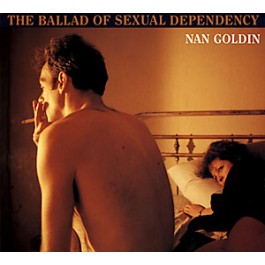
A huge thanks to the folks at Aperture publishing who have kindly offered the Photo Book Club community 10% off select titles, including Nan Goldin’s ‘Ballad of Sexual Dependency’ which we are looking at next month.
This special offer code will be sent to all members of our meet-up community at the beginning of next month. If you are not already part of this, you can add yourself below. And if you do not wish to be a meet-up member but would still like the code, please email Matt here.
Thanks to Nina for offering this personal reflection on Invisible City. If you still havn’t seen it, you can view the book here, and images here.
I love this book so much. I co owned New Math gallery on 12th street between A and B from 1983 – 1986. Mario and I always said Ken was our resident photographer. He took so many beautiful photographs of the gallery and the neighborhood. he really captured both the up and downside of living somewhere where both art and creative energy and death and destruction shared a landscape. Thumbing through this book brings back so many memories.
It was a force of will. I think books are like that. I made Invisible City because I had to. I saw myself in a particular place at a particular time that wasn’t being looked at, simply wasn’t a part of the consciousness of the world ‘out there’ at the time. It was an intense period and depicts my life in that unforgiving place: NYC’s East Village/Alphabet City in the mid-1980’s. It was a hotbed of sociological and cultural phenomena that eventually became significant to the larger world: the downtown art scene, performance art, punk rock, hip-hop, the no-wave movement, squats, gay-rights, AIDS. It was the last pre-internet underground cultural scene in the United States. And I was coming of age.
In 1982 I graduated from art school. I found myself destitute in the heroin trade center for the planet—but felt lucky enough to find an apartment in what a few years later became an abandoned building—only it wasn’t really abandoned. There were many people living there—whole families, artists, couples, all sorts of people. It was the landlord who walked out on us. I remember that cold winter I was sequencing the images for Invisible City: there was a fire that destroyed the electrical controls for the boiler and we were having a kind of war with junkies who were using an apartment in the building as a shooting gallery. But that was later on.
When I was shooting Invisible City I was keenly aware of the rich history of photography in New York City: Jacob Riis, Lewis Hine, Weegee, Bernice Abbott, Louis Fauer, Helen Levitt, Roy DeCarava, William Klein, Robert Frank, Diane Arbus, Garry Winogrand, Lee Friedlander, Joel Meyerowitz’s early street work. And I recognized that legacy all around me. I saw it in the buildings and the sidewalks. These were the same hallways, the same streets, same tenements, sometimes seemingly the same faces in the crowds, the same freaks in the park that I saw in those photographs, but my view of it all was very different. Physically there were incredible similarities, but the physical content had a different significance to me. Having grown up in New York and being the son of someone who grew up in New York, I realized just how different the mythos surrounding New York City played to people of different generations.
You can only begin to know a place at a particular time and from a particular perspective. And you are, for the most part, isolated in that place and locked into that specific time. I recognized my invisible city. I saw the truth in it. The book is a love story about the place I found myself in. And it features many pictures of the person who eventually became my wife, so there is a romance in there as well. But the world and the images are not simple or one-dimensional. The depiction is complex, perhaps a little obscure and frankly, somewhat dark. I moved with some friends from high school to the East Village in 1978, a year after the black out and the riots. I was 17 and starting on my own—I just got into Cooper Union, an art school down in the Village. Those were the ‘Taxi Driver’ days. People were dying on the streets, victims of self-abuse and addiction, victims of violence. And then in the early 80’s friends started getting sick and dying of aids. And then there was this craziness to the abandon we were feeling and trying to make sense of. We were children and we had reign of the decay of the city. It was a world my friends and I embraced as our own.
I titled my book Invisible City after Italo Calvino’s amazing book Invisible Cities. His book is a fictional encounter between Marco Polo and Kubla Khan. Polo tells the Khan of cities within his vast empire—an empire so large that the Khan knows nothing about its composition. The descriptions turn to allegory or fantastic creations of the imagination. The emperor knows nothing of the reality outside the impenetrable walls of his palace and knows not whether to believe Polo’s tales or not. I was Marco Polo to the impenetrable world’s Kubla Khan.
I tried every publisher I could think of to publish the book. But it didn’t fit the mold at the time: it wasn’t a monograph devoted to a specific dead photographer tastefully done with large white borders in a coffee table format. It was dark and small and full bleed. I had no gallery to back it, no museum show to sell it through. No book tour. I was in my 20’s. I didn’t have a history that could be banked on: no gallery outside of the East Village would take me; no publisher would publish me: “Who do you think you are that you want to publish a book?” “Who wants to look at that?” And then Jack Woody picked it up after my anonymous drop. Late one sweltering summer night he called and spoke to me in his slow, deep and commanding voice: “Is this Ken Schles? I’m Jack Woody. I want to publish your book. It’s so depressing.” By then he was my last best hope really. By the time he called, I had nearly given up. And so, Jack Woody (publisher of Twelvetrees Press and later Twin Palms) just put it out there. No promotion, really. I guess he didn’t care if it sold or didn’t, he just wanted to make it happen. Strange that. But then, in those days, two thousand copies wasn’t such a great risk.
The news/radio piece talks about their role in the neighborhood and how it is a mecca for the artists that frequent it. Even about how it was the “go to” place for the iconic beat poet and fellow Twelvetrees Press photobook alum Allen Ginsburg when he was alive. (As a neighbor, it wasn’t hard to bump into him in all manner of places in the neighborhood back then.) One of the ironies is that their landlord, Cooper Union (my Alma Matter) is one of the oldest cultural institutions in the neighborhood (probably in the whole of NYC, in fact). Cooper uses rent money it collects to subsidize the tuition of students and is the only college that gives every student who has the privilege to study there a full tuition scholarship. I find it symptomatic of the times we live in now that these institutions must weigh their needs against each other, rather than both contributing to the rich cultural fabric of a diverse neighborhood. And it is also a reflection of the cultural status of the book. A petition for signatures can be found here.
Ken Schles Invisible City was a lonely, cold toned poem to the urban night, capturing equally the alienation of those unsanctified city spaces while simultaneously calling forth the glee of anonymity and free flight found only on the street. The size of the book was perfect, the design perfect, and its printing perfect: matt, coal-black, sheet-fed gravure. Bleed upon bleed: images interrupting and overflowing onto, and into, one another.
This was a fragmented, elliptical narrative. With tenderness sprouting on one double spread, and bouts of cold-hard fucking amongst the decay on another. Blighted beauty. Naked nightscapes. Unkempt, dimly lit details of fast and forlorn self-pleasure make themselves known. Revelations pour down from our daily stage production, the audience a lone camera. Metonyms and metaphors for all that ail humanity.
This was a grainy, lens wide-open, manly photography: when a fellow had to know how to push film. Had to know the proper darkroom alchemy in which to conjure and coax delicate, thinly sliced images from cooked celluloid.
A bit of William Klein, Meatyard and Brassai. R. Frank roaming internal America instead of its hinterlands. A Tom Waits tune or Bukowskian turn-of-phrase made visual; the threat of the acrid, hot city beckoning, or blowing itself up, or perhaps imploding. Who knows in all that darkness?
Schles’ Invisible City photos hold all tension and dance with it. We catch our breath for the briefest of moments and then seek solace in movement again.
Invisible City is well known to those who know it and unknown to those that don’t! How do you feel about it being so rare, and considered one of the greats, while many who cannot afford it, have not been able to see it.
– Matt
I wish more people could see it. I feel it has never really been widely known. It went out of print soon after it was published. It was never my intention for it to be so rare. Relatively unknown and yet delighted in, maybe that’s a good definition of it being in a certain kind of club? A good thing people will be able to see it here in this club then. But books of this sort need to be held and flipped through, that I know.
Books take on their own lives, if they are successful, and go on to have their own histories. I have a few stories around the book. Books reflect back on you. And although this book is relatively obscure because of its rarity, it’s given me a few stories to tell. Walker Evens called his book, American Photographs, his “calling card.” For me, Invisible City was a life-line into a career as a working artist. It has gone places I’ve never been to, spoken to people I’ll never know. It’s always been underground and under the radar. Something people ‘in the know’ seem to know about—whatever that means.
It’s a small private book, and it has affected people in a personal way. But as its creator, I can’t objectively gauge its impact. And I don’t think anybody creating a work of art can ever truly understand what impact one’s work has had. It’s hard enough to know one’s own mind, let alone someone else’s. Sure, over the years I’ve gotten some glimpses. Pre-internet, I’d get the odd phone call. Sometimes people would want to visit, or even send me small gifts. One time I got a phone call from Italy, from a fashion house that said that Robert Frank had told them to call me. I found out through them that Invisible City was a favorite book of his and he was throwing some work my way (eventually there was an ill-fated gallery connection from him too. And it was through that that I eventually met him). One call was from Robert Robertson, the DP who was working on Oliver Stone’s Natural Born Killers at the time. Over the years I found it had had a huge effect on many people in the photo and especially the film industry, but at the time it was considered too ‘raw,’ and too ‘hard’ for the main stream.
But the world has changed. I’d hear that some teacher was showing it to their students, or there was a lecture about it. In time, I’d be asked to give lectures about it. But not that many people contacted me early on. During that time I kept lamenting that the only good photographer was a dead one. I was still struggling to make ends meet. John Szarkowski at MoMA told me that the museum would have to support my work because it was important and galleries wouldn’t want to hang my pictures on the wall because they were too ‘difficult.’ Unfortunately, John retired soon after and the support wasn’t all that forthcoming as the photoworld and museumworld morphed into something else.
So the book didn’t have a direct impact on my career, not at first anyway. It took a few years. Over time though, it’s been cumulative, and it hasn’t abated. Not in the least. I’d hear of creative meetings in all sorts of creative industries—after the fact, where the book was referenced, but rarely did anyone bother to call me. In that, the book had a strange trajectory. Immediately upon publication, the New York Times selected it as a notable book of the year, but there were not many copies yet in distribution because of a decision to sell most of the copies abroad. Copies were slow to surface in US bookstores and it was considered out of print within a year. When first published, a local favorite bookstore, St. Mark’s Books, had it on their hip new arrivals table. I was really proud of that, but within a week it was hidden behind the cash register because so many copies were being stolen.
You had to know that it was there and you had to ask for it. To me it was frustrating. How were you to know about a photography book you had never seen? I worked so hard to make it happen, and when it did, immediately it went into hiding. Peter Galassi at the Museum of Modern Art put it on display for the More Than One Photography exhibition, but left it in a vitrine, so nobody could leaf through it or even touch it. Somehow, the book was out there, but it was also hidden. Early reviews came with some caveats. I don’t think the book was that well understood at the time when it first came out. The Times review said I was making obvious connections to Weegee. Others thought I had copied Ed Van der Elsken’s Love On The Left Bank—Susan Kismaric at MoMA showed me that book after she saw mine. I love that book, but I had never seen it before.
Because of its rarity (it sold out really fast) the price went up quickly and it was lost to a more general public. I couldn’t even afford to buy copies on the secondary market. It stayed hidden away in collections. How do I feel about that? It’s funny, you want something to be successful, but you think that it being a success would cause certain things to happen, which isn’t necessarily the case. I guess I was naïve. When Jack Woody published my book, he also put out that same year Joel Peter-Witkin’s first book and Herb Ritt’s first book. Personally, and in the long run, I think my book is as important as theirs, but they got the museum shows and they got the fame. The attention my book got was pre-internet word of mouth. I see now that it is people of a certain age and from a certain milieu who mostly know of the book. There were no photography book geeks to speak of back then. There were lovers of photography books, but it wasn’t such a vocal and distinct appellation to like photography books. And of those that did their voices had little impact in the larger photographic community.
Not that long ago I was in the office of Phil Block, the director of the school at the International Center of Photography, and while he sings the praises of Invisible City (he was an early and ardent advocate, an early champion of photography books as well) he says that younger people just don’t know about it. To test this, I asked students walking into his office if they’d heard of the book. Most all said they never heard of it. With less than two thousand copies in a world of seven billion people, I think that’s quite understandable. But then again, you just don’t know its impact. In 1999, I got an email from the Dutch photographer and curator, Machiel Botman. He and the curator Wim Melis of the Noorderlicht Foundation for Photography wanted to make my work the center of a festival that included a slew of some very impressive photographers (I don’t want to leave any names out, so please look at this link). They said, “We love Invisible City, what have you been doing lately?” That exhibition led to the publication of my second book, The Geometry of Innocence, published by Hatje Cantz, in Germany, 13 years after IC came out.
I hadn’t a clue that there was an audience of people that knew of my work outside the U.S. I felt like one of those old forgotten jazz musicians who had to go to Europe to find their audience. So, in that sense, I wish my work wasn’t so obscure to people. It’s been a long and somewhat hard road. I’m lucky that I can still work and explore new avenues of ideas. By and large, Invisible City was my passport to entry. I’m proud of its successes. From all the responses from people over the years who have sought me out to tell me what impact the book has had on their lives, I would think that more people would like to know about it. But with few copies about and people being so precious about them, I can understand why more people don’t know about it. I wish Invisible City more luck in the coming years. More is hard to say.