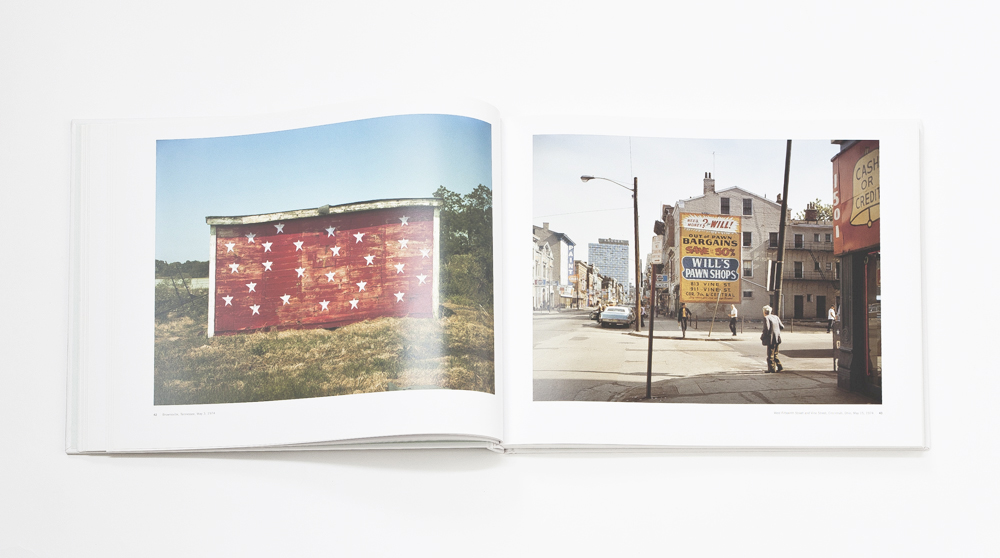
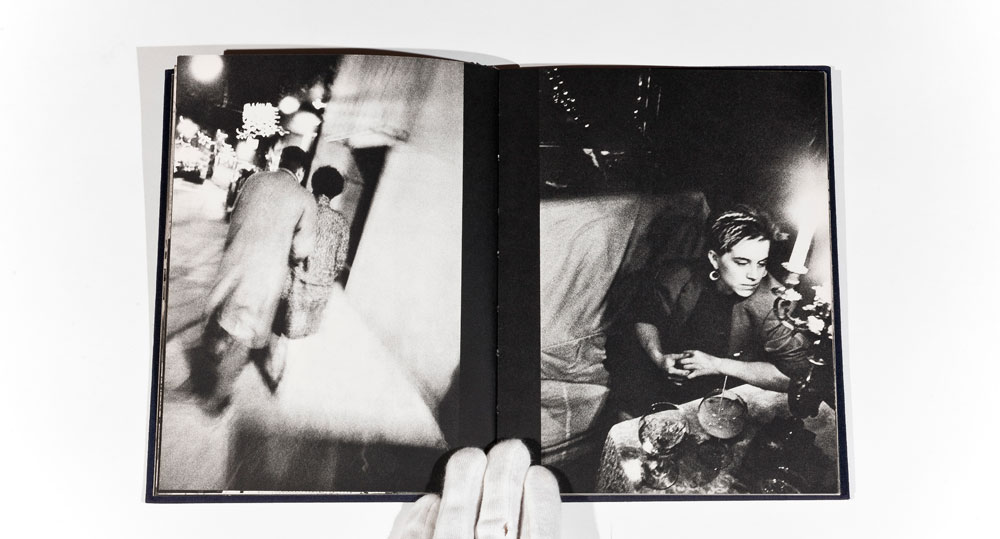
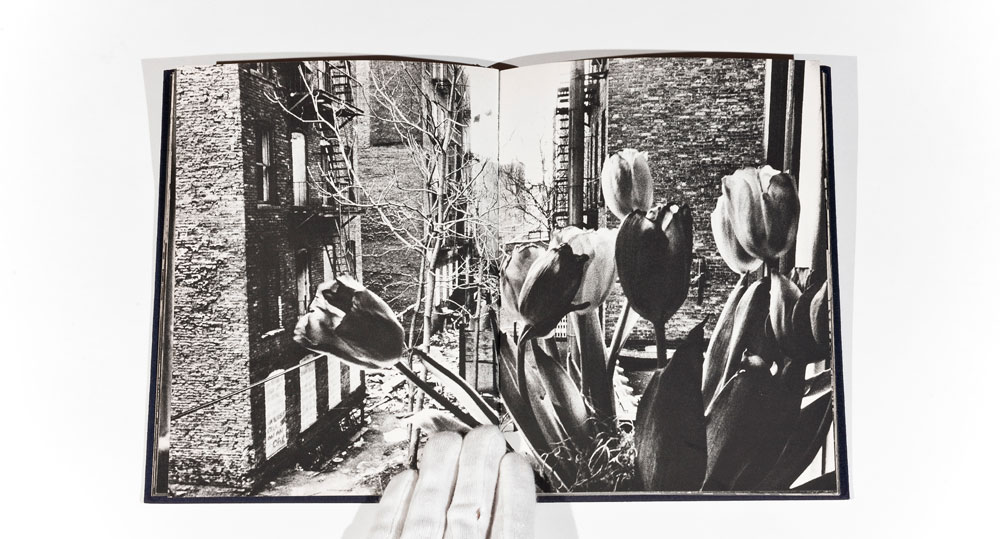
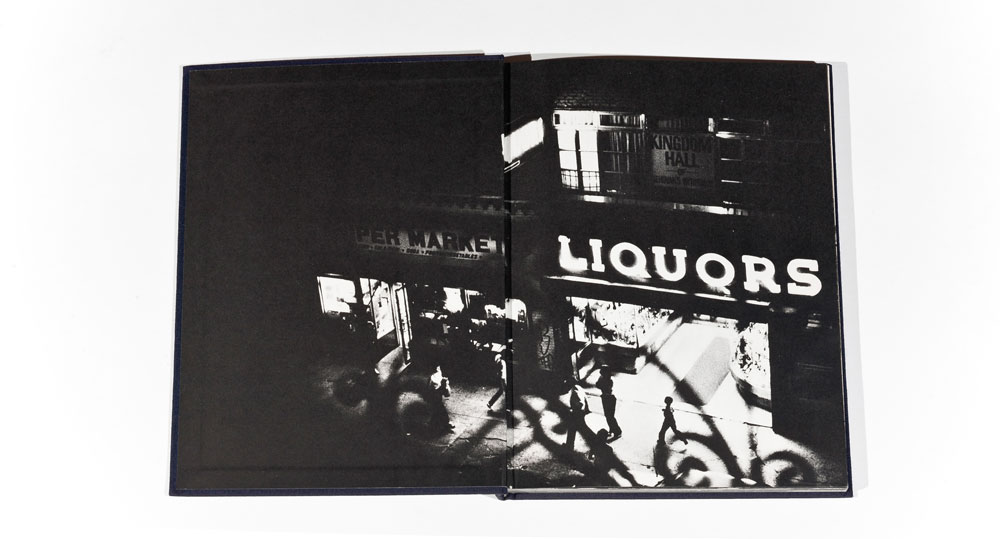
Kurt Easterwood of the awesome Japan Exposures has produced an extended piece of writing on one of Shore’s images featured in ‘Uncommon Places, The Complete Works’. The image in question can be seen on the right hand side of the image below and as well as finding the full PDF underneath the image or right here, this is the first post also featuring an extraction from the full article, this time an extended introduction to the full article.
A huge thank you to Kurt for opening this great piece of writing up to the Photo Book Club community.
West Fifteenth St. and Vine St., Cincinnati, Ohio, May 1, 1974
I would like to explore Uncommon Places: The Complete Works by looking at a single photo, a photo that like all the photos of Uncommon Places can only be referred to by its caption, “West Fifteenth St. and Vine St., Cincinnati, Ohio, May 1, 1974”, which appears on page 43. This photo was not included in the original publication, and while it would certainly be a useful exercise to discuss why not, I would rather take Shore’s inclusion of the photo in the revised edition to mean that for him the photograph is an important part of the complete work.
It is tempting to be self-deprecating on the photograph’s behalf and acknowledge that it’s true there is nothing particularly compelling about this photo that would cause it to stand out in relation to the other photographs in the book, but saying that would imply that Uncommon Places: The Complete Works contains stand-out photographs. It does not, which is precisely why it is such a wonderful book to look at. The power of Uncommon Places is not the sort where each turn of the page knocks us back into a sublime revelry. Its power rather results from an accumulation of what Gerry Badger has called “quiet” photographs 3, and it is this quiet tone that allows us, if we are so willing, to journey along with Shore, and occasionally to step off and linger a bit at stops along the way, to explore further.
Several years ago when I got my copy of Uncommon Places: The Complete Works, this ordinary, dare I say nondescript, photograph taken in Cincinnati, Ohio in 1974 caused me to dwell and ponder a bit longer than the others. For personal reasons (I had a suspicion I had once been on this section of Vine street during a visit to Cincinnati in 1987), and for graphic, visual reasons (there was something in the denseness of the signage on the left side of the photo, and a single, dominant sign on the right side that visually appealed to me), I felt compelled to explore the photo further. What follows is an account of this one stop on Shore’s larger journey — my journey within a journey, we could say — and what I found at West Fifteenth and Vine in Cincinnati. READ MORE
Super excited for this ‘mini-series’ which will be posted over the last week of our Stephen Shore month. Kurt Easterwood of the awesome Japan Exposures has produced an extended piece of writing on one of Shore’s images featured in ‘Uncommon Places, The Complete Works’. The image in question can be seen on the right hand side of the image below and as well as finding the full PDF at the bottom of the post or right here, there will be 4 posts coming up with little sneak peaks.
A huge thank you to Kurt for opening this great piece of writing up to the Photo Book Club community.
West Fifteenth St. and Vine St., Cincinnati, Ohio, May 1, 1974
“A few years ago when I got Stephen Shore’s revised Uncommon Places book, I couldn’t get over how familiar the places looked to me, though surely most of the towns and places he shot I’ve never been to. But one image was more familiar than any other — a street scene from Cincinnati. “I’ve been here!”, I remember exclaiming to myself, and I started to take notes about the image. Now five years later, I’ve used Shore’s photo (and my notes) to visit that photo, that place, one more time.”
Thanks to Simen Edvardsen who runs the blog ‘Enthusiasms’ here for this post comparing and relating Shore’s ‘Uncommon Places’ with the moods and thought’s of Jack Kerouac in ‘On the Road’. This is a fantastically rich article which I hope will be enjoyed in it’s entirety.
(And if you still have not seen Uncommon Places, the video is found at the bottom of this post)
– Matt
On the Road is the fictionalized account of a number of road trips Jack Kerouac took across America together with his friend Neal Cassady and an assorted menagerie of other characters in the late 1940s; Uncommon Places is the photographic account of a number of road trips Stephen Shore took, chiefly alone, through the 1970s, armed with an 8×10 camera and color film. I promised earlier that if I could get over myself, I would describe these two together, as I think they are in many ways similar and in some other ways dissimilar, but in almost every way illuminating in light of each other. Well, I got over myself and besides, I only finished reading On the Road recently, so here are some thoughts.
Beverly Boulevard and La Brea Avenue, Los Angeles, California, June 21, 1975
On the surface, the one thing that ties these together is the road, but I think there’s more to it than that. For one thing, they both take a particular interest in the unparticular, the mundane, the scenes that we pass through every day without consciously registering them. On the Road is written in a streaming way that is by turns impressionistic and quite frankly incoherent, with little to no meaning but with a certain poetic beauty, and an almost photographic depiction of the little things, which we can see as the literary analogue of the super-detailed scenes of everyday life in Anywhere, USA that Shore would later depict with his large format 8×10 camera. The characters, and especially Dean Moriarty/Neal Cassady, have an exaggerated but sincere fascination with everything, large and small, significant and insignificant. Kerouac was inspired by and tried to incorporate the free-flowing and vividly detailed letters Cassady wrote to him and to other of his friends — his wife described him as having a photographic memory — and this kind of raw curiosity and visual sponging-up of every detail is both analogous to the mega-negatives that Shore later exposed to the everyday world he passed through and captivating to read (for me, anyway). Here’s a wonderful little passage from Part Four of On the Road, which describes a trip from Denver to Mexico City — it’s an exalted overfascinated curious little monologue by Dean:
Oh! This is too great to be true. Gurls, gurls. And particularly right now in my stage and condition, Sal, I am digging the interiors of these homes as we pass them — these gone doorways and you look inside and see beds of straw and little brown kids sleeping and stirring to wake, their thoughts congealing from the empty mind of sleep, their selves rising, and the mothers cooking up breakfast in iron pots, and dig them shutters they have for windows and the old men, the old men are so cool and grand not bothered by anything. There’s no suspicion here, nothing like that. Everybody’s cool, everybody looks at you with such straight brown eyes and they don’t say anything, just look, and in that look all the human qualities are soft and subdued and still there. Dig all the foolish stories you read about Mexico and the sleeping gringo and all that crap — and crap about greasers and so on — and all it is, people here are straight and kind and don’t put down any bull. I’m so amazed by this.
All this from passing a few houses on the road. Stephen Shore, decades later, found that he didn’t need to focus on anything in particular, because his film was so huge and slow that it preserved approximately every detail you could ever desire and still had room for cramming in a piece of bacon should you so desire, so instead of putting one thing or another in center his images are for the most part in focus front to back and there are these little wonderful details that you don’t notice because no one forces you to stop and look at the everyday (dare I say, the daily meh), but Shore captures them and shows them to you, if you wish to look. On a second or third look, or even a fifth or fifteenth, you can still find details you didn’t notice on any of the previous viewings. I don’t know about you, but I can’t but admire the fascination and sincere interest in ordinary stuff — I’m too much of a sucker for the extraordinary and special which we can’t have every day anyway, and if I could only learn to enjoy the simple stuff and take in the world in the way one does when visiting a truly foreign country for the first time, life would be so much more interesting and exciting. Babies have this ability and I wish I had kept it, and admire those who do.
Presidio, Tex., Feb. 21, 1975
So, there’s all this detail, and Shore lets it sit there waiting to be discovered, instead of putting it left, front, center, in the rule-of-thirds-prescribed position, or anywhere else where you might expect it. Instead, he looks at lines and perspectives and puts on these displays of composition — not just a buzzword used as a placeholder for “I like your pic” on Flickr, see — that are nigh unparalelled in photography. I think if you took a bunch of transparencies, put them over Shore’s pictures and drew out the lines and stuff, you would have yourself a textbook in composition. Stephen Shore’s uncommon pictures of common places are real marvels of lines, really formal but nice. And there, my pairing of these two books starts straining and feeling forced.
I mean, both Shore and Kerouac are on the road, and both document it in their chosen medium, and both photobook and novel eventually became landmarks in their respective traditions, both capturing the zeitgeist and signaling, legitimizing a form of expression (art photography in color and the beat, “spontaneous prose” and then-vulgar lives of the Beats, respectively). Both are concerned in some way with the ordinary. But really. Sal Paradise and Dean Moriarty (especially the latter) are amoral adventurers who experiment with drugs, sex, breaking the law, peeking over the edge of life down to death, testing the limits of friendship, alternatively doing dirty jobs and living off momma’s grace to sustain themselves, digging the world, and generally being genuinely counterculture. They are obscure and searching. Stephen Shore, both the man and his photographic persona, seem quaint in comparison. He’s two decades too young to be a Beat, and according to interviews he once dressed up as a jungle explorer of the 1800s for the task of driving around the fucking country in a car, abiding the law, risking nothing, and taking pictures. His edginess consists of his choice of film (color) and something that would be called guerilla art today: distributing postcards he’d made of Amarillo, Texas (with nothing vulgar or interesting on them, in fact they looked like ordinary postcards) at store stands. His days as one of the cool kids are over when he turns to the road. Besides, he’s already famous, as famous as an art photographer gets, anyway.
Trail’s End Restaurant, Kanab, Utah, Aug. 10, 1973
That’s one of the important differences between Shore and Kerouac on the road, besides the obvious. Jack Kerouac was an obscure writer until he woke up the morning after he late at night had bought the freshly printed NY Times from an all-night newsstand and read its glowing review of On the Road — or so the legendarium that is the critical introduction to my copy of the book has it. Stephen Shore’s minibio up until his road trips, in contrast, looks like this: first photo kit at 6; calls up Edward Steichen, curator at MoMA, and sells three of his photos at 14; hangs around Andy Warhol’s Factory, taking pictures and getting to know Andy, from 17 and on; second living photographer to have a solo show at the Metropolitan Museum of Art at 24; experiences the greater America outside NY for the first time on a road trip around the same time. He was a successful artist and a naive youth when he set out while Kerouac was unknown, struggling, almost as naive but probably more world-weary when he hit the road. In common, they had a search for something, anything, whatever: meaning, or another of the eternals that we humans seek and seek and have sought since the dawn of time.
Of course, my slamming of Shore is only my youthful love of rebellion, otherness, edginess, which On the Road has in spades (though it’s no longer shocking, because, well, we’re used to that kind of stuff now) — even as I acknowledge that going the other way just for the sake of going the other way is stupid, that going the opposite way of the herd is no better than mindlessly going along with it. Shore’s project is by far the most mature, but also, I suppose, less fun. Both the view camera with its hyperdetailed images and the kaleidoscopic by turns hyper-aware and impressionistic, unconscious looking at the world that happens in On the Road are examples of what Shore calls “a heightened awareness of the world.” Shore is meticulous, both because he wants to be and because his large, slow camera forces him to be; Dean Moriarty is as fascinated by the world as Shore but he has the attention span of a goldfish and rather than slowly setting out to capture everything he almost accidentally inhales it. The characters in On the Road sound like they’re high (which they often are) even when they’re not. If Shore’s hyperawareness is achieved by the equivalent of meditating calmly in a cave for a decade, Dean and Sal’s is like ODing on life. No wonder Stephen Shore is still alive and will probably live to be both seventy and eighty (random unknowns notwithstanding) while both Kerouac and Cassady, the models of the characters in On the Road, died relatively young.
I’ve mentioned hyperawareness several times now, and it’s undeniable that the technical equipment has a large part in achieving this for Shore, while Kerouac’s and Cassady’s hardly can be attributed to their typewriters. View cameras are large, tripod-operated, slow, and they produce enormous negatives/slides (I was amazed when I realized the pictures in Uncommon Places the book are just a tad larger than the film that was exposed to produce them). The fact that a tool had something to do with it sort of destroys my neat as hell ten-years-of-meditation metaphor, but it’s true. Interestingly, Shore mentions in one interview — sorry, I didn’t keep notes while researching this post, so I don’t have a link — that he was actually more anonymous and drew less attention with his view camera than with his previous small 35mms. What was a spontaneous process in the precursor to Uncommon Places, the photographic diary Shore kept on one of his first road trips (in 1972) and which was exhibited to unglowing reviews as American Surfaces (guess what subject matter he chose), where he photographed everything casually with a small camera, became an involved process in Uncommon Places. He photographed his pancake breakfast early on, and where previously he would have reached for the camera, snapped a pic and then eaten, all while sitting, he now had to put his tripod-mounted camera on a chair, set it all up, focus via ground glass and everything, and when the picture was finished his pancakes were long cold.
On the other hand his newfound anonymity-by-hiding-in-plain-sight allowed him to photograph streets without having anyone complain or act up; the long-haired kid lurking around with a not always obvious camera that he was in American Surfaces wasn’t always welcomed. But then again Uncommon Places has few people in its pages, even in the Complete Works edition I have that contains some 100 pictures previously cut to keep the price down, including some more portraits and interiors. What is more important is that it forced him to or facilitated his looking at patterns, at lines, at corners and shapes, at the picture as a two-dimensional thing, and it resulted in his virtuoso performance as a photographic composer. Everything’s almost always placed so that there’s an underlying order. Poles and cables are everywhere, perspectives recede into the sharp background and your eyes are led into the picture as you switch between looking at the shapes and colors on the one hand and the 3D scene they represent on the other. All the while Shore doesn’t actually touch the scene. He can’t: his scenes are buildings, other people’s shops or homes, the urban landscape, stuff too heavy to move or choreograph other than by moving the frame, and he has only natural light to illuminate the stuff.
Merced River, Yosemite National Park, California, August 13, 1979
The details and the composition is illustrated well by the picture of Merced River, above. In recent years Shore has been making a series of small-run photobooks with iPhoto, and one of them consists solely of crops from Merced River. While this might have been a cheap gimmick from just about anyone, from Shore it works. At least the web-size pics I’ve seen of it. The technical quality is, of course, up to par, as you’d expect from the equipment. But there are so many details and patterns in this picture that, particularly when looked at up close, or as in Shore’s little book in crops, they stand up as individual pictures.
Uncommon Places is the only photobook I own. I love the photos in it. I can praise their subject matter, their exposure and composition and light and tonalities. But what appeals to me about both Uncommon Places and On the Road, as a young person and as someone who often feels like an outsider, not an interesting outsider with a backstory and a sidekick but simply one on the outside looking in on life, is the search and the guts. Out on the road, experience things, genuinely, without scarequotes around the experiences to protect from the criticism that inevitably comes from expressing a real, honest feeling about anything, and above all, live while you’re alive and worry about death while you’re dead (which is to say not at all) — that attitude is so full of life and so much of what many aspire to be, it’s pathetic, romanticizing and awesome. And here the pairing of these two books again falters, because when Shore talks about his project he talks about solving aesthetic problems, while Kerouac says things like:
… I shambled after as I’ve been doing all my life after people who interest me, because the only people for me are the mad ones, the ones who are mad to live, mad to talk, mad to be saved, desirous of everything at the same time, the ones who never yawn or say a commonplace thing, but burn, burn, burn like fabulous yellow roman candles exploding like spiders across the stars and in the middle you see the blue centerlight pop and everybody goes ‘Awww!’
While Stephen Shore also occasionally mentions that before the set out to do American Surfaces, he hadn’t seen much of the world outside New York and he wanted to rectify that, often he talks more about aesthetics and whatnot, maybe because his project has nothing to do with that search for meaning, purpose, a life that we find in On the Road, or maybe — and this is what I prefer, since I want him to be an actual adventurer and I want him to be someone I can identify with, even as I consider that this might be simply wishful thinking — or maybe he’s simply older and slightly embarrassed about the illusions of the road he had when he set out. In one interview he says he didn’t set out to copy Jack Kerouac or Robert Frank (another photographer who produced a seminal work documenting America, called The Americans, published around the same time as On the Road and with an introduction by Kerouac). He says that who he was really emulating was “a young painter who picks Jack up outside Cheyenne and takes him to Denver”, but “with a camera instead of a paintbrush.” That young painter did not make an impression, to say the least. I can’t even remember him, and I just read the book. So maybe his project isn’t that exciting in the meaning-of-life-searching way.
Cedar Springs Road, Dallas, Texas, June 5, 1976
One last thing. Both books have a sad undercurrent. There’s one picture of Shore in Uncommon Places, not counting one where only his feet are visible, and it’s a self portrait taken in his apartment in New York. In it, he’s staring emptily (if not angrily) into the camera (detail from that picture). The picture doesn’t fit in with the rest at all and yet strangely does, since it exemplifies the man behind the project, and maybe a little bit of his soul. Sal Paradise/Jack Kerouac, too, is a sad person. He is extremely extraverted compared to everyone I know, yet also sad and introspective (something I can more readily recognize in myself), and he has illusions of or hopes for the road that turn out to be nothing but disappointments. He is looking for something, for anything to make his life great, he’s having fun but also can’t shake the feeling that he’s been cheated out of whatever vague glob of happiness the dream promised him, and in the end, a lot is experienced (and isn’t the journey the point?) but nothing is accomplished. After his trips, Kerouac continued to seek meaning while he was struggling to write his road novel and get it published. When it finally was published, he couldn’t handle it, and his last years of life weren’t exactly characterized by the cheerful joy and hyperawareness of the best and most optimistic passages of On the Road.
In the end, we don’t know anything (except, per Socrates, the preceding fact) and especially so when we’re young. We seek but we don’t find. In fact I think the answer may be not to play the game: excessive introspection and meaning-seeking, while not exclusive to introverted and intellectual wannabes, always stands in the way of happiness. Happy people never look like the aforementioned intellectuals with big thoughts and huge doubts. Throwing yourself on the road and trying to live in the now is certainly one way to combat this, but whether or not it’s a success is a different question altogether.
Ken, perhaps you could talk a little about Invisible City’s relationship with ‘Best Photobook lists’?
The lists… I’m assuming you mean the Parr/Badger book, the Roth book and Hasselblad’s The Open Book — I don’t really want to say too much about them directly since the stories I know about Invisible City being included in them or not are all hearsay. I’m happy Invisible City was seriously considered. I’m gratified that other people would argue publicly and privately disappointment that it wasn’t included: Here is a piece Bint photobooks blogged when the Parr book first came out, and here is Gerry Badger discussing it. This last thread contains good comments on the speculative prices of photography books.
I ran into Martin Parr the year before last at Arles. He gave me his Playas book and signed it: “to Ken — Invisible no longer.” Obviously I have a few things to say about history and being invisible and maybe my previous book A New History of Photography is a bit of a reaction to all these histories. No one person writes history and it’s problematic to second-guess these things when it is so very close to you.
I guess I can talk around it a bit, talk about the arbitrary turns that history plays upon us all. What seems important at the time and what becomes important in retrospect can be very separate things. I ran into Gail Buckland about a year ago after so many years—she was my history of photography prof in school and did the seminal research that established Fox Talbot as the inventor of photography (she came around over a hundred years later to sort that one out). She had some interesting things to say about how some work and some photographers arbitrarily have missed the boat of history or fell into it because of random decisions by curators or publishers or their own quirks. She told me about some photographers not wanting to have their work reproduced—that’s a buzz kill right there.
Reminds me a bit about photographers being paranoid about the Internet. Things that don’t get ported to new media can easily get lost. Certainly things that don’t get seen or become known do get lost. We are seeing it with film right now—old nitrite films are being lost forever as they decompose. Luckily books tend to kick around for a while and can be rediscovered. Yes, the work has to be good, but if it doesn’t get seen it can’t be remembered and might lay unopened on a shelf. What works for one generation may fall out of fashion and get picked up by the next, but if that next generation isn’t exposed to it in any form it can and will certainly die. What if Lisette Model didn’t show Diane Arbus the work of the little known German photographer August Sander? Torches need to be carried otherwise there will be no lights to guide those seeking things in dark corners.
Lists of the great photography books. Well, Invisible City did make it into one of those books. It is in Auer and Auer’s 802 Photo Books (#676). It lists the most important photography and photography related books of the last 250 years.
It was a force of will. I think books are like that. I made Invisible City because I had to. I saw myself in a particular place at a particular time that wasn’t being looked at, simply wasn’t a part of the consciousness of the world ‘out there’ at the time. It was an intense period and depicts my life in that unforgiving place: NYC’s East Village/Alphabet City in the mid-1980’s. It was a hotbed of sociological and cultural phenomena that eventually became significant to the larger world: the downtown art scene, performance art, punk rock, hip-hop, the no-wave movement, squats, gay-rights, AIDS. It was the last pre-internet underground cultural scene in the United States. And I was coming of age.
In 1982 I graduated from art school. I found myself destitute in the heroin trade center for the planet—but felt lucky enough to find an apartment in what a few years later became an abandoned building—only it wasn’t really abandoned. There were many people living there—whole families, artists, couples, all sorts of people. It was the landlord who walked out on us. I remember that cold winter I was sequencing the images for Invisible City: there was a fire that destroyed the electrical controls for the boiler and we were having a kind of war with junkies who were using an apartment in the building as a shooting gallery. But that was later on.
When I was shooting Invisible City I was keenly aware of the rich history of photography in New York City: Jacob Riis, Lewis Hine, Weegee, Bernice Abbott, Louis Fauer, Helen Levitt, Roy DeCarava, William Klein, Robert Frank, Diane Arbus, Garry Winogrand, Lee Friedlander, Joel Meyerowitz’s early street work. And I recognized that legacy all around me. I saw it in the buildings and the sidewalks. These were the same hallways, the same streets, same tenements, sometimes seemingly the same faces in the crowds, the same freaks in the park that I saw in those photographs, but my view of it all was very different. Physically there were incredible similarities, but the physical content had a different significance to me. Having grown up in New York and being the son of someone who grew up in New York, I realized just how different the mythos surrounding New York City played to people of different generations.
You can only begin to know a place at a particular time and from a particular perspective. And you are, for the most part, isolated in that place and locked into that specific time. I recognized my invisible city. I saw the truth in it. The book is a love story about the place I found myself in. And it features many pictures of the person who eventually became my wife, so there is a romance in there as well. But the world and the images are not simple or one-dimensional. The depiction is complex, perhaps a little obscure and frankly, somewhat dark. I moved with some friends from high school to the East Village in 1978, a year after the black out and the riots. I was 17 and starting on my own—I just got into Cooper Union, an art school down in the Village. Those were the ‘Taxi Driver’ days. People were dying on the streets, victims of self-abuse and addiction, victims of violence. And then in the early 80’s friends started getting sick and dying of aids. And then there was this craziness to the abandon we were feeling and trying to make sense of. We were children and we had reign of the decay of the city. It was a world my friends and I embraced as our own.
I titled my book Invisible City after Italo Calvino’s amazing book Invisible Cities. His book is a fictional encounter between Marco Polo and Kubla Khan. Polo tells the Khan of cities within his vast empire—an empire so large that the Khan knows nothing about its composition. The descriptions turn to allegory or fantastic creations of the imagination. The emperor knows nothing of the reality outside the impenetrable walls of his palace and knows not whether to believe Polo’s tales or not. I was Marco Polo to the impenetrable world’s Kubla Khan.
I tried every publisher I could think of to publish the book. But it didn’t fit the mold at the time: it wasn’t a monograph devoted to a specific dead photographer tastefully done with large white borders in a coffee table format. It was dark and small and full bleed. I had no gallery to back it, no museum show to sell it through. No book tour. I was in my 20’s. I didn’t have a history that could be banked on: no gallery outside of the East Village would take me; no publisher would publish me: “Who do you think you are that you want to publish a book?” “Who wants to look at that?” And then Jack Woody picked it up after my anonymous drop. Late one sweltering summer night he called and spoke to me in his slow, deep and commanding voice: “Is this Ken Schles? I’m Jack Woody. I want to publish your book. It’s so depressing.” By then he was my last best hope really. By the time he called, I had nearly given up. And so, Jack Woody (publisher of Twelvetrees Press and later Twin Palms) just put it out there. No promotion, really. I guess he didn’t care if it sold or didn’t, he just wanted to make it happen. Strange that. But then, in those days, two thousand copies wasn’t such a great risk.
Invisible City is well known to those who know it and unknown to those that don’t! How do you feel about it being so rare, and considered one of the greats, while many who cannot afford it, have not been able to see it.
– Matt
I wish more people could see it. I feel it has never really been widely known. It went out of print soon after it was published. It was never my intention for it to be so rare. Relatively unknown and yet delighted in, maybe that’s a good definition of it being in a certain kind of club? A good thing people will be able to see it here in this club then. But books of this sort need to be held and flipped through, that I know.
Books take on their own lives, if they are successful, and go on to have their own histories. I have a few stories around the book. Books reflect back on you. And although this book is relatively obscure because of its rarity, it’s given me a few stories to tell. Walker Evens called his book, American Photographs, his “calling card.” For me, Invisible City was a life-line into a career as a working artist. It has gone places I’ve never been to, spoken to people I’ll never know. It’s always been underground and under the radar. Something people ‘in the know’ seem to know about—whatever that means.
It’s a small private book, and it has affected people in a personal way. But as its creator, I can’t objectively gauge its impact. And I don’t think anybody creating a work of art can ever truly understand what impact one’s work has had. It’s hard enough to know one’s own mind, let alone someone else’s. Sure, over the years I’ve gotten some glimpses. Pre-internet, I’d get the odd phone call. Sometimes people would want to visit, or even send me small gifts. One time I got a phone call from Italy, from a fashion house that said that Robert Frank had told them to call me. I found out through them that Invisible City was a favorite book of his and he was throwing some work my way (eventually there was an ill-fated gallery connection from him too. And it was through that that I eventually met him). One call was from Robert Robertson, the DP who was working on Oliver Stone’s Natural Born Killers at the time. Over the years I found it had had a huge effect on many people in the photo and especially the film industry, but at the time it was considered too ‘raw,’ and too ‘hard’ for the main stream.
But the world has changed. I’d hear that some teacher was showing it to their students, or there was a lecture about it. In time, I’d be asked to give lectures about it. But not that many people contacted me early on. During that time I kept lamenting that the only good photographer was a dead one. I was still struggling to make ends meet. John Szarkowski at MoMA told me that the museum would have to support my work because it was important and galleries wouldn’t want to hang my pictures on the wall because they were too ‘difficult.’ Unfortunately, John retired soon after and the support wasn’t all that forthcoming as the photoworld and museumworld morphed into something else.
So the book didn’t have a direct impact on my career, not at first anyway. It took a few years. Over time though, it’s been cumulative, and it hasn’t abated. Not in the least. I’d hear of creative meetings in all sorts of creative industries—after the fact, where the book was referenced, but rarely did anyone bother to call me. In that, the book had a strange trajectory. Immediately upon publication, the New York Times selected it as a notable book of the year, but there were not many copies yet in distribution because of a decision to sell most of the copies abroad. Copies were slow to surface in US bookstores and it was considered out of print within a year. When first published, a local favorite bookstore, St. Mark’s Books, had it on their hip new arrivals table. I was really proud of that, but within a week it was hidden behind the cash register because so many copies were being stolen.
You had to know that it was there and you had to ask for it. To me it was frustrating. How were you to know about a photography book you had never seen? I worked so hard to make it happen, and when it did, immediately it went into hiding. Peter Galassi at the Museum of Modern Art put it on display for the More Than One Photography exhibition, but left it in a vitrine, so nobody could leaf through it or even touch it. Somehow, the book was out there, but it was also hidden. Early reviews came with some caveats. I don’t think the book was that well understood at the time when it first came out. The Times review said I was making obvious connections to Weegee. Others thought I had copied Ed Van der Elsken’s Love On The Left Bank—Susan Kismaric at MoMA showed me that book after she saw mine. I love that book, but I had never seen it before.
Because of its rarity (it sold out really fast) the price went up quickly and it was lost to a more general public. I couldn’t even afford to buy copies on the secondary market. It stayed hidden away in collections. How do I feel about that? It’s funny, you want something to be successful, but you think that it being a success would cause certain things to happen, which isn’t necessarily the case. I guess I was naïve. When Jack Woody published my book, he also put out that same year Joel Peter-Witkin’s first book and Herb Ritt’s first book. Personally, and in the long run, I think my book is as important as theirs, but they got the museum shows and they got the fame. The attention my book got was pre-internet word of mouth. I see now that it is people of a certain age and from a certain milieu who mostly know of the book. There were no photography book geeks to speak of back then. There were lovers of photography books, but it wasn’t such a vocal and distinct appellation to like photography books. And of those that did their voices had little impact in the larger photographic community.
Not that long ago I was in the office of Phil Block, the director of the school at the International Center of Photography, and while he sings the praises of Invisible City (he was an early and ardent advocate, an early champion of photography books as well) he says that younger people just don’t know about it. To test this, I asked students walking into his office if they’d heard of the book. Most all said they never heard of it. With less than two thousand copies in a world of seven billion people, I think that’s quite understandable. But then again, you just don’t know its impact. In 1999, I got an email from the Dutch photographer and curator, Machiel Botman. He and the curator Wim Melis of the Noorderlicht Foundation for Photography wanted to make my work the center of a festival that included a slew of some very impressive photographers (I don’t want to leave any names out, so please look at this link). They said, “We love Invisible City, what have you been doing lately?” That exhibition led to the publication of my second book, The Geometry of Innocence, published by Hatje Cantz, in Germany, 13 years after IC came out.
I hadn’t a clue that there was an audience of people that knew of my work outside the U.S. I felt like one of those old forgotten jazz musicians who had to go to Europe to find their audience. So, in that sense, I wish my work wasn’t so obscure to people. It’s been a long and somewhat hard road. I’m lucky that I can still work and explore new avenues of ideas. By and large, Invisible City was my passport to entry. I’m proud of its successes. From all the responses from people over the years who have sought me out to tell me what impact the book has had on their lives, I would think that more people would like to know about it. But with few copies about and people being so precious about them, I can understand why more people don’t know about it. I wish Invisible City more luck in the coming years. More is hard to say.
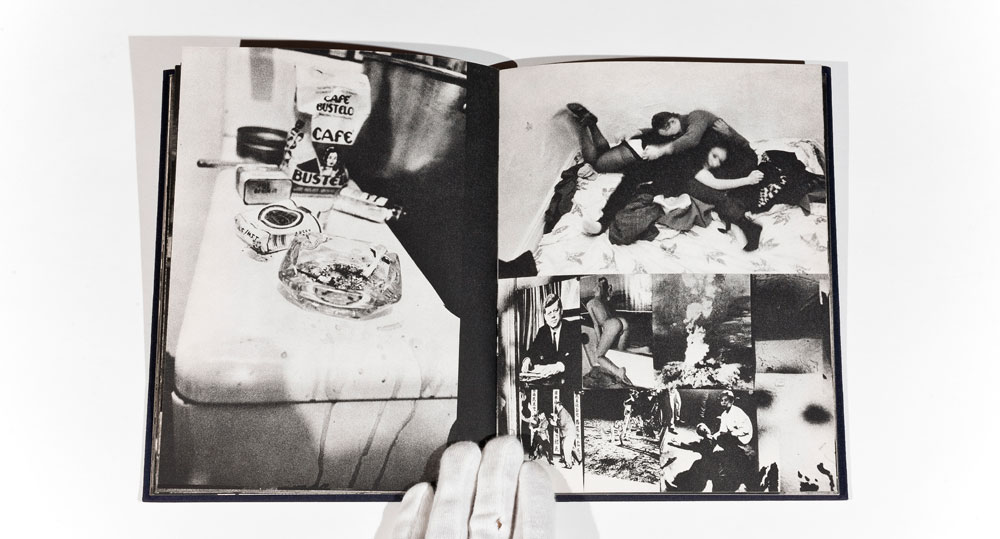
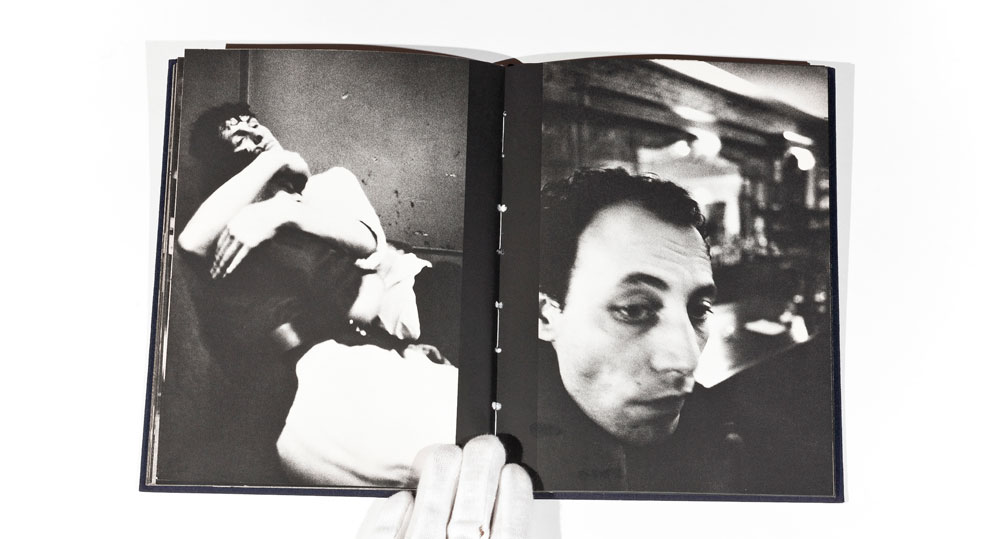
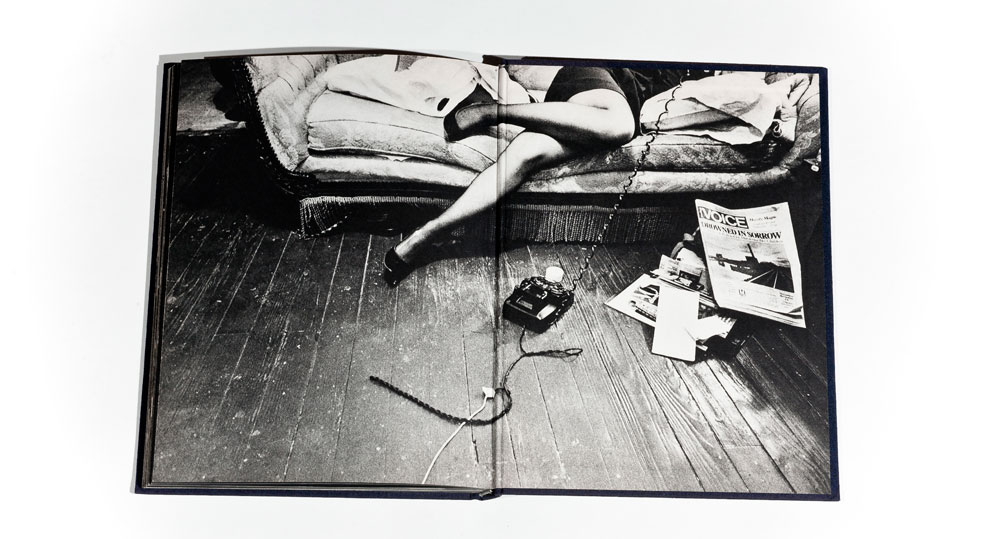
In 1968 Swedish photographer Anders Petersen walked into Café Lehmitz, a bar located on the Reeperbahn, the red light district of Hamburg. Sitting down at a table with a beer, the photographer was soon engaged in conversation with a young man, his camera sitting on the table top, when he got up fro the table to use the menʼs room, Petersen left his camera on the table, and when he returned from he found the barʼs clientele
photographing one another.
Seizing the opportunity, Petersen asked if he too could photograph the bars clientele; a
mixture of sailors and dock workers, strippers, prostitutes and their pimps, along with poets and small time criminals; all of whom occupy the fringe of society, and signalling the beginning of a project that would occupy him on and off for the next two years.
In the raw and gritty black-and-white images, that have now become a signature of
Petersenʼs oeuvre, we experience in Café Lehmitz, not a voyeuristic view of this
atmospheric, smoke filled world, but a collaborative visual dairy. Petersen has fully
integrated himself into the Café Lehmitz family, with it becoming a new home.
Whilst this work is often graphic, even brutal at times, it is a very intimate and sensitive
work, with Kate Bush, curator of the Barbicanʼs ʻIn the Face of history: European
Photographers in the 20th Century,ʼ an exhibition which included the Petersenʼs series,
describing Café Lehmitz as a ʻZeigeist book,ʼ she continues, ‘It has a powerful identity and is totally of the moment. But Petersen is also important because he was very much a
participant in the social life he was documenting. His work has that integrity of engagement that great personal reportage requires.’
Chris Timothy is a photographer and teacher from England, he runs the 21 Rue De La Hachette blog which is well worth a follow. He got in touch to add thoughts on Larry Sultan’s ‘The Valley’ with reference to key images. If you do not have access to the book make sure you check out our video from cover to cover.
Chris Timothy on Larry Sultan’s ‘The Valley’
Larry Sultans work entitled “The Valley” documents the filming of pornographic movies in his hometown of San Fernando Valley in Southern California. The Valley is an average middle class area, where homes cater for the needs of dentists, lawyers and strangely enough porn stars. These wonderful homes are rented out to the porn industry for live scenes to be captured in an aspirational setting. The strategy that ensures the body of works identity is different to that in which it is documenting is its main angle of concentration on location rather than the actors or actresses being sexualised or objectified. Sultan’s images explore the issues surrounding the questions; why would the owners of these middle class homes rent them to the industry, why does the industry want them? And maybe most importantly what are the consequences?
Why would the owners of these middle class homes rent them to the industry? Is it a sense of self-indulgence on the owner’s part or is it simply a method of further financial gain, which helps with the continuity of the middle class lifestyle? I believe it is the later. To rent out your home to the porn industry is a big moral decision and to do so is a clear indication of where you stand on the issue. However Sultan’s work discretely highlights maybe this moral decision is simply ignored and the homes are being rented out without too much thought to what the consequences may actually be. Sultan’s images show family portraits and personal photographs of the homeowners, their friends and their families, left on shelves and cabinet tops. These photographs are being captured in the background of sexual scenes and taken into the industry. While the viewers are consuming sexual media texts the home owners family and friends are on full view. Is this conscious choice of Sultan to show this demonstrating the loss of morality and care for others when a high amount of money is involved.
So why does the industry want these homes? The choice of location has been made by the production companies to satisfy the needs of the consumers of the films. Remember, the sole aim of these films are to excite the viewer, so the combination of sexual gratification and aspirational images and locations will help the audiences purpose of consumption be met. To set scenes in houses, which most are not able to afford adds to the fantasy aspect for consumers and maybe most importantly adds to the escapism. Sultan’s choice of mis en scene within some of his images demonstrates this.
There is a definite juxtaposition between the property owners and the porn stars. One of Sultan’s images will focus on the pleasure and excitement of being a porn star and the next, the banality of sitting, sleeping and generally waiting around on set. This drastic change of emotion could be compared to that stereotypical view of a superficial consumer lifestyle held by the middle class. One minute you are filled with excited with a purchase that most would not be able to afford, the next this excitement has worn off. You find yourself sitting in your museum of expensive purchases with the realisation that boredom has set in due to a lack of motivation and purpose of a lifestyle where there is no need to work towards anything, success has already been achieved.
Tasha's Third Film, 1998
Although Sultan states this work is not focused on the stars of the porn industry, after the audience views the images, most cant help but question why the actors and actresses take part in the industry. Do they perform due to a sense of aspiration and a desire to gain financial clout from a profession that is relatively high paid? Are the actors motivated by and aspire to be the very people who are renting their homes to the industry in which they work? So what are the consequences of the middle class renting out their home to the porn industry? Well, that is a matter of opinion dictated to you by your own moral standing. But what “The Valley” does clearly demonstrate is the porn industry and the films it creates are becoming more and more integrated in every day life and society in the western world.
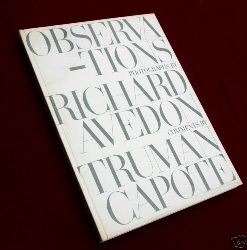
At the age of 17, Richard Avedon (1923-2004) joined the merchant marineʼs photographic section in 1940, where he would spend much of his time producing personnel identification photographs, and occasionally document shipwrecks. Following his discharge from service in 1944, Avedon found a job as a photographer in a New York department store, before Alexey Brodovitch — who Avedon had studied under in his Design Laboratory at the New School of Social Research — hired the 22 year-old as a staff photographer at Harperʼs Bazaar in 1945, where he would be the youngest member of the Russian emigres team.
This appointment would mark the beginning of the creative collaboration between the
inspirational art director, who did much to introduce modern graphic design aesthetics, and modernist European photography to the United States, and the photographer, that
culminated in the publication of ʻObservationsʼ in 1959.
One of the characteristicʼs of Brodovitchʼs design style, was his use of white space on the
editorial pages of Harperʼs Bazaar and his other projects, including ʻPortfolio,ʼ and this
influence is seen in Avedonʼs photography when he adopted the seamless white background in his fashion photography, for which he first became known, and latterly his
portrait work to.
Throughout his career, Avedon was a restless chronicler of our time, that led John Lahr to
write in ʻThe Times,ʼ ʻNo one has given a nation a more wide-ranging, disciplined
photographic document of itself,ʼ which is well reflected in the 150 pages that make up
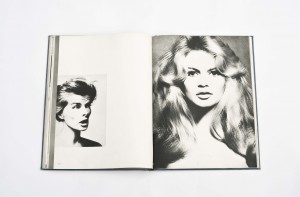
ʻObservationsʼ which includes portraits of Charlie Chaplin, John Huston, Alfred Hitchcock, The Duke and Duchess of Windsor, Arthur Miller, Picasso, Jacques Cousteau, Marilyn Monroe, Mae West, Judy Garland, Igor Stravinsky, Katherine Hepburn, Brigitte Bardot, Gloria Swanson, Louis Armstrong, Humphrey Bogart, Buster Keaton, Georgia OʼKeefe, Frank Lloyd Wright, and Truman Capote, amongst many other key people of the 20th century.
A remark made by Avedon in the 1970s reflects this restless nature, ʻIf a day goes by
without my doing something related to photography, itʼs as though Iʼve neglected
something essential to my existence, as though I had forgotten to wake up.ʼ
For a photographer to produce during their career more than one exceptional book — a
volume that sets new standards — is a rarity, Avedon is one of those exceptions. In 1964,
he collaborated with the writer James Baldwin, to create ʻNothing Personalʼ (Atheneum),
which was designed by art director Marvin Israel (a good friend of Diane Arbus), and whilst ʻNothing Personalʼ isnʼt quite of the standard of ʻObservations,ʼ it signalled Avedonʼs commitment to the book format, and in 1985, he published his sixth book, ʻIn the American West 1979-1984,ʼ (Harry N. Abrams) designed by Elizabeth Avedon, who also produced ʻPortraitsʼ (Farrar, Straus, Giroux, 1976) and ʻPhotographs 1947-1977ʼ (Farrar, Straus, Giroux, 1978).