Categories
CLOSER LOOK GUEST POST INDEPTH INVISIBLE CITY REFLECTION

Ken Schles On: The Rare and Unique life of ‘Invisible City’

Invisible City is well known to those who know it and unknown to those that don’t! How do you feel about it being so rare, and considered one of the greats, while many who cannot afford it, have not been able to see it.

– Matt

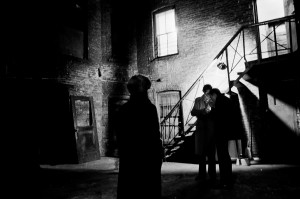
I wish more people could see it. I feel it has never really been widely known. It went out of print soon after it was published. It was never my intention for it to be so rare. Relatively unknown and yet delighted in, maybe that’s a good definition of it being in a certain kind of club? A good thing people will be able to see it here in this club then. But books of this sort need to be held and flipped through, that I know.
© KEN SCHLES

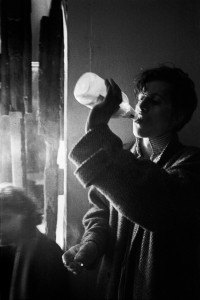
Books take on their own lives, if they are successful, and go on to have their own histories. I have a few stories around the book. Books reflect back on you. And although this book is relatively obscure because of its rarity, it’s given me a few stories to tell. Walker Evens called his book, American Photographs, his “calling card.” For me, Invisible City was a life-line into a career as a working artist. It has gone places I’ve never been to, spoken to people I’ll never know. It’s always been underground and under the radar. Something people ‘in the know’ seem to know about—whatever that means.

It’s a small private book, and it has affected people in a personal way. But as its creator, I can’t objectively gauge its impact. And I don’t think anybody creating a work of art can ever truly understand what impact one’s work has had. It’s hard enough to know one’s own mind, let alone someone else’s. Sure, over the years I’ve gotten some glimpses. Pre-internet, I’d get the odd phone call. Sometimes people would want to visit, or even send me small gifts. One time I got a phone call from Italy, from a fashion house that said that Robert Frank had told them to call me. I found out through them that Invisible City was a favorite book of his and he was throwing some work my way (eventually there was an ill-fated gallery connection from him too. And it was through that that I eventually met him). One call was from Robert Robertson, the DP who was working on Oliver Stone’s Natural Born Killers at the time. Over the years I found it had had a huge effect on many people in the photo and especially the film industry, but at the time it was considered too ‘raw,’ and too ‘hard’ for the main stream.
© KEN SCHLES

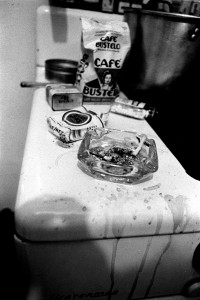
But the world has changed. I’d hear that some teacher was showing it to their students, or there was a lecture about it. In time, I’d be asked to give lectures about it. But not that many people contacted me early on. During that time I kept lamenting that the only good photographer was a dead one. I was still struggling to make ends meet. John Szarkowski at MoMA told me that the museum would have to support my work because it was important and galleries wouldn’t want to hang my pictures on the wall because they were too ‘difficult.’ Unfortunately, John retired soon after and the support wasn’t all that forthcoming as the photoworld and museumworld morphed into something else.

So the book didn’t have a direct impact on my career, not at first anyway. It took a few years. Over time though, it’s been cumulative, and it hasn’t abated. Not in the least. I’d hear of creative meetings in all sorts of creative industries—after the fact, where the book was referenced, but rarely did anyone bother to call me. In that, the book had a strange trajectory. Immediately upon publication, the New York Times selected it as a notable book of the year, but there were not many copies yet in distribution because of a decision to sell most of the copies abroad. Copies were slow to surface in US bookstores and it was considered out of print within a year. When first published, a local favorite bookstore, St. Mark’s Books, had it on their hip new arrivals table. I was really proud of that, but within a week it was hidden behind the cash register because so many copies were being stolen.
© KEN SCHLES

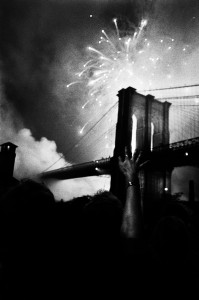
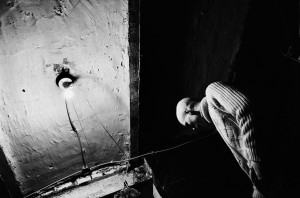
You had to know that it was there and you had to ask for it. To me it was frustrating. How were you to know about a photography book you had never seen? I worked so hard to make it happen, and when it did, immediately it went into hiding. Peter Galassi at the Museum of Modern Art put it on display for the More Than One Photography exhibition, but left it in a vitrine, so nobody could leaf through it or even touch it. Somehow, the book was out there, but it was also hidden. Early reviews came with some caveats. I don’t think the book was that well understood at the time when it first came out. The Times review said I was making obvious connections to Weegee. Others thought I had copied Ed Van der Elsken’s Love On The Left Bank—Susan Kismaric at MoMA showed me that book after she saw mine. I love that book, but I had never seen it before.
© KEN SCHLES

Because of its rarity (it sold out really fast) the price went up quickly and it was lost to a more general public. I couldn’t even afford to buy copies on the secondary market. It stayed hidden away in collections. How do I feel about that? It’s funny, you want something to be successful, but you think that it being a success would cause certain things to happen, which isn’t necessarily the case. I guess I was naïve. When Jack Woody published my book, he also put out that same year Joel Peter-Witkin’s first book and Herb Ritt’s first book. Personally, and in the long run, I think my book is as important as theirs, but they got the museum shows and they got the fame. The attention my book got was pre-internet word of mouth. I see now that it is people of a certain age and from a certain milieu who mostly know of the book. There were no photography book geeks to speak of back then. There were lovers of photography books, but it wasn’t such a vocal and distinct appellation to like photography books. And of those that did their voices had little impact in the larger photographic community.

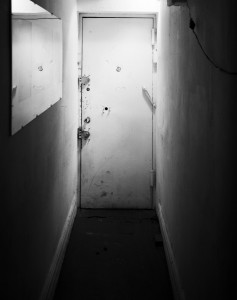
Not that long ago I was in the office of Phil Block, the director of the school at the International Center of Photography, and while he sings the praises of Invisible City (he was an early and ardent advocate, an early champion of photography books as well) he says that younger people just don’t know about it. To test this, I asked students walking into his office if they’d heard of the book. Most all said they never heard of it. With less than two thousand copies in a world of seven billion people, I think that’s quite understandable. But then again, you just don’t know its impact. In 1999, I got an email from the Dutch photographer and curator, Machiel Botman. He and the curator Wim Melis of the Noorderlicht Foundation for Photography wanted to make my work the center of a festival that included a slew of some very impressive photographers (I don’t want to leave any names out, so please look at this link). They said, “We love Invisible City, what have you been doing lately?” That exhibition led to the publication of my second book, The Geometry of Innocence, published by Hatje Cantz, in Germany, 13 years after IC came out.
© KEN SCHLES

I hadn’t a clue that there was an audience of people that knew of my work outside the U.S. I felt like one of those old forgotten jazz musicians who had to go to Europe to find their audience. So, in that sense, I wish my work wasn’t so obscure to people. It’s been a long and somewhat hard road. I’m lucky that I can still work and explore new avenues of ideas. By and large, Invisible City was my passport to entry. I’m proud of its successes. From all the responses from people over the years who have sought me out to tell me what impact the book has had on their lives, I would think that more people would like to know about it. But with few copies about and people being so precious about them, I can understand why more people don’t know about it. I wish Invisible City more luck in the coming years. More is hard to say.

– Ken Schles


Categories
COMMENTS GUEST POST INVISIBLE CITY

Jn-Ulrick Desert on ‘Invisible City’, a personal reflection

The following is a personal reflection on this month’s book ‘Invisible City’ by Ken Schles. If you would like to add your own personal reflection from seeing the book for the first time. Email us mail@photobookclub.org

I have selfishly carried my copy of this wonderful book with me 3000 miles to my new home in Europe, since 10years now. I knew the work was beautiful then and i had no idea (youth) that that landscape (including the people) captured so artfully by Ken’s vision would morph or fade away- it now seems like a tsunami has hit what we all called home turf (east-village)- New York let alone the USA is indebted to Ken to have captured such a seminal period of American history so well (and i remind everyone that the book is a mere tip of the iceberg which he chose to reveal). I understand (and can see) that this book has influenced videos and films such as Pi (π) which is well worth seeing. Indeed I remember Newmath gallery and Mario and Craig Coleman and an atmosphere that I sometimes see only vaguely echoed here in Berlin (perhaps that is why i live here now- trying to re-enter Ken Schles’ Invisible City)

– Jn-Ulrick Desert

Categories
BOOKS GUEST POST INVISIBLE CITY

Ken Schles On: The Photo Book Club Process

First off I want to thank Matt and Wayne for taking on Invisible City for the Photobook Club. They didn’t have to do it. But I’m glad they have.

Photo Book Club and Ken Schles' Invisible City

The project of the Photo Book Club interests me: it’s about photography books, something I’ve been interested in and engaged in as part of my practice as a photographer for over 25 years. But there is something else that piques my interest here as well. You see, making lists of importance and photography share a common thread—one I also connect to the writing of history as well. All are activities to seek out and present hierarchies of importance. We do it all the time, in the choices we make, how we focus our attentions. When we gravitate towards something, I don’t think it’s necessarily about popularity. And even when it is, it’s almost always about something else as well. At their best, these attentions, these choices are about significance. And the question of significance interests me deeply.

©KEN SCHLES

Significance is something that this blog takes aim at and something photography targets at as well. Flusser calls photographs “significant surfaces” —they are two-dimensional surfaces that signify something. And significance is very much of importance to us humans. We are signifying creatures. It’s what we do. Maybe it is because every one of us operates from a unique and insignificant point in the universe: a deep subjectivity that we struggle to overcome through social activities. We are compelled to ‘discover’ what is significant and share our discoveries: for survival’s sake, certainly, but also for what nourishes us.

©KEN SCHLES

We can take someone else’s word for what is important or significant, which of course, we do all the time, but do those opinions have as much meaning as when we investigate and make these evaluations for ourselves? For me photography has always been about that kind of questioning. I test images against ideas, I test ideas through the work I do with photography, rather than simply accept what I am presented with. I don’t tend to let images ‘wash over’ me. I search for meaning.

And I believe that’s the project of the Photo Book Club as well. The Photo Book Club evaluates significance and relevancy, expanding our insight into the possibilities of what specific photo books can offer. That is why I am keen for this Photo Book Club process.

– Ken Schles

Categories
BOOKS INVISIBLE CITY SYNOPSIS

Synopsis: Ken Schles – ‘Invisible City’

Title

Invisible City

Author

Ken Schles

Publisher

Twelvetree Press, 1988

For a decade Ken Schles watched the passing of time from his Lower East Side Manhattan neighborhood. His camera has fixed the instances of his observations, and these moments become the foundation of his invisible city. Friends and architecture come under the scrutiny of his lens and, when sorted and viewed in the pages of this book, a remarkable achievement of personal vision emerges.

For the next month we will be looking at Invisible City with its author Ken Schles adding comment and context throughout. After you have seen the book and text using the links below, perhaps you would like to put a question to Ken?

Getting a copy of Invisible City is not easy, hence our video and text posts, but you can get your hands on Ken’s latest release ‘Oculus’ from kenschles.com or from the publisher, Noordelicht here.

Resources:

Invisible City: The Images (VIDEO)

Invisible City: The Book (VIDEO)

Invisible City: the Text

Ken Schles’ Website

Review by Guy Trebay

Review by Thomas Beller


Categories
BOOKS CONTEXT INVISIBLE CITY TEXT

Invisible City: The Text

As well as showing Invisible City in its entirety here, we see that the text is just as important to try and get a sense of the book and Schles’ vision. So here is the text featured in the book alongside the full video for your viewing pleasure!

Opening text:

Cities are a product of time. They are the molds in which men’s lifetimes have cooled and congealed, giving lasting shape, by way of art, to moments that would otherwise vanish with the living and leave no means of renewal or wider participation behind them. In the city, time becomes visible: buildings and monuments and public ways, more open than the written record, more subject to the gaze of many men than the scattered artifacts of the countryside, leave an imprint upon the minds even of the ignorant or the indifferent. Through the material fact of preservation, time challenges time, time clashes with time: habits and values carryover beyond the living group, streaking with different strata of time the character of any single generation. Layer upon layer, past times preserve themselves in the city until life itself is finally threatened with suffocation… Lewis Mumford The Culture of Cities


Back of the book text:

Steadily, for the past generation, a transformation has been going on in every department of thought: a re-location of interest from mechanism to organism, a change from a world in which material bodies and mechanical motion alone were real to a world in which invisible rays and emanations, in which human projections and dreams, are as real as any immediately visible or external phenomenon – as real and on occasion more important.
Lewis Mumford, The Culture of Cities

A man becomes confused, gradually, with the forms of his destiny; a man is, by and large, his circumstances. More than a decipherer or an avenger, more than a priest or a god, I was one imprisoned. From the tireless labyrinth of dreams I returned as if to my home to the harsh prison.. I blessed its dampness, I blessed its tiger, I blessed the crevice of light, I blessed my old suffering body, I blessed the darkness and the stone.
Borges Labyrinths

All is imaginary – family, office, friends, the street, all imaginary, far away or close at hand, the woman; the truth that lies closest, however, is only this: that you are beating your head against the wall of a windowless
and doorless cell.
Kafka Diaries (1921)

This metropolitan world then, is a world where flesh and, blood is less real than paper and ink·and celluloid. It is a world where the great masses of people, unable to have direct contact with more satisfying means of living, take life vicariously, as readers, spectators, passive observers: a world where people watch shadow-heroes and heroines in order to forget their own clumsiness or coldness in love, where they behold brutal men crushing out life in a strike riot, a wrestling ring or a military assault, while they lack the nerve even to resist the petty tyranny of their immediate boss: where they hysterically cheer the flag of their political state, and in their neighborhood, their trades union, their church, fail to perform the most elementary duties of citizenship.

Living thus, year in and year out at second hand, remote from the nature that is outside them and no Ie remote from the nature within, handicapped as lovers and as parents by the routine of the metropolis and by the constant specter of insecurity and death that hovers over its bold towers and shadowed streets living thus the mass of inhabitants remain in a state bordering on the pathological.
[Nb – The quote continues, but I did not include this part in the book, although it might be interesting to see it here:] – Ken Schles
They become the victims of phantasms, fears, obsessions, which bind them to ancestral patterns of behavior. At the very point where super-mechanization takes hold of economic production and social intercourse, a treacherous superstition, a savage irrationality, reappear in the metropolis. But these reversionary modes of behavior, though they are speedily rationalized in pseudo-philosophies, do not remain on paper: they seek an outlet. The sadistic gangster, the bestial fascist, the homicidal vigilante, the law-offending policeman burst volcanically through the crust of metropolitan life. They challenge the dream city with an even lower order of ‘reality’.
Lewis Mumford, The Culture of Cities (p.258)

…reality itself, entirely impregnated by an aesthetic which is inseparable from its own structure, has been confused with its own image. Reality no longer has the time to take on the appearance of reality. It no longer even surpasses fiction: it captures every dream even before it takes on the appearance of a dream. Schizophrenic vertigo of these serial signs, for which no counterfeit, no sublimation is possible, immanent in their repetition – who could say what the reality is that these signs simulate?
Jean Baudrillard, Simulations

All he wanted was to hold the photograph in his fingers again, or at least to see it.
‘It exists!’ he cried.
‘No,’ said O’Brien.

He stepped across the room. There was a memory hole in the opposite wall. O’Brien lifted the grating. Unseen, the frail slip of paper was whirling away on the current of warm air; it was vanishing in a flash of flame. O’Brien turned away from the wall.
‘Ashes,’ he said. ‘Not even identifiable ashes. Dust. It does not exist. It never existed.’
‘But it did exist! It does exist! It exists in memory. I remember it. You remember it.’
‘I do not remember it,’ said O’Brien.

Winston’s heart sank. That was doublethink. He had a feeling of deadly helplessness. If he could have been certain that O’Brien was lying, it would not have seemed to matter. But it was perfectly possible that O’Brien had really forgotten the photograph. And if so, then already he would have forgotten his denial of remembering it, and forgotten the act of forgetting. How could one be sure that it was simple trickery? Perhaps that lunatic dislocation in the mind could really happen: that was the thought that defeated him.

O’Brien was looking down at him speculatively. More than ever he had the air of a teacher taking pains with a wayward but promising child.
‘There is a Party slogan dealing with the control of the past,’ he said. ‘Repeat it, if you please.’

‘”Who controls the past controls the future: who controls the present controls the past,”‘ repeated Winston obediently.
George Orwell, 1984


Categories
BOOKS EVENTS MEET-UPS NEWS

Join the Photo Book Club for the first meet-up at Photobook London

We will be holding our inaugural meet-up at Photobook London in the evening with an informal event of books, discussion and beer.

As well as the Photo Book Club bringing a selection of the books they have looked at over the past 6 months, those who wish to attend are asked to bring along a photobook to share and discuss. After the event, one of these books will be chosen to be January’s book on the Photo Book Club.
This event has a limited number of spaces, please email info@photobookclub.org to reserve a space.

Date:           Monday 5th September
Time:          18:00
Location:   PhotoBook London
29-31 Saffron Hill
London EC1N 8SW

Categories
BOOKS COMMENTS INTERVIEW INVISIBLE CITY

Put your questions to Ken Schles on the Photo Book Club

Throughout September we will not only be looking at Invisible City, but we will be hearing from its author Ken Schles who will not only be giving us a unique insight on how the book came to be, but also answering questions from Photo Book Club readers on the book, his practice and anything else that you would love to ask one of the most important photographic minds working today.

[customcontact form=2]

Pop any questions to us via the comments section above, our Facebook page, using the #photobc hashtag on Twitter, or using the form below. We will collate questions and out them to Ken in September.

If you have not seen the book, it is online in it’s entirety right here

Categories
BOOKS MEET-UPS NEWS THOUGHTS ON BOOKS

Meet-up Map – An update and improved ease of use!

The Photo Book Club Meet-up map has now had over 10,000 hits and a smattering of people adding themselves to the map in order to meet up with like minded ‘photobook-folk’. We also have the first few meetings shown on the map so make sure you check out if they are near you!

Some people have contacted me having trouble with adding themselves onto the map and so in order to make this smoother, I have created a form below and on the Meet-up page which when filled in, will be sent to myself in order to add you to the map.

If you are planning to host or organize a meeting, pop an email to matt@photobookclub.org and we shall add this to the map as well as publicize it on the website.

Note
The map is still public and can be edited by anyone, this public nature also means that the information you provide can be seen by other users. If you would rather, you can provide a website instead of direct contact information, and a rough location rather than your house!

[customcontact form=1]

Categories
BOOKS INVISIBLE CITY

Invisible City: The images and the book

‘For a decade Ken Schles watched the passing of time from his Lower East Side Manhattan neighborhood. His camera has fixed the instances of his observations, and these moments become the foundation of his invisible city. Friends and architecture come under the scrutiny of his lens and, when sorted and viewed in the pages of this book, a remarkable achievement of personal vision emerges.’

As we have previously mentioned, come September we will be looking at Ken Schles’ ‘Invisible City’ with Ken himself agreeing to take part in the discussion and be available to answer any questions.

In order to do this we need to ensure as many people as possible can see this very rare and often expensive object. And so we have produced two videos which are shown below. The first displays all the images from ‘invisible City’ sequenced as they are in the book. The second video shows the book as an object in itself to give an idea of the layout, typography, size and feel of the book.

You can also flick through the book at your own pace with the slideshow at the bottom of the page (Click to advance)

We would love to hear first thoughts upon seeing the images and book as well as any questions which we can put to Ken when he joins us in September: email mail@photobookclub.org or find us on twitter – @photobookclub


[slideshow id=1]

Categories
SUMMARY

Cafe Lehmitz: A Summary

Thanks to all who have contributed to the discussion on Anders Petersen’s ‘Cafe Lehmitz’. It has been a really busy month! We have compiled an archive of the posts below for future reference and will also be listed under the reading list page.

Anders Petersen talks about his SOHO projects – video
Synopsis – Anders Petersen – ‘Cafe Lehmitz’
5b4 looks at the editions of Cafe Lehmitz
Key editions and other books by Anders Petersen
A personal reflection by Wayne Ford
A personal reflection by Matt Johnston
Stan Banos on the technical proficiency in Cafe Lehmitz
Cafe Lehmitz inDepth by Wayne Ford
Aggie Morganti on the warmth, honesty and heart of Cafe Lehmitz
A Personal reflection by Aya Takada

There is no book in August as we explain here, but in September we will be looking at Ken Schles’ ‘Invisible City’