Categories
BOOKS COMMENTS INVISIBLE CITY REFLECTION

Matt Johnston on ‘Invisible City’, a personal reflection

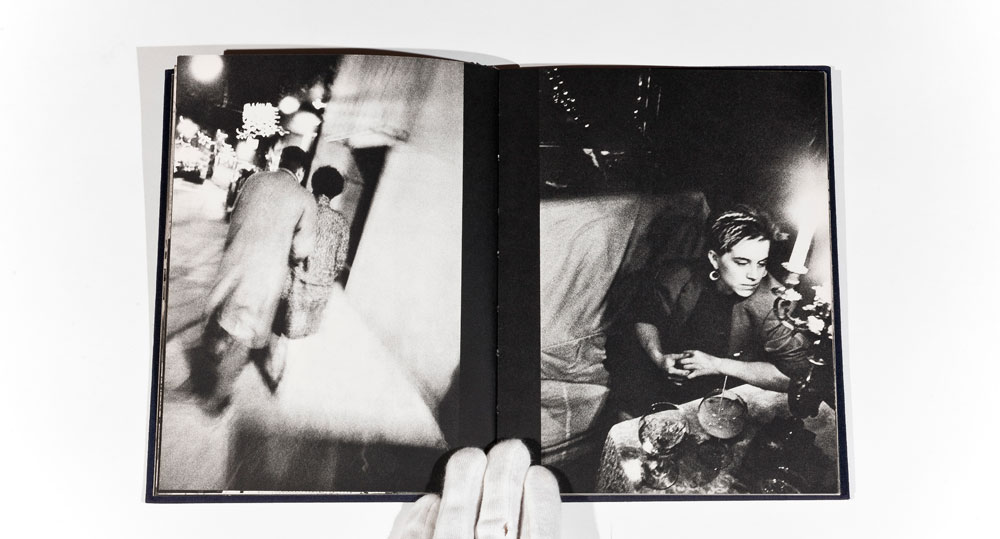
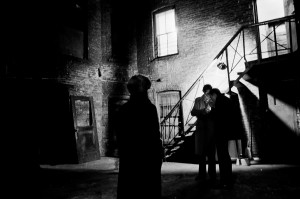
The first thing I said upon seeing the ‘Invisible City’ in it’s entirety was simply, “wow”, unfortunately at the time I was across the table from Ken Schles himself who had kindly agreed to lend the Photo Book Club a copy. It was a ‘Frasier-like’ moment when I really wished I had something more intelligent to say.

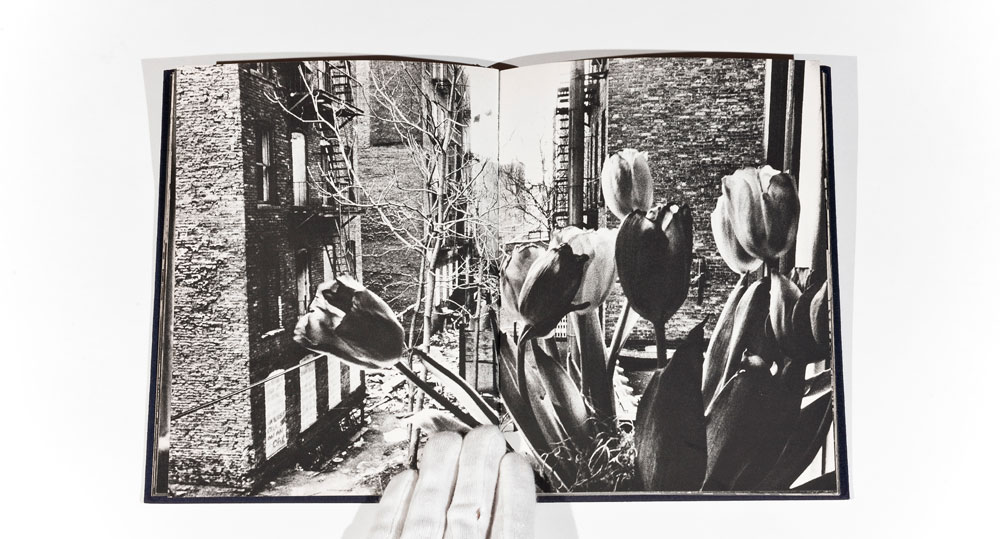
I also wished that I had a memory of this time and place depicted in such dark tones within Ken’s images, I wanted to layer my own history onto Ken’s page and relive a particular time through different eyes. But I have no memory of Ken’s subject and so Invisible City was new for me, allowing me to search without reference and without the worry of reality or history. It was like reading a book as a kid, each character would come to life and create a movie in my mind. There are books in which the authorial presence is constant and reassuring, in Invisible City I felt I was left alone to wander and explore Alphabet city, a fascinating, daunting, exciting and entirely unfamiliar place to be.

To me, Invisible City is not just a poem to the night (As Jeff Brouws commented) but a poem to the book, a reminder of how powerful the book as a medium can be. Single images are erased from my mind as I follow the darkest black tones from page to page, much like a shadow stretching across the entire spread of images. A photobook is a selection of images, and a good photobook is a fantastically sequenced and edited selection of images. Invisible City is just one, single, poetic image.

– Matt Johnston

©KEN SCHLES


Categories
BOOKS INVISIBLE CITY REFLECTION SUMMARY VIDEO

Invisible City: Nightwalk, Fragments and Alternates

I want to thank Matt Johnston and Wayne Ford so very much, once again, for taking on Invisible City. I hope people not already familiar with IC found something here. For me, this month has been a great ride. The Photo Book Club re-connected me to that challenging time—not only to people I once knew but it also reaffirmed bonds with people I’ve known on through into our current challenging times. I want to personally thank those who wrote so eloquently about their memories and the significance Invisible City had for them: Some of you I’ve met in later years and some I still have yet to meet—and look forward to meeting.

I have to say it’s been extraordinarily good timing for me to revisit Invisible City. It gave me insight on current work, as well as old. Because of this Photo Book Club process, I dug out things I barely remembered I even had. It’s help me with talks I am about to give and it was helpful in organizing the Invisible City images to exhibit at the Bursa Photo Festival. And good timing as well as I consider a reprint in the book’s future.

Over the summer I was approached to produce a piece for Paris Photo by Harper’s Books that worked in relation to Invisible City. And because my mind thinks in ‘book’ form, I put together a maquette of images and text I had originally considered for inclusion in Invisible City but that didn’t make it into the original for reasons about tone and emphasis. To this day I still enjoy seeing and reading this other work: they still share essential poetic qualities that infuse the heart of Invisible City; they still speak about that time and my experience of it. And so I made a small companion to Invisible City—Invisible City: Nightwalk, Fragments and Alternates. Because this is a one of a kind, hand-made thing, I videotaped it before sending off to Harper. I am now happy to share this rarity here with the Photo Book Club members to close out the Photo Book Club/Invisible City experience:

Images in this dummy have not appeared previously anywhere (if memory serves me) with the following three exceptions: image on left at the 2:11 mark, image at right at the 4:00 mark and the back cover image all appear in my book, A New History of Photography: The World Outside and the Pictures In Our Heads (plates 61, 35 and 31 respectively). The back cover image is also in the collection of The Metropolitan Museum of Art in New York.

TEXT

This is a hand-made 64 page book prototype (including covers) composed of material I considered for use in the book Invisible City (Twelvetrees Press, 1988). None of these images appear in the final printed version of the book, however. The images here were scanned from original prints used in a book dummy that was a forerunner to Invisible City. The plates used to print Invisible City were also made from this set of original prints. 

The book dummy ends with my original notes for a talk I gave at the International Center of Photography in 1990. The full text, including the excerpt by Kathy Acker, from Blood And Guts In High School, can be seen here.

Other text in this prototype:

NIGHT WALK
Night draws from its body one hour after another. Each different, each solemn. Grapes, figs, sweet drops of quiet blackness. Fountains: bodies. Wind plays the piano among the stones of the ruined garden. The lighthouse stretches its neck, turns, goes out, cries out.
Crystals a thought dims, softness, invitations: night, immense and shining leaf plucked from the invisible tree that grows at the center of the world.

Around the comer, Apparitions: the girl who becomes a pile of withered leaves if you touch her; the stranger who pulls off his mask and remains faceless, fixedly staring at you; the ballerina who spins on the point of a scream; the who goes there?, the who are you?, the where am I?; the girl who moves like a murmur of birds; the great tower destroyed by inconclusive thought, open to ,the sky like a poem split in two … No, none of these is the one you wait for, the sleeper who waits for you in the folds of her dream.

Around the corner, Plants end and stones begin. There is nothing, nothing you can give the desert, not a drop of water, not a drop of blood. You move with bandaged eyes through corridors, plazas, alleys where three vile stars conspire. The river speaks softly. To your left, to your right, ahead, behind: whispers and cruel laughter. The monologue traps you at every step with its exclamations, its question marks, its noble sentiments, its dots over the i’s in’ the middle of a kiss, its mill of laments, its repertory of broken mirrors.
Go on: there’s ‘nothing you can say to yourself.
– Octavio Paz, from Eagle or Sun?

Remember when I insulted you? When I vomited all over you?
And when you had to see with these eyes that never close how I slept with that vile hag and talked of suicide? Show me your face,
Where are you? Actually, none of this matters to me. I’m tired, that’s all. I’m sleepy. Don’t these endless discussions tire you?
It’s as if we were a couple who, at five in the morning, with swollen eyes, continues on the rumpled sheets a quarrel started twenty years ago. Let’s go to sleep. Say good night. Show a little courtesy.
You are condemned to live with me and you ought to force yourself to make life more bearable. Don’t shrug your shoulders. Be quiet if you want, but don’t go away. I don’t want to be alone: the less I suffer, the more unhappy I am. Maybe happiness is like the foam of the painful tide of life that covers our souls with a red fullness. Now the tide recedes and nothing remains of that which made us suffer so. Nothing but you. We are alone, you are alone. Don’t look at me. Close your eyes so I can close mine. I can’t get used to your eyeless watching.
– Octavio Paz, from Eagle or Sun?

Memory is redundant: it repeats signs so that the city can begin to exist.
– Italo Calvino, from Invisible Cities

“The necessary condition for an image is sight,” Janouch told Kafka; and Kafka smiled and replied: “We photograph things in order to drive them from our minds. My stories are a way of shutting my eyes.”
– Roland Barthes, from Camera Lucida

At this point Kublai Khan interrupted him or imagined
interrupting him, or Marco Polo imagined himself
interrupted, with a question such as: “You advance
always with your head turned back?” or “Is what you see always behind you?” or rather, “Does your journey take place only in the past?”
– Italo Calvino, from Invisible Cities

Mind takes form in the city; and in turn, urban forms condition mind. For space, no less than time, is
artfully reorganized in cities: in boundary lines and
silhouettes, in the fixing of horizontal planes and
vertical peaks, in utilizing or denying the natural site, the city records the attitude of a culture and an epoch to the fundamental facts of its existence.
– Lewis Mumford, from The Culture Of Cities

Even when lovers twist their naked bodies, skin against skin, seeking that position that will give one the most pleasure in the other, even when murderers plunge the knife into the black veins of the neck and more clotted blood pours the more they press the blade that slips between the tendons, it is not so much their copulating or murdering that matters as the copulating or murdering of the images, limpid cold in the mirror.
– Italo Calvino, from Invisible Cities

I don’t believe people exist whose inner plight resembles mine; still, it is possible to imagine such people—but that the secret raven forever flaps about their heads as it does about mine, even to imagine that is impossible.
– Franz Kafka, from Diaries 1914-1923

Categories
BOOKS COMMENTS GUEST POST INVISIBLE CITY

Stan Banos on ‘Invisible City’, a personal reflection

Thanks to Stan Banos for contributing this personal reflection on Ken Schles’ ‘Invisible City’. Stan’s ‘Reciprocity Failure’ is a must read and can be found over here.

Like Cafe Lehmitz, I’m glad someone not only made the effort- but actually succeeded in successfully capturing this part of town, this part of time that existed in all its brief wonder and tragedy. Loisaida was in constant motion in the late 70′s, early 80′s, evolving (or devolving) from a culturally heterogeneous, junkie laden, cheap rent district of promise, hope and energy into that of a gentrified homogeneity of yuppies, condos and crack. In a half dozen brief years, the place was transformed from a place fueled by the spirit and fire of punk, new wave and the very beginnings of rap, to a veritable laughing stock where practically every other neighborhood storefront and bodega was transformed overnight into fledgling art galleries by trust fund, wannabe gallerists. Their “galleries” lasted about as long as your average punk set at CB’s, but the blight upon the neighborhood was permanent. The Ramones had somehow mutated into Madonna.

I remember someone wrote a book called ‘It Was Gonna To Be Like Paris’. If only. Thanks for the memories Ken.

©KEN SCHLES

– Stan Banos


Categories
BOOKS CLOSER LOOK COMMENTS GUEST POST INVISIBLE CITY

Ken Schles On: Invisible City and photobook lists

Ken, perhaps you could talk a little about Invisible City’s relationship with ‘Best Photobook lists’?

The lists… I’m assuming you mean the Parr/Badger book, the Roth book and Hasselblad’s The Open Book — I don’t really want to say too much about them directly since the stories I know about Invisible City being included in them or not are all hearsay. I’m happy Invisible City was seriously considered. I’m gratified that other people would argue publicly and privately disappointment that it wasn’t included:
Here is a piece Bint photobooks blogged when the Parr book first came out, and here is Gerry Badger discussing it. This last thread contains good comments on the speculative prices of photography books.

I ran into Martin Parr the year before last at Arles. He gave me his Playas book and signed it: “to Ken — Invisible no longer.” Obviously I have a few things to say about history and being invisible and maybe my previous book A New History of Photography is a bit of a reaction to all these histories. No one person writes history and it’s problematic to second-guess these things when it is so very close to you.

©KEN SCHLES


I guess I can talk around it a bit, talk about the arbitrary turns that history plays upon us all. What seems important at the time and what becomes important in retrospect can be very separate things. I ran into Gail Buckland about a year ago after so many years—she was my history of photography prof in school and did the seminal research that established Fox Talbot as the inventor of photography (she came around over a hundred years later to sort that one out). She had some interesting things to say about how some work and some photographers arbitrarily have missed the boat of history or fell into it because of random decisions by curators or publishers or their own quirks. She told me about some photographers not wanting to have their work reproduced—that’s a buzz kill right there.

©KEN SCHLES


Reminds me a bit about photographers being paranoid about the Internet. Things that don’t get ported to new media can easily get lost. Certainly things that don’t get seen or become known do get lost. We are seeing it with film right now—old nitrite films are being lost forever as they decompose. Luckily books tend to kick around for a while and can be rediscovered. Yes, the work has to be good, but if it doesn’t get seen it can’t be remembered and might lay unopened on a shelf. What works for one generation may fall out of fashion and get picked up by the next, but if that next generation isn’t exposed to it in any form it can and will certainly die. What if Lisette Model didn’t show Diane Arbus the work of the little known German photographer August Sander? Torches need to be carried otherwise there will be no lights to guide those seeking things in dark corners.

©KEN SCHLES


Lists of the great photography books. Well, Invisible City did make it into one of those books. It is in Auer and Auer’s 802 Photo Books (#676). It lists the most important photography and photography related books of the last 250 years.

– Ken Schles

Categories
BOOKS

10% Off select Aperture titles for Meet-up Members

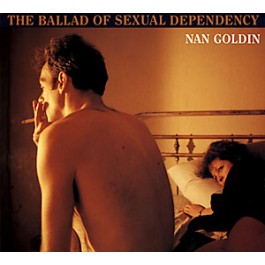
A huge thanks to the folks at Aperture publishing who have kindly offered the Photo Book Club community 10% off select titles, including Nan Goldin’s ‘Ballad of Sexual Dependency’ which we are looking at next month.

This special offer code will be sent to all members of our meet-up community at the beginning of next month. If you are not already part of this, you can add yourself below. And if you do not wish to be a meet-up member but would still like the code, please email Matt here.

[customcontact form=3]


So what books are available to get 10% off?

Nan Goldin, The Ballad of sexual dependency

John Gossage, The Pond

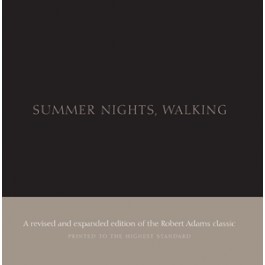
Robert Adams, Summer Nights, Walking

Sally Mann, Immediate Family

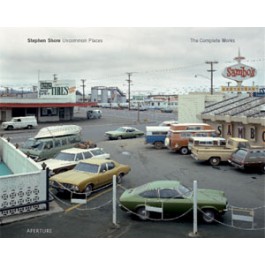
Stephen Shore, Uncommon Places

Japanese Photobooks of the 60’s and 70’s

Fred Ritchin – In our own image

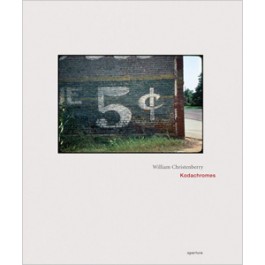
William Christenberry, Kodachromes

Rinko Kawauchi, Illuminance

Bruce Davidson, Subway


Categories
BOOKS

Other Books by Ken Schles

While we have only been looking at ‘Invisible City’, Ken Schles’ other books are just as highly regarded, helping make Ken one of the most important photobook authors around.

Ken’s latest book ‘Oculus’ is listed below alongside an in-depth video from Ken, looking through the images and text contained within.

Oculus by Ken Schles


Categories
BOOKS MEET-UPS NEWS

The first Photo Book Club Meet-up

A huge thanks to all who came down last night to the Hotshoe Gallery in London for an evening with the Photo Book Club, a bunch of great books and beer as part of ‘Photobook London‘.

It seems that all who came down really enjoyed the event and we are already working to arrange the next meeting. If you would like to be notified of the next meeting, pop your email into the box below the image.

The Photo Book Club at Photobook London

[customcontact form=3]

We had some great books brought along to the meet-up including Tim Hetherington’s ‘Infidel’, Watabe Yukichi’s ‘A Criminal Investigation’ and Nobuyoshi Araki’s ‘A Sentimental Journey’ . We were also lucky enough to be joined by Maxwell Anderson of Bemojake publishing to give us an insight into the production of Kenji Hirasawa’s ‘Celebrity’ which raised interesting questions on sequence, design, colour and the notion of celebrity.

– Matt

Maxwell Anderson, Harry Hardie and Matt Johnston (L to R)

Categories
BOOKS GUEST POST INVISIBLE CITY

Ken Schles On: The Photo Book Club Process

First off I want to thank Matt and Wayne for taking on Invisible City for the Photobook Club. They didn’t have to do it. But I’m glad they have.

Photo Book Club and Ken Schles' Invisible City

The project of the Photo Book Club interests me: it’s about photography books, something I’ve been interested in and engaged in as part of my practice as a photographer for over 25 years. But there is something else that piques my interest here as well. You see, making lists of importance and photography share a common thread—one I also connect to the writing of history as well. All are activities to seek out and present hierarchies of importance. We do it all the time, in the choices we make, how we focus our attentions. When we gravitate towards something, I don’t think it’s necessarily about popularity. And even when it is, it’s almost always about something else as well. At their best, these attentions, these choices are about significance. And the question of significance interests me deeply.

©KEN SCHLES

Significance is something that this blog takes aim at and something photography targets at as well. Flusser calls photographs “significant surfaces” —they are two-dimensional surfaces that signify something. And significance is very much of importance to us humans. We are signifying creatures. It’s what we do. Maybe it is because every one of us operates from a unique and insignificant point in the universe: a deep subjectivity that we struggle to overcome through social activities. We are compelled to ‘discover’ what is significant and share our discoveries: for survival’s sake, certainly, but also for what nourishes us.

©KEN SCHLES

We can take someone else’s word for what is important or significant, which of course, we do all the time, but do those opinions have as much meaning as when we investigate and make these evaluations for ourselves? For me photography has always been about that kind of questioning. I test images against ideas, I test ideas through the work I do with photography, rather than simply accept what I am presented with. I don’t tend to let images ‘wash over’ me. I search for meaning.

And I believe that’s the project of the Photo Book Club as well. The Photo Book Club evaluates significance and relevancy, expanding our insight into the possibilities of what specific photo books can offer. That is why I am keen for this Photo Book Club process.

– Ken Schles

Categories
BOOKS INVISIBLE CITY SYNOPSIS

Synopsis: Ken Schles – ‘Invisible City’

Title

Invisible City

Author

Ken Schles

Publisher

Twelvetree Press, 1988

For a decade Ken Schles watched the passing of time from his Lower East Side Manhattan neighborhood. His camera has fixed the instances of his observations, and these moments become the foundation of his invisible city. Friends and architecture come under the scrutiny of his lens and, when sorted and viewed in the pages of this book, a remarkable achievement of personal vision emerges.

For the next month we will be looking at Invisible City with its author Ken Schles adding comment and context throughout. After you have seen the book and text using the links below, perhaps you would like to put a question to Ken?

Getting a copy of Invisible City is not easy, hence our video and text posts, but you can get your hands on Ken’s latest release ‘Oculus’ from kenschles.com or from the publisher, Noordelicht here.

Resources:

Invisible City: The Images (VIDEO)

Invisible City: The Book (VIDEO)

Invisible City: the Text

Ken Schles’ Website

Review by Guy Trebay

Review by Thomas Beller


Categories
BOOKS CONTEXT INVISIBLE CITY TEXT

Invisible City: The Text

As well as showing Invisible City in its entirety here, we see that the text is just as important to try and get a sense of the book and Schles’ vision. So here is the text featured in the book alongside the full video for your viewing pleasure!

Opening text:

Cities are a product of time. They are the molds in which men’s lifetimes have cooled and congealed, giving lasting shape, by way of art, to moments that would otherwise vanish with the living and leave no means of renewal or wider participation behind them. In the city, time becomes visible: buildings and monuments and public ways, more open than the written record, more subject to the gaze of many men than the scattered artifacts of the countryside, leave an imprint upon the minds even of the ignorant or the indifferent. Through the material fact of preservation, time challenges time, time clashes with time: habits and values carryover beyond the living group, streaking with different strata of time the character of any single generation. Layer upon layer, past times preserve themselves in the city until life itself is finally threatened with suffocation… Lewis Mumford The Culture of Cities


Back of the book text:

Steadily, for the past generation, a transformation has been going on in every department of thought: a re-location of interest from mechanism to organism, a change from a world in which material bodies and mechanical motion alone were real to a world in which invisible rays and emanations, in which human projections and dreams, are as real as any immediately visible or external phenomenon – as real and on occasion more important.
Lewis Mumford, The Culture of Cities

A man becomes confused, gradually, with the forms of his destiny; a man is, by and large, his circumstances. More than a decipherer or an avenger, more than a priest or a god, I was one imprisoned. From the tireless labyrinth of dreams I returned as if to my home to the harsh prison.. I blessed its dampness, I blessed its tiger, I blessed the crevice of light, I blessed my old suffering body, I blessed the darkness and the stone.
Borges Labyrinths

All is imaginary – family, office, friends, the street, all imaginary, far away or close at hand, the woman; the truth that lies closest, however, is only this: that you are beating your head against the wall of a windowless
and doorless cell.
Kafka Diaries (1921)

This metropolitan world then, is a world where flesh and, blood is less real than paper and ink·and celluloid. It is a world where the great masses of people, unable to have direct contact with more satisfying means of living, take life vicariously, as readers, spectators, passive observers: a world where people watch shadow-heroes and heroines in order to forget their own clumsiness or coldness in love, where they behold brutal men crushing out life in a strike riot, a wrestling ring or a military assault, while they lack the nerve even to resist the petty tyranny of their immediate boss: where they hysterically cheer the flag of their political state, and in their neighborhood, their trades union, their church, fail to perform the most elementary duties of citizenship.

Living thus, year in and year out at second hand, remote from the nature that is outside them and no Ie remote from the nature within, handicapped as lovers and as parents by the routine of the metropolis and by the constant specter of insecurity and death that hovers over its bold towers and shadowed streets living thus the mass of inhabitants remain in a state bordering on the pathological.
[Nb – The quote continues, but I did not include this part in the book, although it might be interesting to see it here:] – Ken Schles
They become the victims of phantasms, fears, obsessions, which bind them to ancestral patterns of behavior. At the very point where super-mechanization takes hold of economic production and social intercourse, a treacherous superstition, a savage irrationality, reappear in the metropolis. But these reversionary modes of behavior, though they are speedily rationalized in pseudo-philosophies, do not remain on paper: they seek an outlet. The sadistic gangster, the bestial fascist, the homicidal vigilante, the law-offending policeman burst volcanically through the crust of metropolitan life. They challenge the dream city with an even lower order of ‘reality’.
Lewis Mumford, The Culture of Cities (p.258)

…reality itself, entirely impregnated by an aesthetic which is inseparable from its own structure, has been confused with its own image. Reality no longer has the time to take on the appearance of reality. It no longer even surpasses fiction: it captures every dream even before it takes on the appearance of a dream. Schizophrenic vertigo of these serial signs, for which no counterfeit, no sublimation is possible, immanent in their repetition – who could say what the reality is that these signs simulate?
Jean Baudrillard, Simulations

All he wanted was to hold the photograph in his fingers again, or at least to see it.
‘It exists!’ he cried.
‘No,’ said O’Brien.

He stepped across the room. There was a memory hole in the opposite wall. O’Brien lifted the grating. Unseen, the frail slip of paper was whirling away on the current of warm air; it was vanishing in a flash of flame. O’Brien turned away from the wall.
‘Ashes,’ he said. ‘Not even identifiable ashes. Dust. It does not exist. It never existed.’
‘But it did exist! It does exist! It exists in memory. I remember it. You remember it.’
‘I do not remember it,’ said O’Brien.

Winston’s heart sank. That was doublethink. He had a feeling of deadly helplessness. If he could have been certain that O’Brien was lying, it would not have seemed to matter. But it was perfectly possible that O’Brien had really forgotten the photograph. And if so, then already he would have forgotten his denial of remembering it, and forgotten the act of forgetting. How could one be sure that it was simple trickery? Perhaps that lunatic dislocation in the mind could really happen: that was the thought that defeated him.

O’Brien was looking down at him speculatively. More than ever he had the air of a teacher taking pains with a wayward but promising child.
‘There is a Party slogan dealing with the control of the past,’ he said. ‘Repeat it, if you please.’

‘”Who controls the past controls the future: who controls the present controls the past,”‘ repeated Winston obediently.
George Orwell, 1984